Regulation of Cell Fate, Institute for Stem Cell Science and Regenerative Medicine (inStem), Bangalore, India.
National Centre for Biological Sciences, Tata Institute of Fundamental Research, Bangalore, India.
Elife. 2021 Oct 8;10:e68636. doi: 10.7554/eLife.68636.
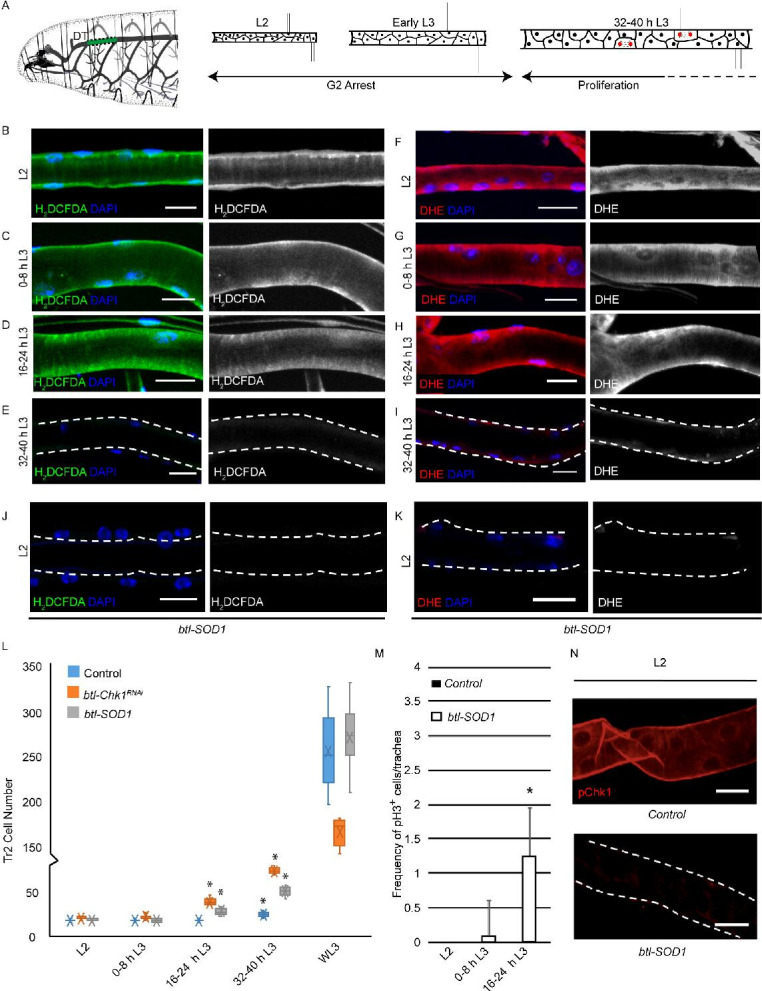
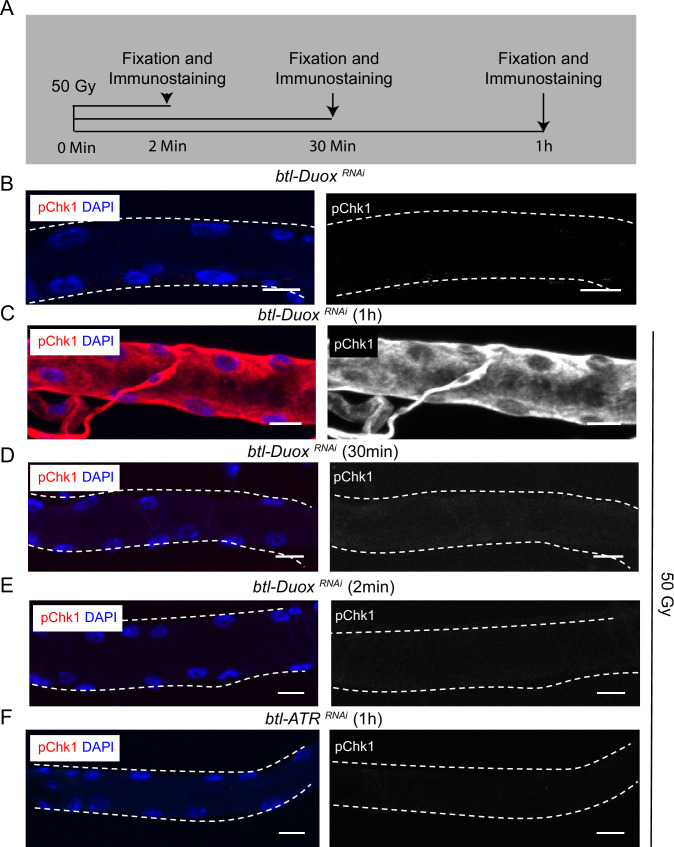
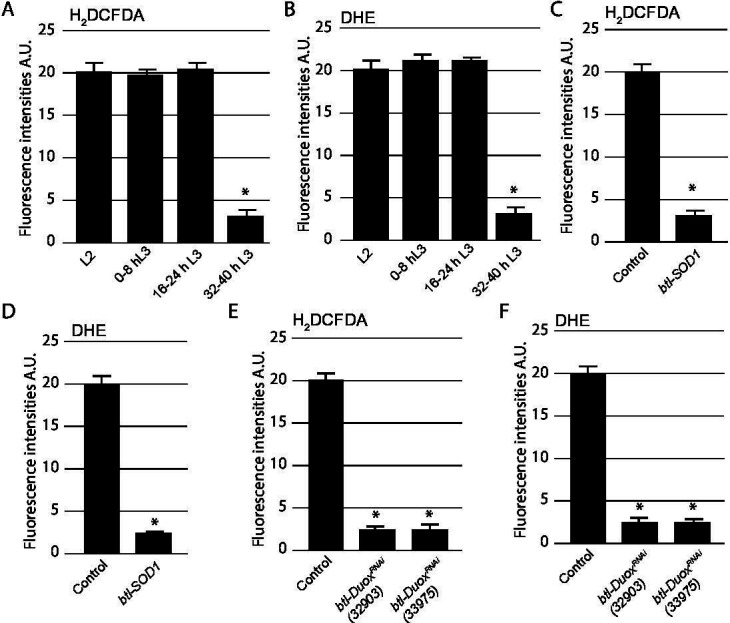
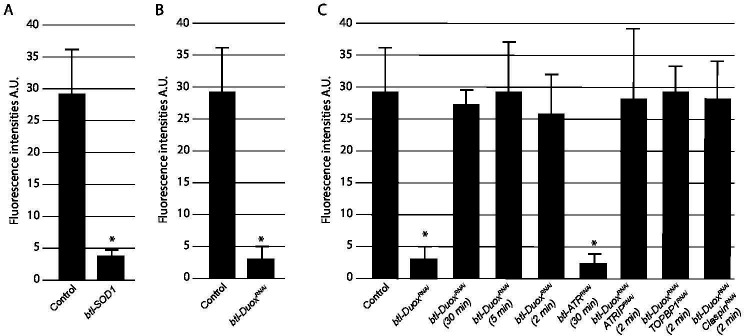
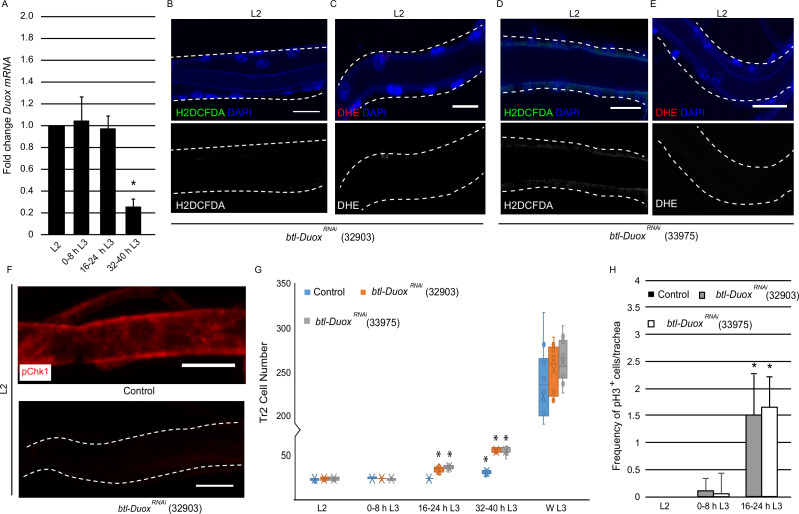
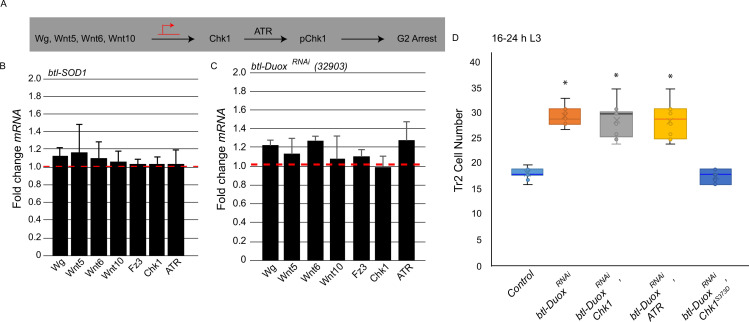
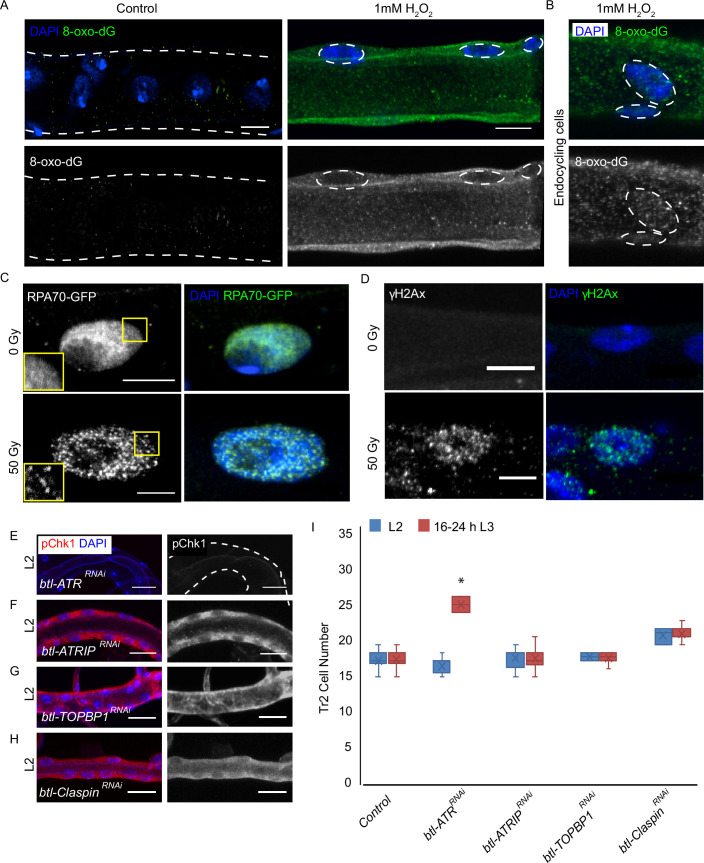
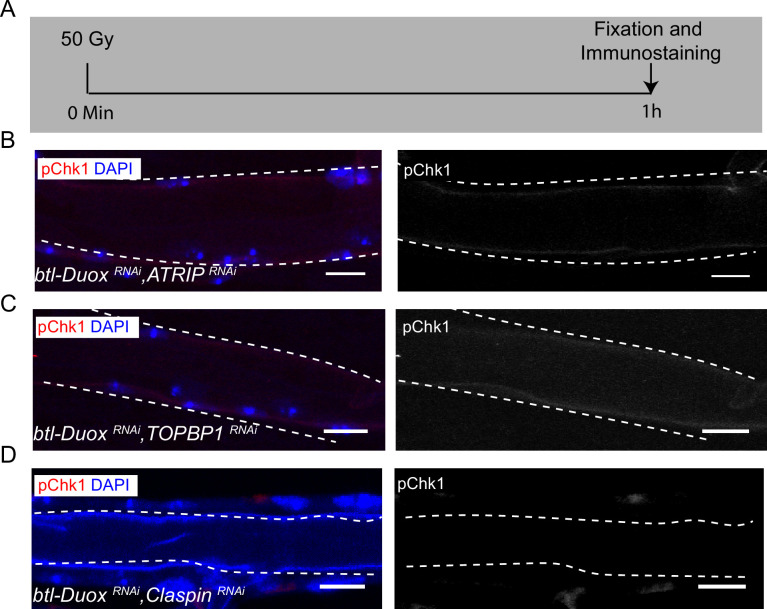
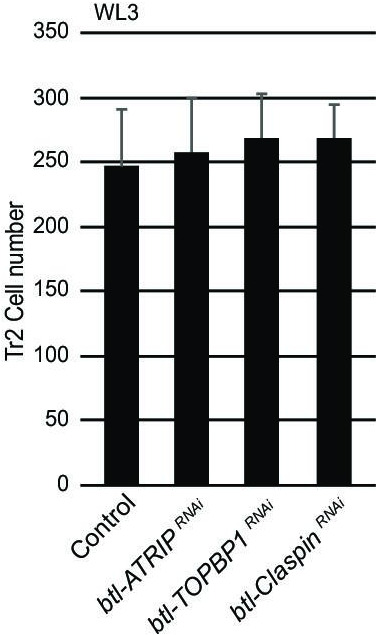
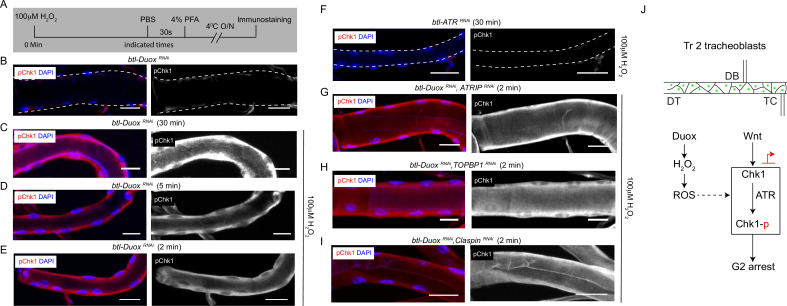
Progenitors of the thoracic tracheal system of adult (tracheoblasts) arrest in G2 during larval life and rekindle a mitotic program subsequently. G2 arrest is dependent on ataxia telangiectasia mutated and rad3-related kinase (ATR)-dependent phosphorylation of checkpoint kinase 1 (Chk1) that is actuated in the absence of detectable DNA damage. We are interested in the mechanisms that activate ATR/Chk1 (Kizhedathu et al., 2018; Kizhedathu et al., 2020). Here we report that levels of reactive oxygen species (ROS) are high in arrested tracheoblasts and decrease upon mitotic re-entry. High ROS is dependent on expression of Duox, an HO generating dual oxidase. ROS quenching by overexpression of superoxide dismutase 1, or by knockdown of Duox, abolishes Chk1 phosphorylation and results in precocious proliferation. Tracheae deficient in Duox, or deficient in both Duox and regulators of DNA damage-dependent ATR/Chk1 activation (ATRIP/TOPBP1/claspin), can induce phosphorylation of Chk1 in response to micromolar concentrations of HO in minutes. The findings presented reveal that HO activates ATR/Chk1 in tracheoblasts by a non-canonical, potentially direct, mechanism.
成体胸气管系统的祖细胞(tracheoblasts)在幼虫期的 G2 期停滞,并随后重新启动有丝分裂程序。G2 期停滞依赖于共济失调毛细血管扩张突变和 rad3 相关激酶(ATR)依赖性磷酸化检查点激酶 1(Chk1),而在没有检测到 DNA 损伤的情况下,ATR/Chk1(Kizhedathu 等人,2018 年;Kizhedathu 等人,2020 年)。我们对激活 ATR/Chk1 的机制感兴趣。在这里,我们报告说,停滞的气管细胞中的活性氧(ROS)水平很高,并且在有丝分裂重新进入时会降低。高 ROS 依赖于 HO 生成的双氧化酶 Duox 的表达。通过过表达超氧化物歧化酶 1 或敲低 Duox 来清除 ROS,会消除 Chk1 的磷酸化,并导致早熟增殖。缺乏 Duox 的气管或缺乏 Duox 和 DNA 损伤依赖性 ATR/Chk1 激活调节剂(ATRIP/TOPBP1/claspin)的气管,在几分钟内可以对毫摩尔浓度的 HO 做出 Chk1 磷酸化的反应。这些发现表明,HO 通过一种非典型的、潜在的直接机制,在气管细胞中激活 ATR/Chk1。