Northwell North Shore/Long Island Jewish General Surgery, Manhasset, New York.
Northwell North Shore/Long Island Jewish General Surgery, Manhasset, New York.
J Surg Educ. 2022 Mar-Apr;79(2):330-341. doi: 10.1016/j.jsurg.2021.09.005. Epub 2021 Sep 17.
The SARS-CoV-2 (COVID-19) pandemic has profoundly impacted healthcare delivery and strained medical training. This study explores resident and faculty perceptions regarding the impact of the COVID-19 crisis on technical skill decay of surgical and anesthesia residents. We hypothesized that many residents perceived that their technical abilities diminished due to a short period of interruption in their training.
An IRB-exempt, web-based cross-sectional survey distributed to residents and faculty SETTING: Two large academic tertiary medical centers, North Shore University Hospital and Long Island Jewish Medical Center, of the Northwell Health System in New York.
General surgery, anesthesiology, plastic surgery, cardiothoracic surgery, orthopedic surgery, oral maxillofacial surgery, urology, podiatry residents and faculty.
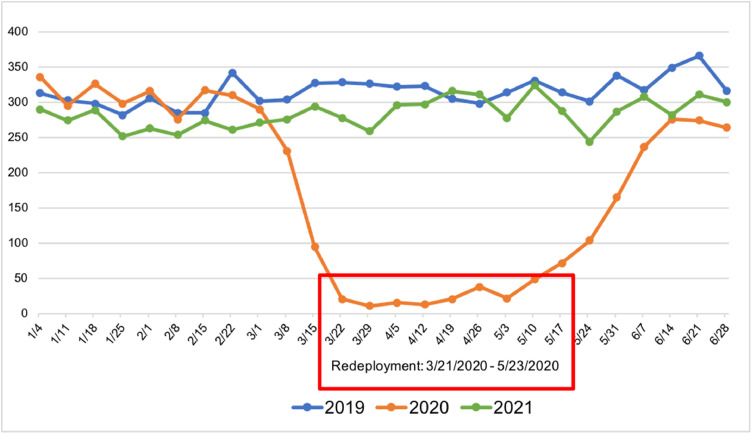
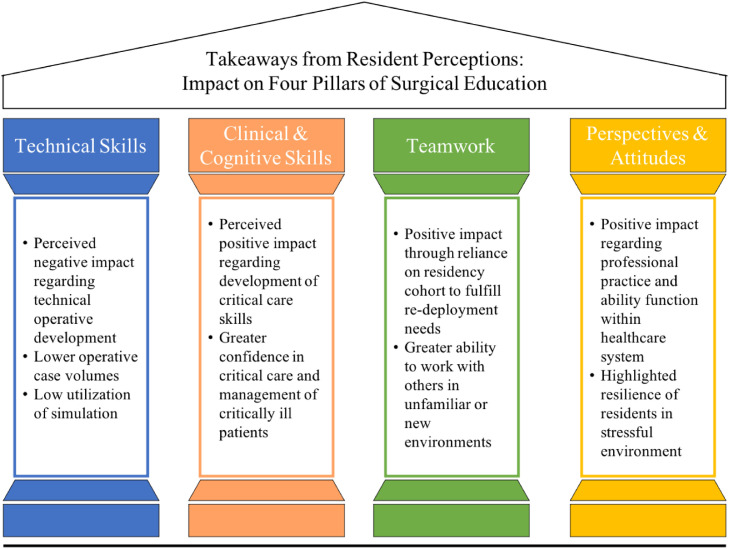
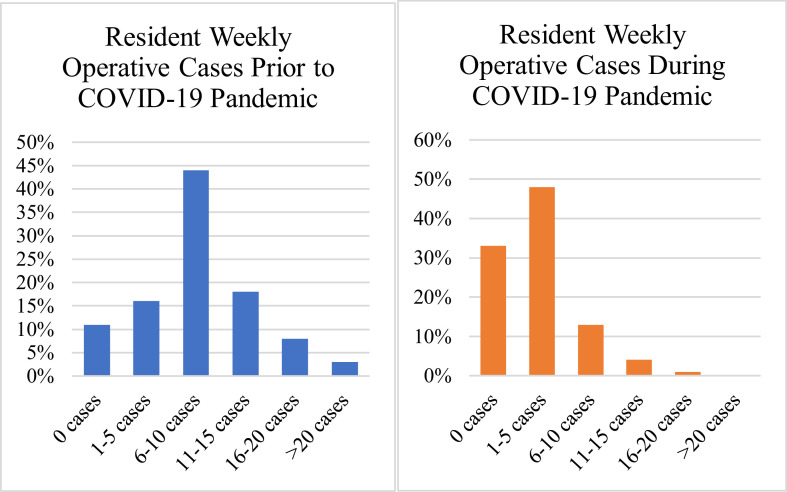
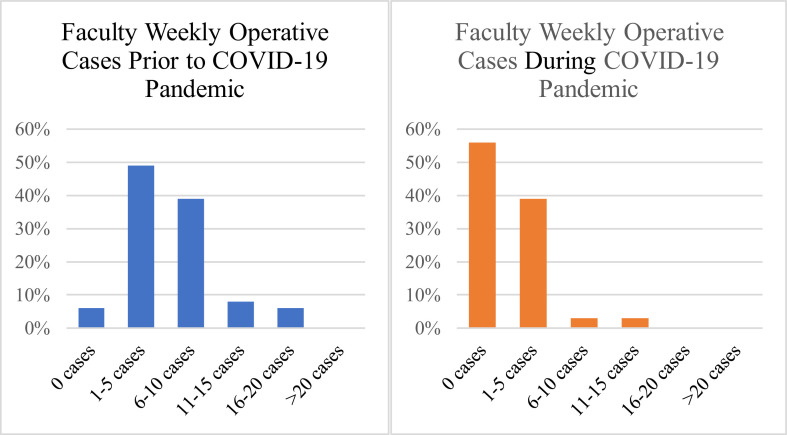
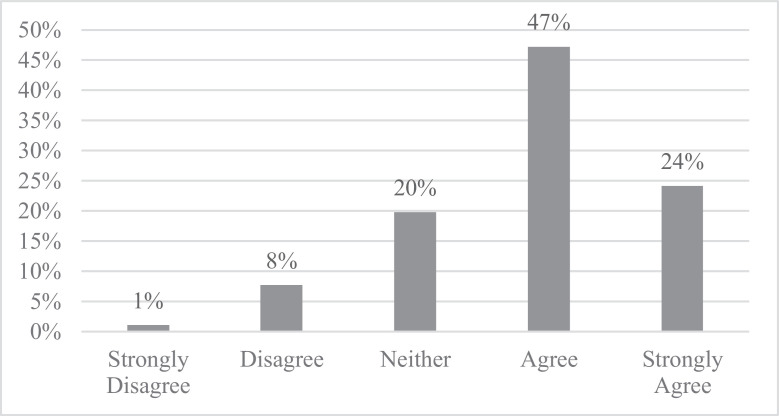
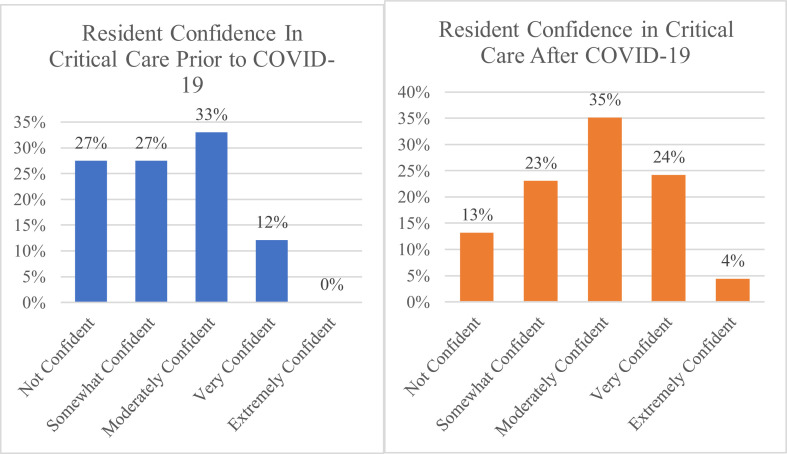
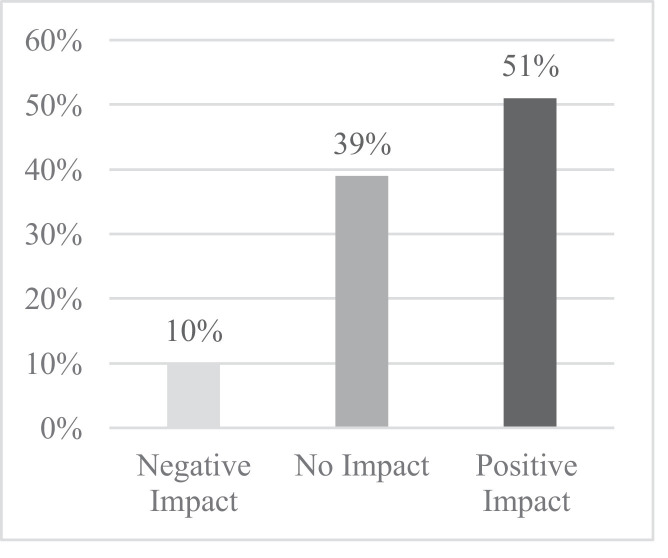
All residents reported a significant impact on their training. Residents (82%) and faculty (94%) reported a significant reduction in case volumes due to the COVID-19 pandemic (p < 0.05). 64% of residents reported a reduction in technical skills, and 75% of faculty perceived a decrease in resident technical skills. Residents were concerned about fulfilling ACGME case requirements, however faculty were more optimistic that residents would achieve level-appropriate proficiency by the conclusion of their training. Both residents and faculty felt that resident critical care skills improved as a result of redeployment to COVID-19 intensive care units (66% and 94%). Additionally, residents reported increased confidence in their ability to care for critically ill patients and positive impact on professional competencies.
Effects of the COVID-19 pandemic on residency training are multi-dimensional. The majority of surgical and anesthesia residents perceived that their technical ability diminished as a result of skill decay, whereas other skillsets improved. Longitudinal surveillance of trainees is warranted to evaluate the effect of reduced operative volume and redeployment on professional competency.
SARS-CoV-2(COVID-19)大流行对医疗保健服务产生了深远的影响,并使医学培训紧张。本研究探讨住院医师和教员对 COVID-19 危机对外科和麻醉住院医师技术技能衰退的影响的看法。我们假设许多住院医师认为,由于培训中断了很短的时间,他们的技术能力下降了。
一项豁免机构审查、基于网络的横断面调查,分发给住院医师和教员
纽约 Northwell Health 系统的两家大型学术三级医疗中心,北岸大学医院和长岛犹太医学中心
普通外科、麻醉科、整形外科、心胸外科、骨科、口腔颌面外科、泌尿科、足病学住院医师和教员
所有住院医师均报告培训受到重大影响。由于 COVID-19 大流行,住院医师(82%)和教员(94%)报告手术量显著减少(p < 0.05)。64%的住院医师报告技术技能下降,75%的教员认为住院医师的技术技能下降。住院医师担心无法满足 ACGME 病例要求,但教员更乐观地认为,住院医师将在培训结束时达到适当的水平。住院医师和教员都认为,由于重新部署到 COVID-19 重症监护病房,住院医师的重症监护技能得到了提高(分别为 66%和 94%)。此外,住院医师报告说,他们对照顾重症患者的能力更有信心,并对专业能力产生了积极影响。
COVID-19 大流行对住院医师培训的影响是多方面的。大多数外科和麻醉住院医师认为,由于技能衰退,他们的技术能力下降,而其他技能则有所提高。需要对学员进行纵向监测,以评估手术量减少和重新部署对专业能力的影响。