Department of Psychiatry and Behavioral Sciences/Weill Institute for Neurosciences, University of California, San Francisco, San Francisco, CA, USA.
Neuroscience Graduate Program, University of California, San Francisco, San Francisco, CA, USA.
Nat Commun. 2021 Oct 8;12(1):5916. doi: 10.1038/s41467-021-26206-x.
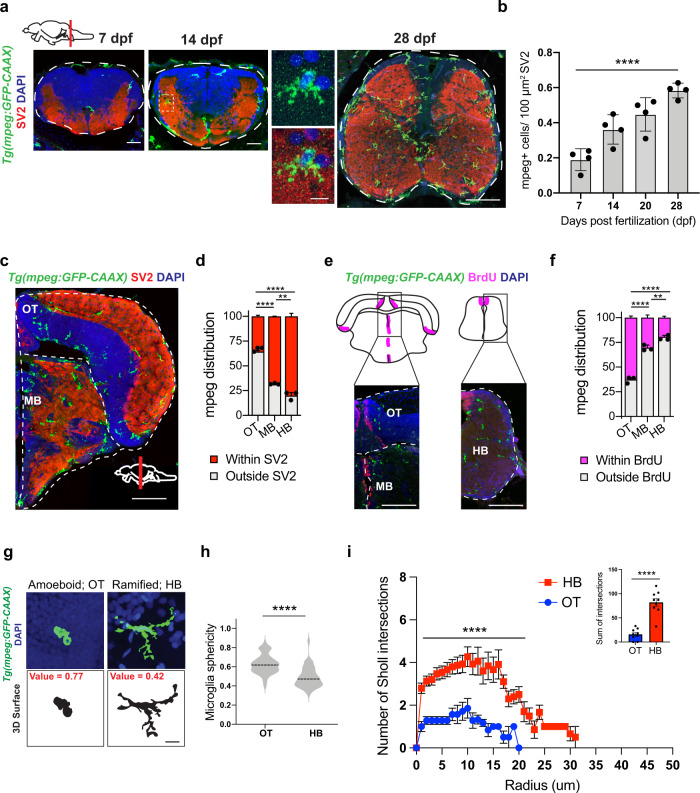
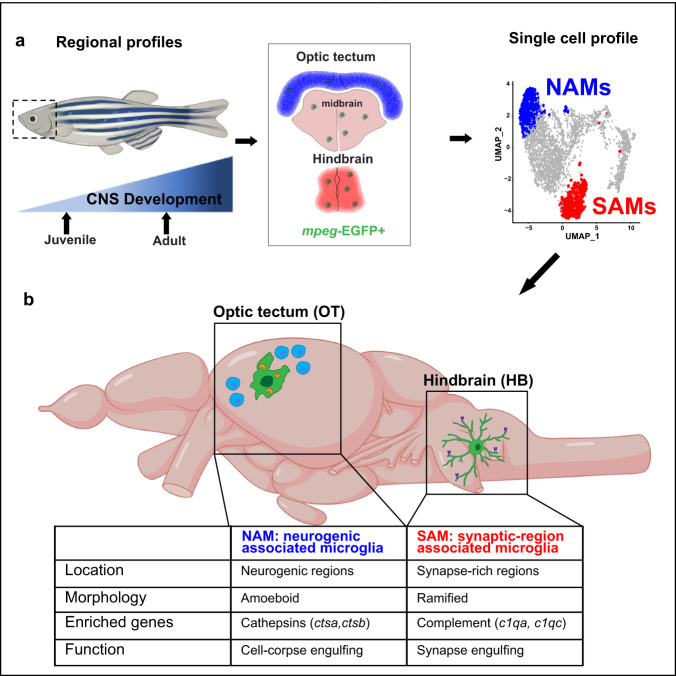
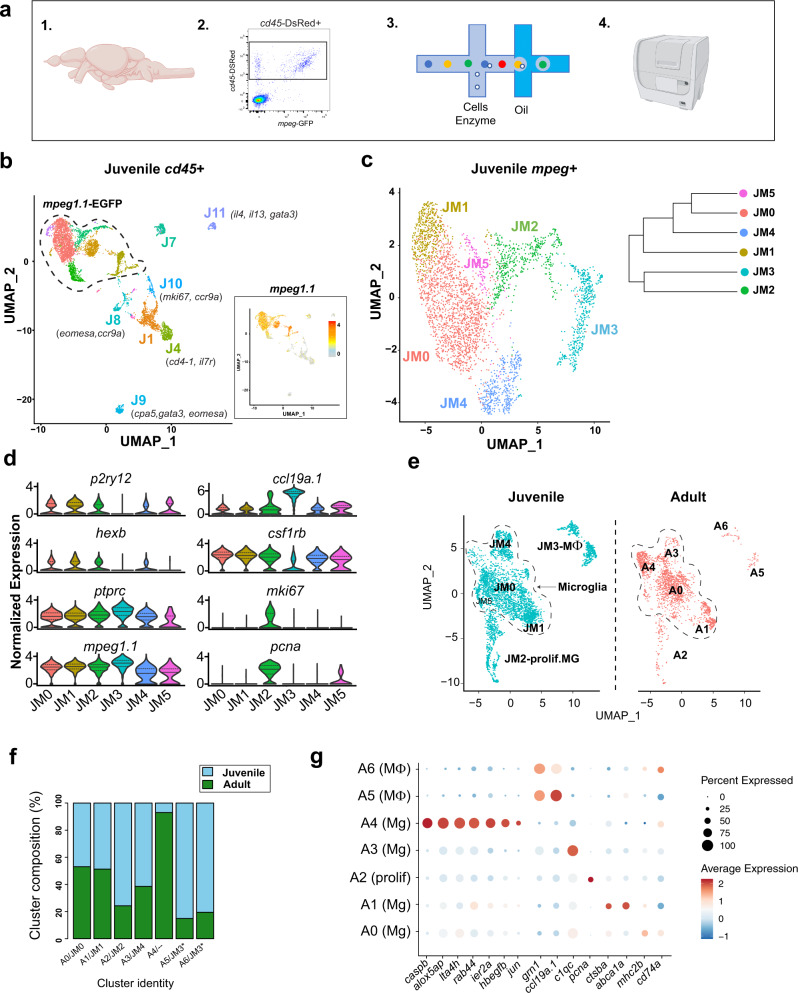
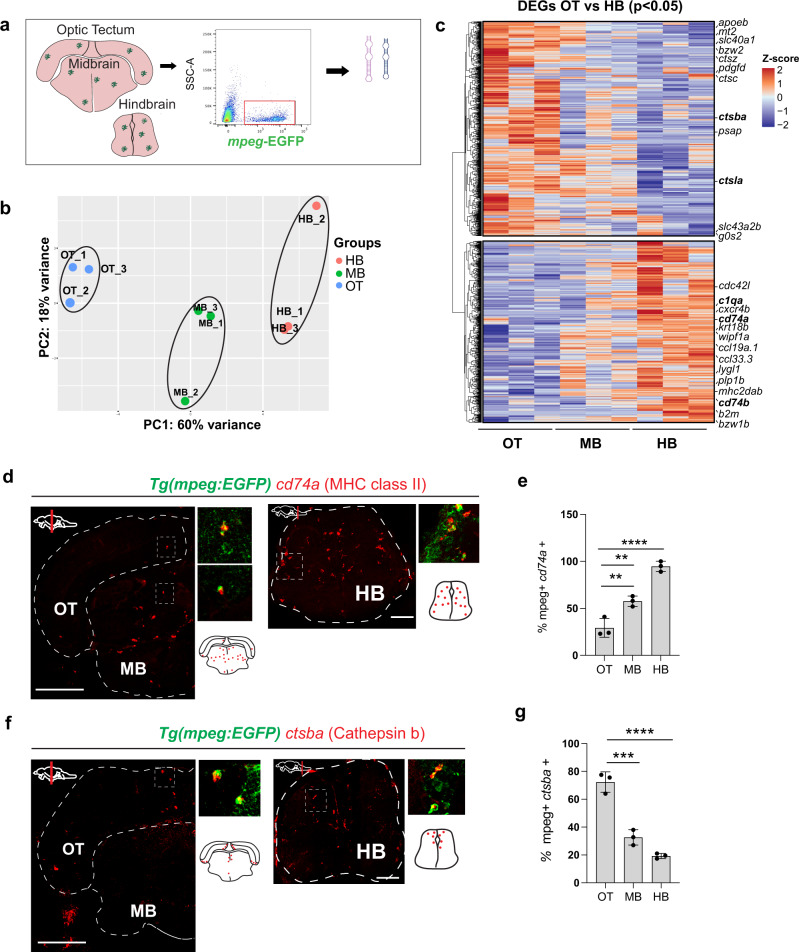
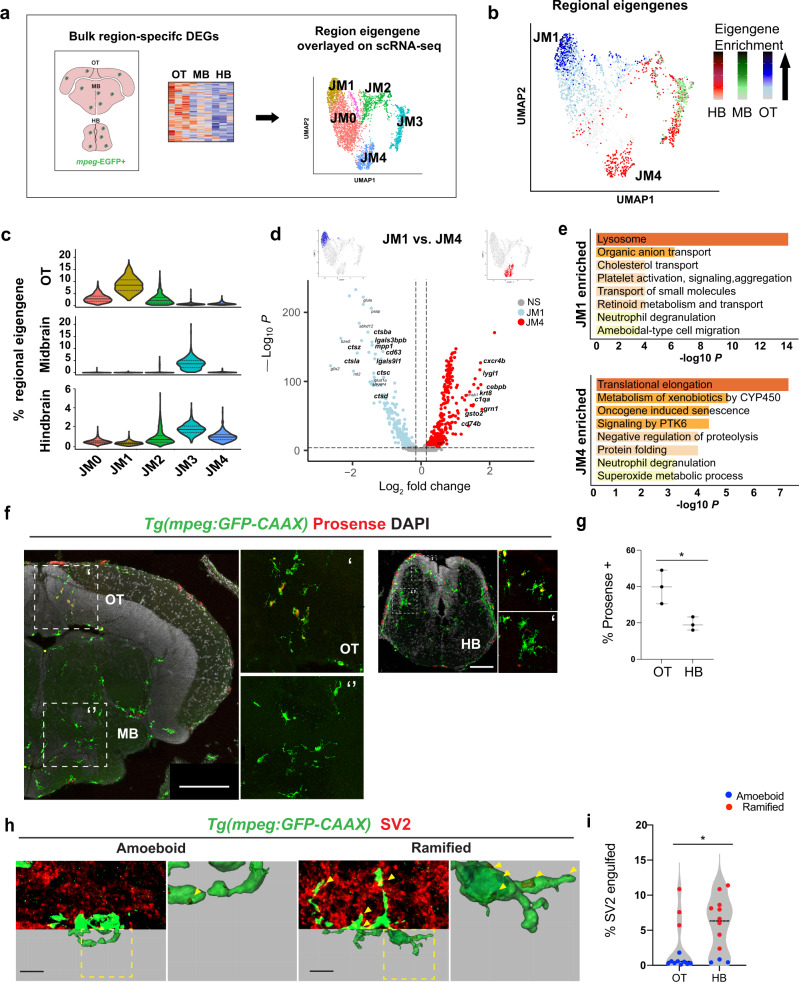
Microglia are brain resident macrophages that play vital roles in central nervous system (CNS) development, homeostasis, and pathology. Microglia both remodel synapses and engulf apoptotic cell corpses during development, but whether unique molecular programs regulate these distinct phagocytic functions is unknown. Here we identify a molecularly distinct microglial subset in the synapse rich regions of the zebrafish (Danio rerio) brain. We found that ramified microglia increased in synaptic regions of the midbrain and hindbrain between 7 and 28 days post fertilization. In contrast, microglia in the optic tectum were ameboid and clustered around neurogenic zones. Using single-cell mRNA sequencing combined with metadata from regional bulk sequencing, we identified synaptic-region associated microglia (SAMs) that were highly enriched in the hindbrain and expressed multiple candidate synapse modulating genes, including genes in the complement pathway. In contrast, neurogenic associated microglia (NAMs) were enriched in the optic tectum, had active cathepsin activity, and preferentially engulfed neuronal corpses. These data reveal that molecularly distinct phagocytic programs mediate synaptic remodeling and cell engulfment, and establish the zebrafish hindbrain as a model for investigating microglial-synapse interactions.
小胶质细胞是大脑驻留的巨噬细胞,在中枢神经系统 (CNS) 的发育、稳态和病理中发挥着重要作用。小胶质细胞在发育过程中既能重塑突触,又能吞噬凋亡的细胞尸体,但调节这些不同吞噬功能的独特分子程序是否存在尚不清楚。在这里,我们在斑马鱼 (Danio rerio) 大脑富含突触的区域中鉴定出一种分子上不同的小胶质细胞亚群。我们发现,分枝状小胶质细胞在受精后 7 至 28 天期间在中脑和后脑的突触区域中增加。相比之下,视神经顶盖中的小胶质细胞呈阿米巴样,聚集在神经发生区周围。使用单细胞 mRNA 测序结合来自区域批量测序的元数据,我们鉴定了与突触相关的小胶质细胞 (SAMs),它们在后脑高度富集,并表达了多种候选的调节突触的基因,包括补体途径中的基因。相比之下,神经发生相关的小胶质细胞 (NAMs) 在视神经顶盖中富集,具有活跃的组织蛋白酶活性,并优先吞噬神经元尸体。这些数据表明,分子上不同的吞噬程序介导了突触重塑和细胞吞噬,并且建立了斑马鱼后脑作为研究小胶质细胞-突触相互作用的模型。