Department of Clinical and Experimental Medicine, University of Foggia, Via Rovelli 50, 71122, Foggia, Italy.
Department of Surgical Sciences, Dental School, University of Turin, Via Nizza 230, 10100, Turin, Italy.
Clin Oral Investig. 2021 Dec;25(12):6597-6621. doi: 10.1007/s00784-021-04187-x. Epub 2021 Oct 10.
The survival rate of indirect partial adhesive restorations on vital versus endodontically treated teeth is still controversial. The hypothesis is that there may be a difference in the survival rate of partial adhesive restorations performed on non-vital teeth compared to vital teeth.
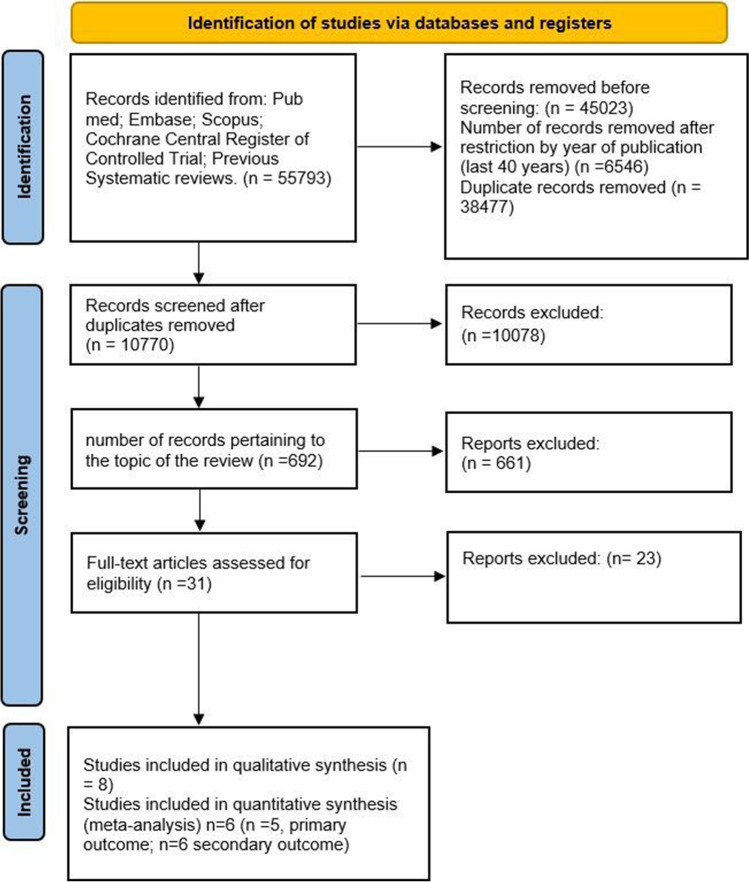
This systematic review was conducted following the PRISMA guidelines. The considered clinical studies investigated the outcomes of adhesive inlays, onlays, and overlays conducted over the past 40 years, focusing on Kaplan-Meier survival curves to calculate the hazard ratio (primary objective) and the survival rate (secondary objective) between vital and non-vital teeth. The risk of bias was assessed using the Newcastle-Ottawa Scale. Studies included in the review were identified through bibliographic research on electronic databases ("PubMed," "Scopus," "Cochrane Central Register of Controlled Trial," and "Embase"). The K agreement between the two screening reviewers was evaluated.
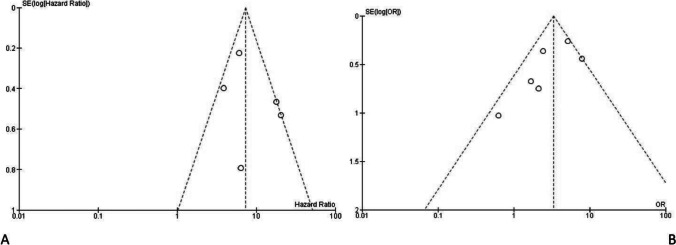
A total of 55,793 records were identified on PubMed, Scopus, and other bibliographic sources, and after the application of the eligibility and inclusion criteria, eight articles were included for qualitative analysis and six for quantitative analysis. The meta-analysis of the primary and secondary outcomes demonstrated that hazard ratios (HR = 8.41, 95% CI: [4.50, 15.72]) and survival rates (OR = 3.24, 95% CI: [1.76, 5.82]) seemed more favorable for indirect partial adhesive restorations on vital teeth than for those on endodontically treated teeth.
Within the limits of this study, these findings suggest that the risk of failure of indirect partial adhesive restorations on endodontically treated teeth is higher than on vital teeth.
The use of partial adhesive restorations on vital and endodontically treated teeth showed different long-term clinical outcomes.
活髓牙与牙髓治疗牙的间接部分黏附修复体的存活率仍存在争议。假设活髓牙与牙髓治疗牙的部分黏附修复体的存活率可能存在差异。
本系统评价遵循 PRISMA 指南进行。所考虑的临床研究调查了过去 40 年中进行的黏附嵌体、高嵌体和贴面的结果,重点关注 Kaplan-Meier 生存曲线以计算危险比(主要目标)和活髓牙与牙髓治疗牙之间的生存率(次要目标)。使用纽卡斯尔-渥太华量表评估偏倚风险。通过电子数据库(“PubMed”、“Scopus”、“Cochrane 中心对照试验注册”和“Embase”)的文献检索识别纳入研究。评估了两位筛选审稿人的 K 一致性。
在 PubMed、Scopus 和其他文献来源中总共确定了 55793 条记录,在应用资格和纳入标准后,有 8 篇文章进行了定性分析,6 篇进行了定量分析。主要和次要结局的荟萃分析表明,危险比(HR=8.41,95%CI:[4.50,15.72])和生存率(OR=3.24,95%CI:[1.76,5.82])似乎更有利于活髓牙的间接部分黏附修复体,而不是牙髓治疗牙。
在本研究的范围内,这些发现表明牙髓治疗牙的间接部分黏附修复体失败的风险高于活髓牙。
活髓牙和牙髓治疗牙使用部分黏附修复体显示出不同的长期临床结果。