Pavalaydon Krishnavani, Ramasawmy Hareenanden, Surroop Dinesh
Department of Chemical and Environmental Engineering, Faculty of Engineering, University of Mauritius, Réduit, 80837 Mauritius.
Department of Mechanical and Production Engineering, Faculty of Engineering, University of Mauritius, Réduit, 80837 Mauritius.
Environ Dev Sustain. 2022;24(8):9963-9984. doi: 10.1007/s10668-021-01852-9. Epub 2021 Oct 5.
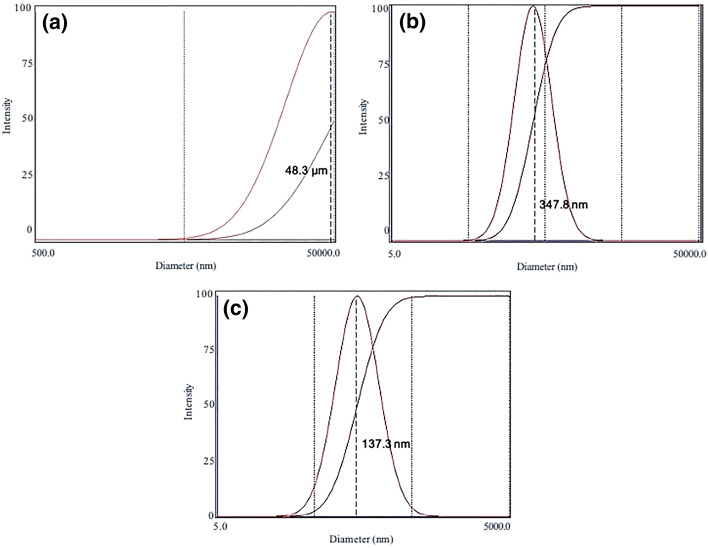
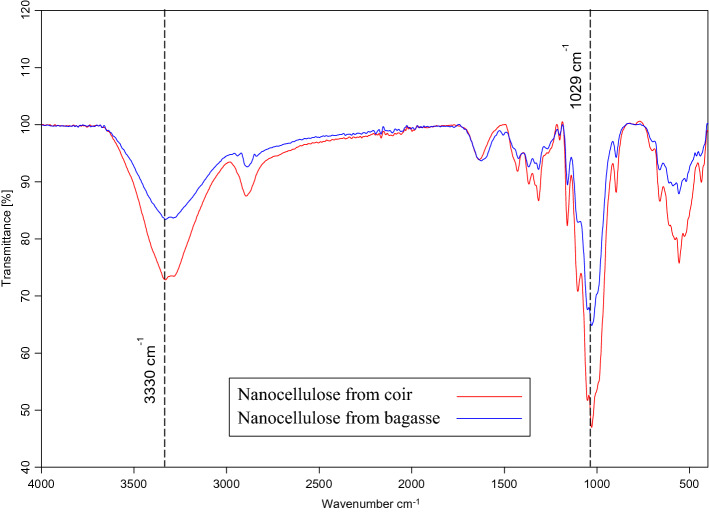
In order to increase resilience of planters against climate change and bring additional economic benefits, agro-wastes can be exploited for extracting nanocellulose to produce eco-friendly composites. This paper focused on extracting nanocellulose from sugarcane bagasse and coir () using chemical methods including mercerisation, bleaching and acid hydrolysis. Taguchi Design of Experiment showed that the optimum alkaline treatment conditions of bagasse were at 2 wt% NaOH at 90 °C for 16 h. The morphological changes occurring along each treatment stage were observed using Fourier-Transform Infrared spectroscopy and Scanning Electron Microscopy. The differences in the nanoparticles extracted from the two biomass were studied through the determination of crystallinity indexes and particle size. Cellulose nanocrystals (CNCs) from coir exhibited a total crystallinity index (TCI) of 1.03 and an average particle size of 137.3 nm while CNCs extracted from sugarcane bagasse under similar treatment conditions had a TCI of 0.85 and an average particle size of around 48 µm. Dynamic Light Scattering findings showed risks of agglomeration after freeze drying. Bio-nanocomposite films with polyvinyl alcohol (PVA) as matrix were manufactured by the solvent casting process. The highest tensile strength (38.2 MPa) was obtained for CNCs extracted from coir at a CNC/PVA loading of 0.5 wt%, representing a 96.9% increase in the tensile strength as compared to the unreinforced PVA matrix. This study showed that sugarcane bagasse and coir are suitable sources of nanocellulose and can be used to prepare bio-composites with considerably high tensile strengths.
为了提高种植者应对气候变化的能力并带来额外的经济效益,可以利用农业废弃物提取纳米纤维素来生产环保复合材料。本文重点研究了采用丝光处理、漂白和酸水解等化学方法从甘蔗渣和椰壳纤维中提取纳米纤维素。田口实验设计表明,甘蔗渣的最佳碱处理条件为在90℃下使用2wt%的氢氧化钠处理16小时。使用傅里叶变换红外光谱和扫描电子显微镜观察了每个处理阶段发生的形态变化。通过测定结晶度指数和粒径研究了从两种生物质中提取的纳米颗粒的差异。椰壳纤维提取的纤维素纳米晶体(CNCs)的总结晶度指数(TCI)为1.03,平均粒径为137.3nm,而在类似处理条件下从甘蔗渣中提取的CNCs的TCI为0.85,平均粒径约为48μm。动态光散射结果表明冷冻干燥后存在团聚风险。通过溶液浇铸工艺制备了以聚乙烯醇(PVA)为基质的生物纳米复合薄膜。从椰壳纤维中提取的CNCs在CNC/PVA负载量为0.5wt%时获得了最高拉伸强度(38.2MPa),与未增强的PVA基质相比,拉伸强度提高了96.9%。这项研究表明,甘蔗渣和椰壳纤维是合适的纳米纤维素来源,可用于制备具有相当高拉伸强度的生物复合材料。