Zheng Kangyong, Chen Changcheng, Yang Suyong, Wang Xueqiang
Department of Sport Rehabilitation, Shanghai University of Sport, Shanghai, China.
Department of Rehabilitation Medicine, Qingtian People's Hospital, Zhejiang, China.
Front Neurosci. 2021 Sep 21;15:735470. doi: 10.3389/fnins.2021.735470. eCollection 2021.
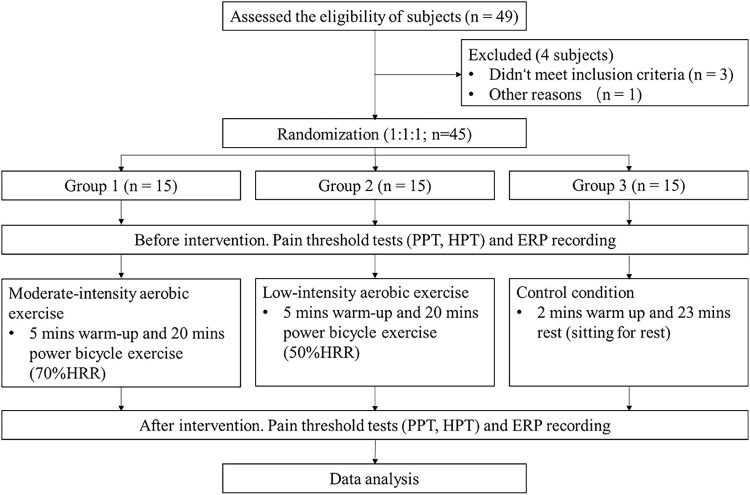
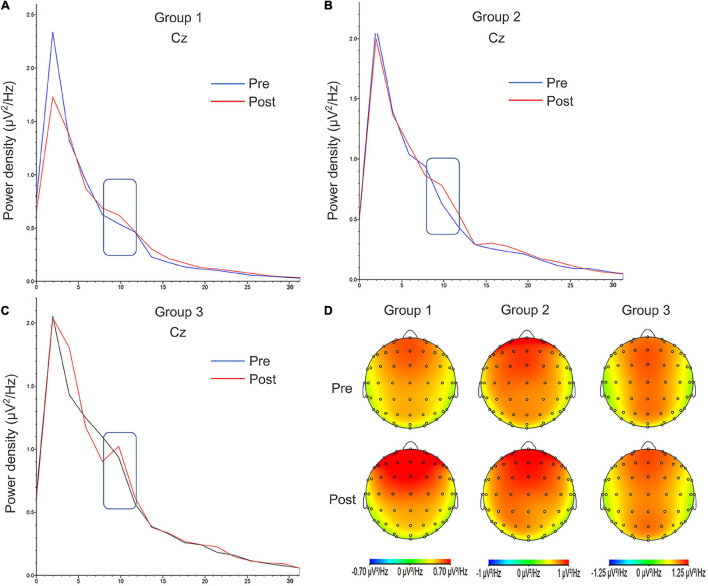
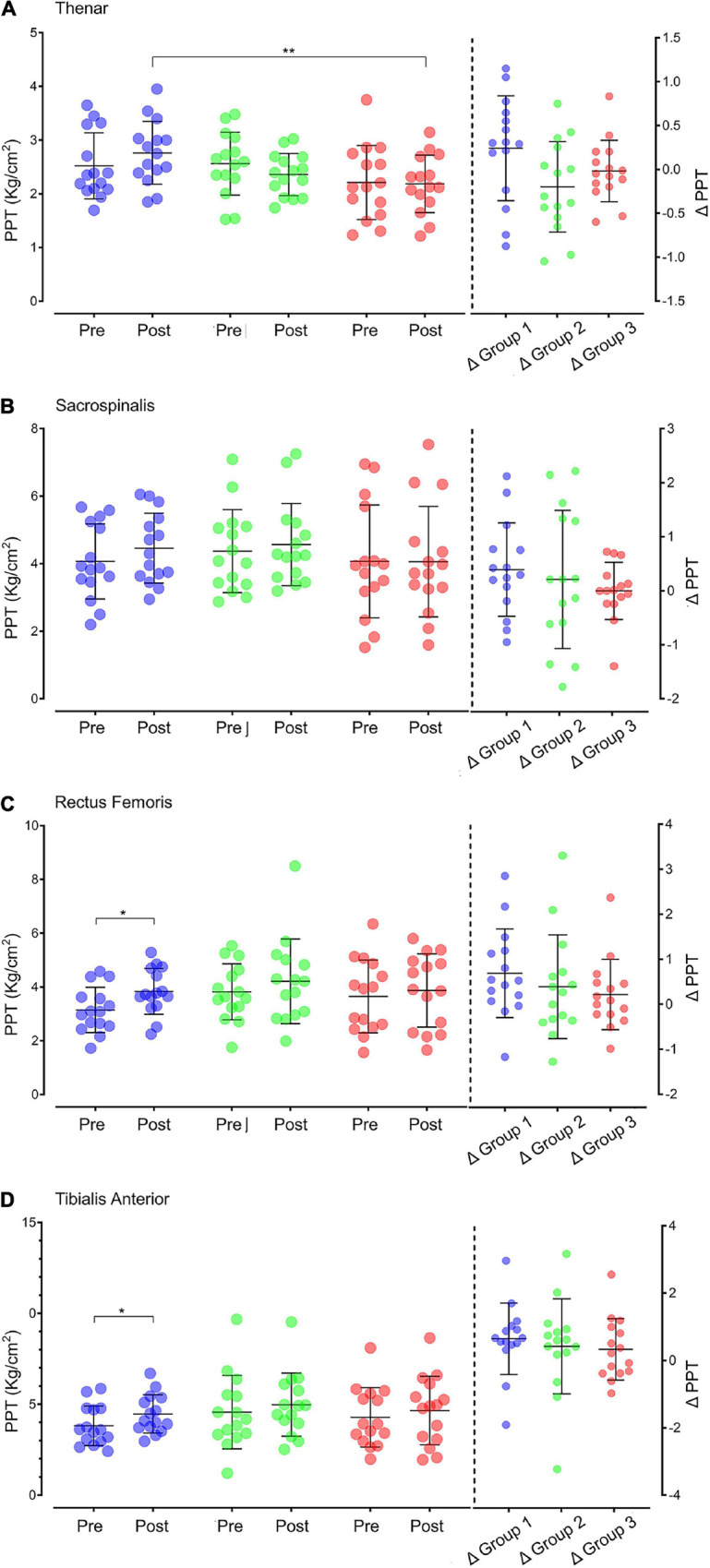
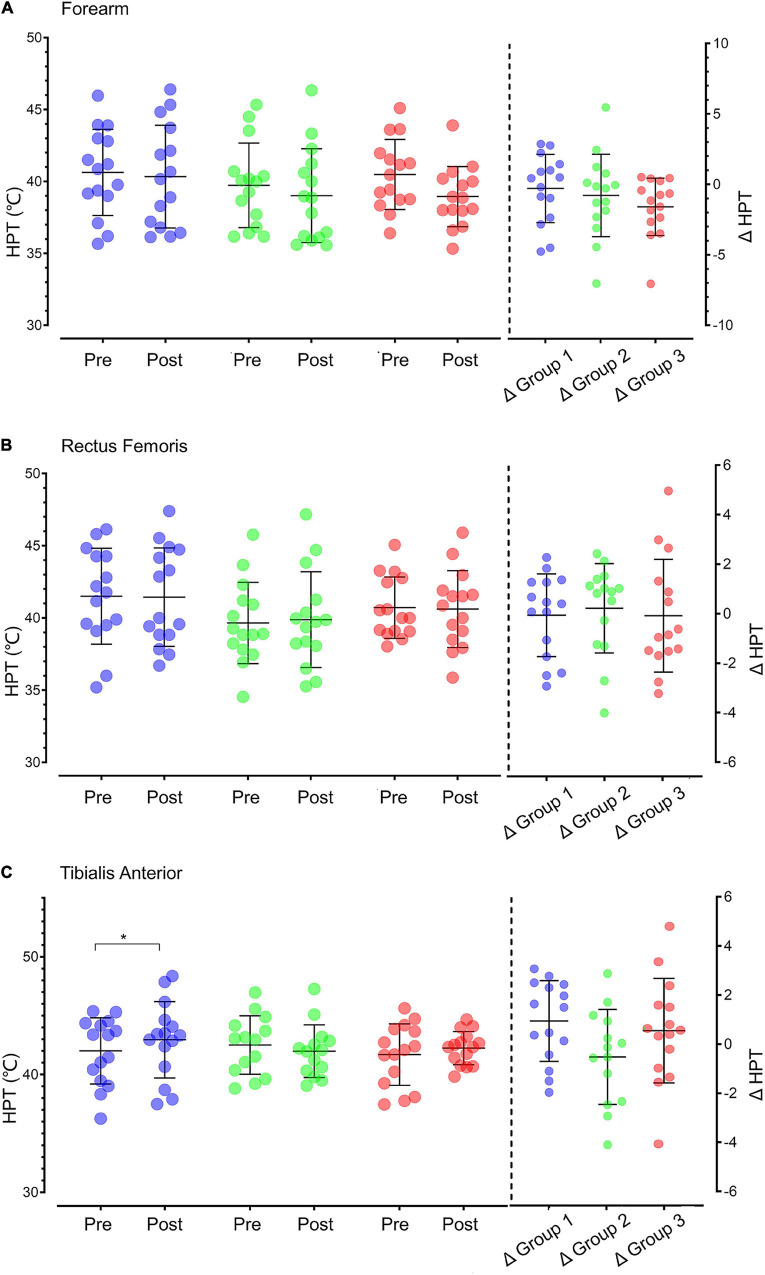
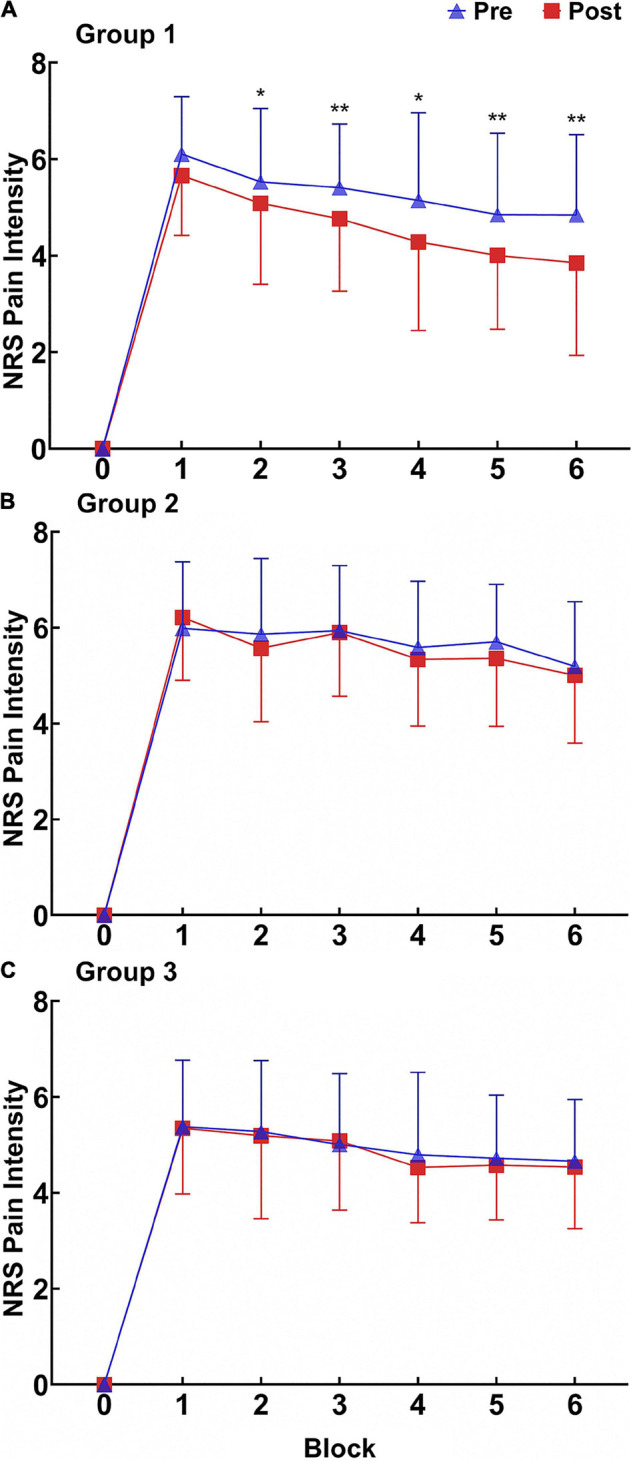
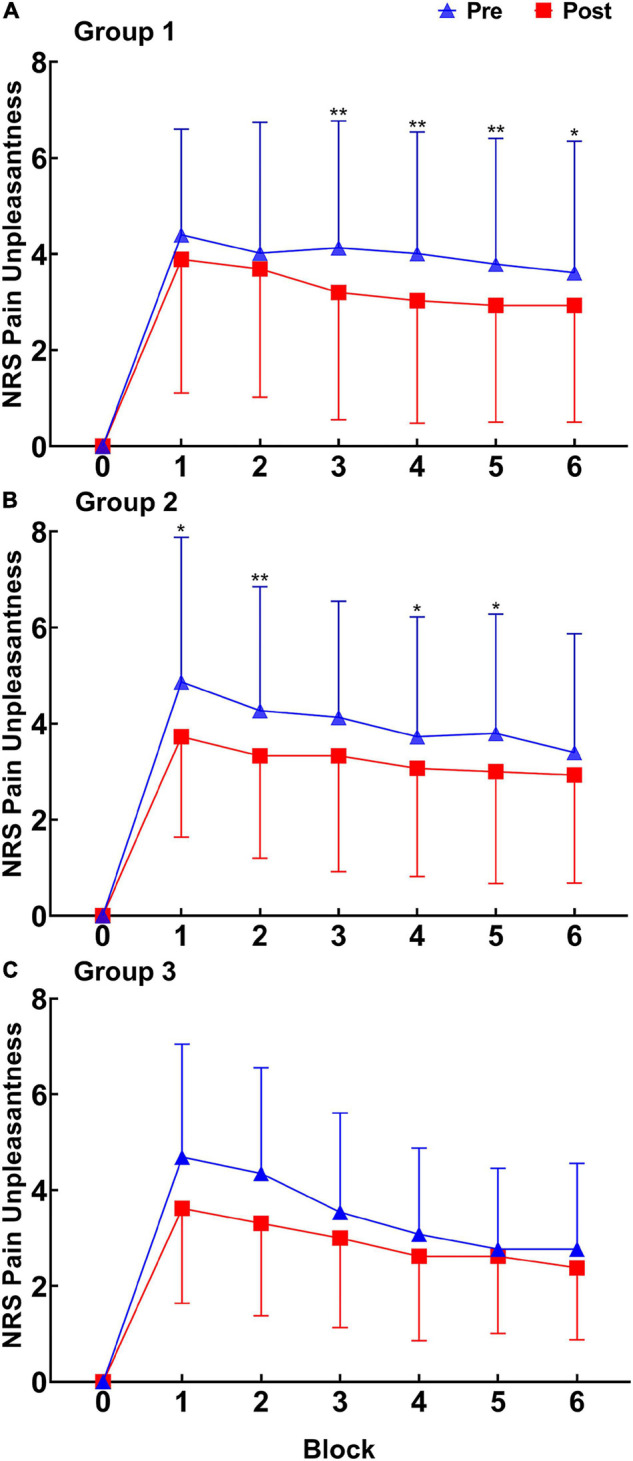
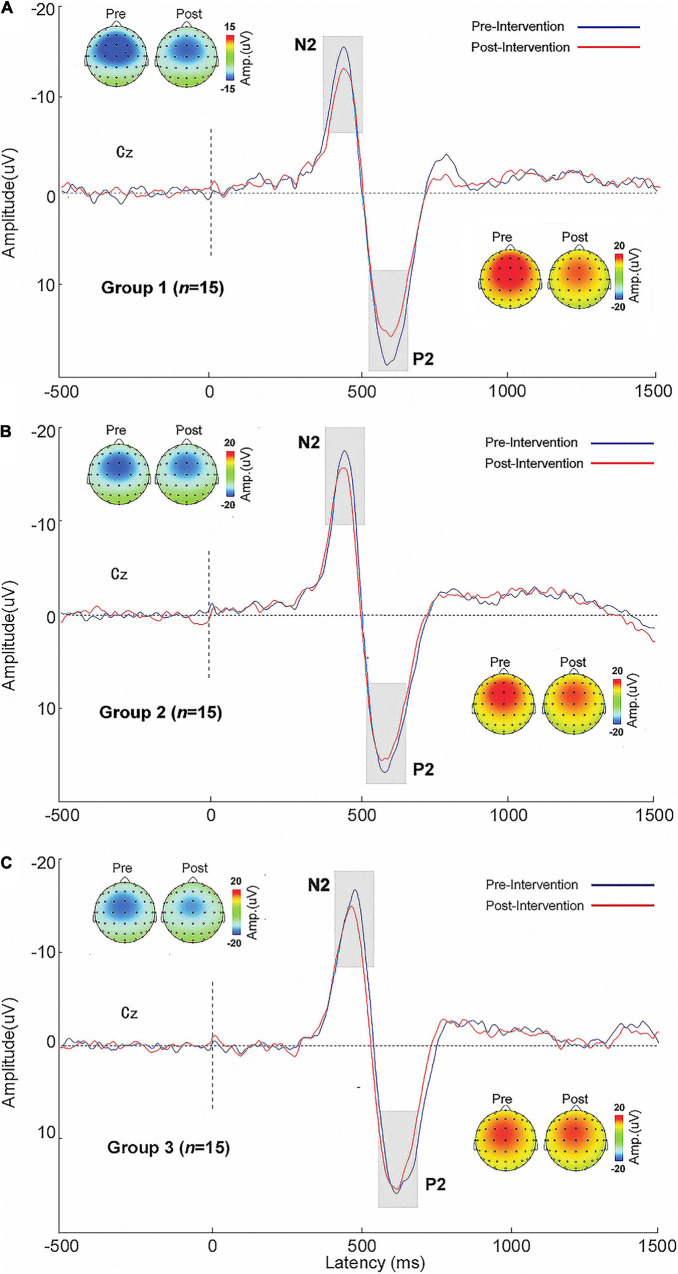
In this study, electroencephalography (EEG) was utilized to explore the neurophysiological mechanisms of aerobic exercise-induced hypoalgesia (EIH) and provide a theoretical basis for the application of aerobic exercise in pain assessment and treatment. Forty-five healthy subjects were randomly divided into moderate-intensity aerobic exercise [70% heart rate reserve (HRR)], low-intensity aerobic exercise (50% HRR), or control groups (sitting). Aerobic exercise was performed with cycling. Pressure pain threshold (PPT), heat pain threshold (HPT), event-related potential (ERP) induced by contact heat stimulus and pain scoring were measured before and after the intervention. We found that moderate-intensity aerobic exercise can increase the PPT (rectus femoris: = -2.71, = 0.017; tibialis anterior muscle: = -2.36, = 0.033) and HPT (tibialis anterior muscle: = -2.219, = 0.044) of proximal intervention sites rather than distal sites, and decreased pain scorings of contact heat stimulus. After moderate-intensity aerobic exercise, alpha oscillation power reflecting the central descending inhibitory function was enhanced ( = -2.31, < 0.05). Low-intensity aerobic exercise mainly reduced the pain unpleasantness rating (Block 1: = 2.415, = 0.030; Block 2: = 3.287, = 0.005; Block 4: = 2.646, = 0.019; Block 5: = 2.567, = 0.022). Aerobic exercise had an overall EIH effect. Its hypoalgesic effect was related to exercise intensity and affected by the site and type of pain stimulus. Moderate-intensity aerobic exercise effectively reduced the sensitivity to various painful stimuli, and low-intensity aerobic exercise selectively inhibited the negative emotional pain response. The hypoalgesic mechanism of aerobic exercise involves the enhancement of the central descending inhibitory function.
在本研究中,利用脑电图(EEG)来探究有氧运动诱导的痛觉减退(EIH)的神经生理机制,并为有氧运动在疼痛评估和治疗中的应用提供理论依据。45名健康受试者被随机分为中等强度有氧运动组[心率储备(HRR)的70%]、低强度有氧运动组(HRR的50%)或对照组(静坐)。通过骑自行车进行有氧运动。在干预前后测量压力痛阈(PPT)、热痛阈(HPT)、接触热刺激诱发的事件相关电位(ERP)以及疼痛评分。我们发现,中等强度有氧运动可提高近端干预部位而非远端部位的PPT(股直肌:t = -2.71,P = 0.017;胫骨前肌:t = -2.36,P = 0.033)和HPT(胫骨前肌:t = -2.219,P = 0.044),并降低接触热刺激的疼痛评分。中等强度有氧运动后,反映中枢下行抑制功能的α振荡功率增强(t = -2.31,P < 0.05)。低强度有氧运动主要降低了疼痛不适感评分(第1组:t = 2.415,P = 0.030;第2组:t = 3.287,P = 0.005;第4组:t = 2.646,P = 0.019;第5组:t = 2.567,P = 0.022)。有氧运动具有整体的EIH效应。其痛觉减退效应与运动强度有关,并受疼痛刺激部位和类型的影响。中等强度有氧运动有效降低了对各种疼痛刺激的敏感性,低强度有氧运动选择性地抑制了负面情绪性疼痛反应。有氧运动的痛觉减退机制涉及中枢下行抑制功能的增强。