Biomechanics Research Laboratory, School of Medicine, University of Wollongong, Wollongong, NSW 2522, Australia.
Research Institute for Sport and Exercise, Faculty of Health, University of Canberra, Canberra, ACT 2601, Australia.
J Sport Health Sci. 2020 Mar;9(2):140-148. doi: 10.1016/j.jshs.2019.05.003. Epub 2019 May 9.
This study investigated the effects of obesity on breast size, thoracic spine structure and function, upper torso musculoskeletal pain and physical activity participation in women living independently in the community.
A total of 378 women were divided into 3 groups (Not Overweight: body mass index (BMI) = 22.5 ± 0.2 kg/m (mean ± SE); Overweight: BMI = 27.4 ± 0.3 kg/m; Obese: BMI = 35.4 ± 0.3 kg/m). Outcome variables of breast volume (mL), thoracic flexion torque (N·m), thoracic kyphosis (degrees), upper torso musculoskeletal pain (score) and time spent in physical activity (min) were calculated and compared among the 3 groups, adjusting for between-group differences in age.
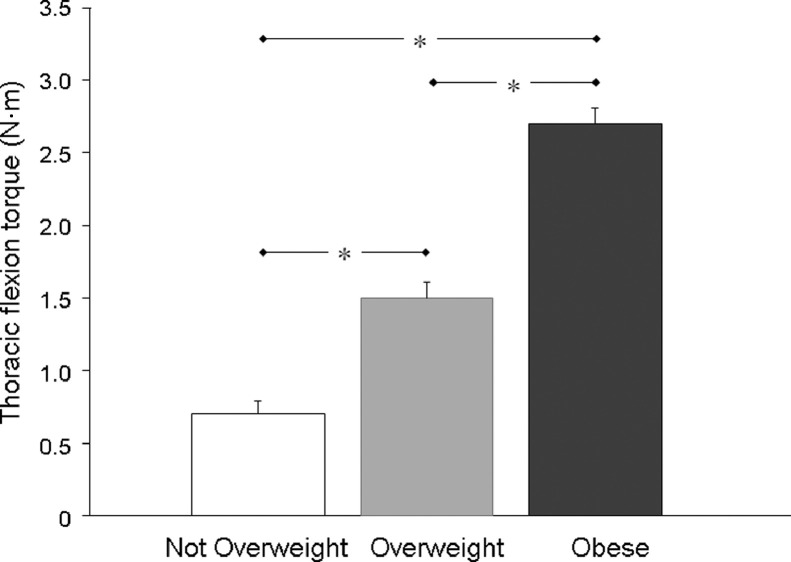
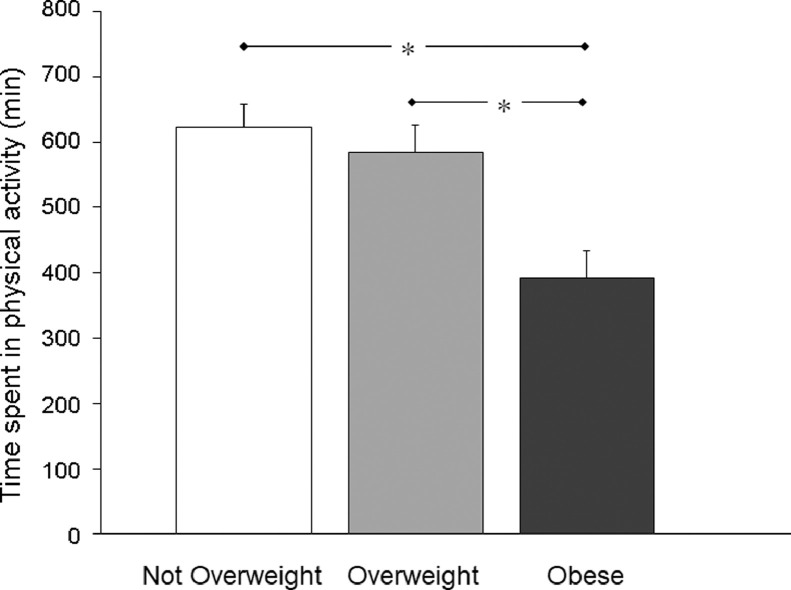
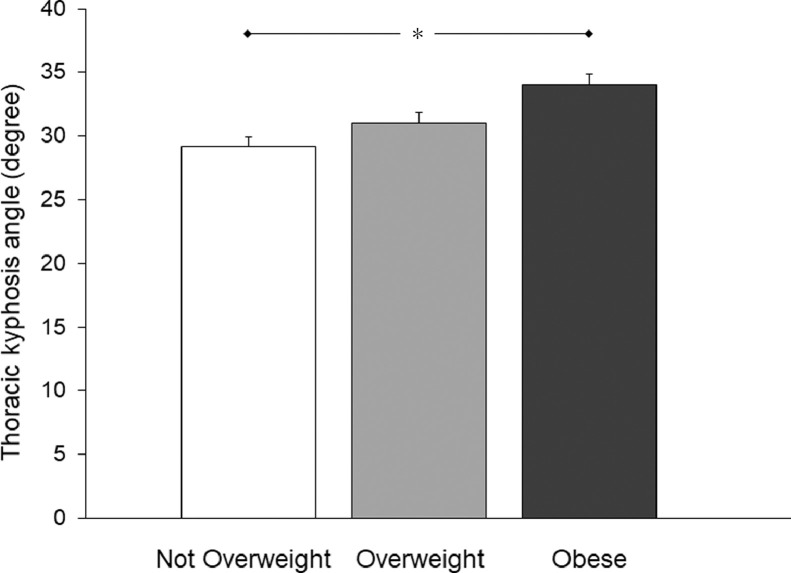
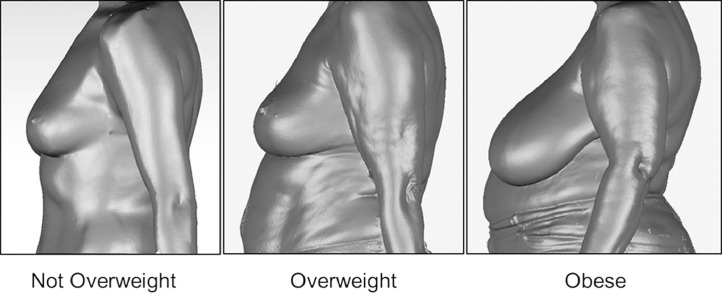
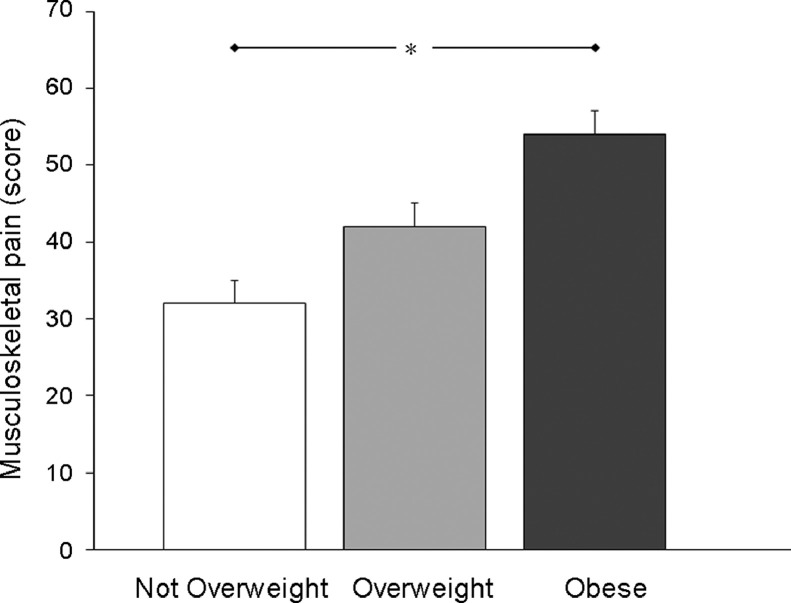
There was a significant main effect of BMI on all outcome variables. Participants classified as Obese displayed significantly larger breasts, had greater thoracic flexion torques and reported less time participating in physical activity relative to the participants who were classified as Not Overweight and Overweight. Participants in the Obese group also displayed significantly more thoracic kyphosis and reported significantly more upper torso musculoskeletal pain compared to their counterparts who were classified as Not Overweight.
This study is the first to demonstrate that increased obesity levels were associated with compromised kyphosis and loading of the thoracic spine, as well as increased symptoms of upper torso musculoskeletal pain and reduced time spent in physical activity in women living in the community. We recommend further research to determine whether evidence-based interventions designed to reduce the flexion torque generated on the thoracic spine can improve these symptoms of upper torso musculoskeletal pain and the ability of women with obesity to participate in physical activity.
本研究旨在调查肥胖对女性乳房大小、胸脊柱结构和功能、上躯干肌肉骨骼疼痛以及社区中独立生活的女性身体活动参与度的影响。
共有 378 名女性被分为 3 组(非超重:身体质量指数(BMI)=22.5±0.2kg/m²(平均值±SE);超重:BMI=27.4±0.3kg/m²;肥胖:BMI=35.4±0.3kg/m²)。计算并比较了乳房体积(mL)、胸脊柱前屈力矩(N·m)、胸脊柱后凸(度)、上躯干肌肉骨骼疼痛(评分)和身体活动时间(min)等结果变量,调整了组间年龄差异。
BMI 对所有结果变量均有显著的主效应。与非超重和超重组相比,肥胖组的乳房更大,胸脊柱前屈力矩更大,身体活动参与时间更少。与非超重组相比,肥胖组的胸脊柱后凸程度更大,上躯干肌肉骨骼疼痛更明显。
本研究首次表明,肥胖程度的增加与胸脊柱后凸和负荷的降低、上躯干肌肉骨骼疼痛症状的增加以及社区中肥胖女性身体活动时间的减少有关。我们建议进一步研究,以确定旨在减少胸脊柱前屈力矩的循证干预措施是否可以改善这些上躯干肌肉骨骼疼痛症状和肥胖女性的身体活动参与能力。