Cimenser Aylin, Hempel Evan, Travers Taylor, Strozewski Nathan, Martin Karen, Malchano Zach, Hajós Mihály
Cognito Therapeutics, Inc., Cambridge, MA, United States.
Department of Comparative Medicine, Yale University School of Medicine, New Haven, CT, United States.
Front Syst Neurosci. 2021 Sep 24;15:746859. doi: 10.3389/fnsys.2021.746859. eCollection 2021.
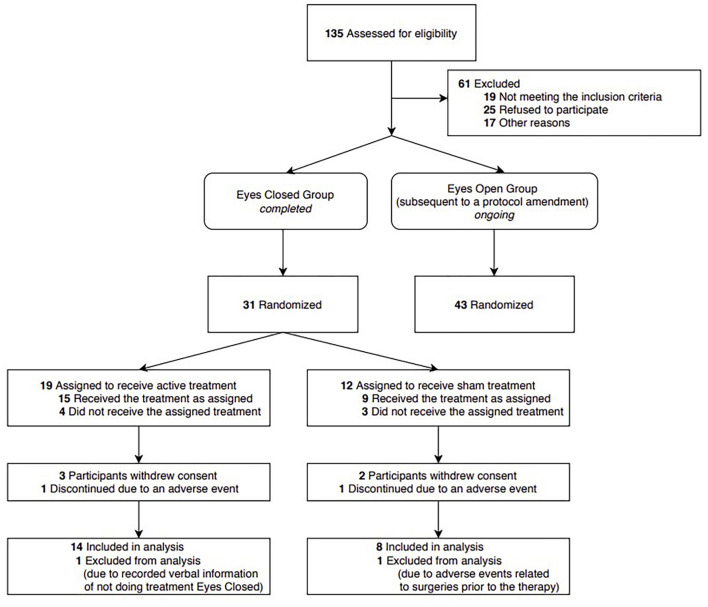
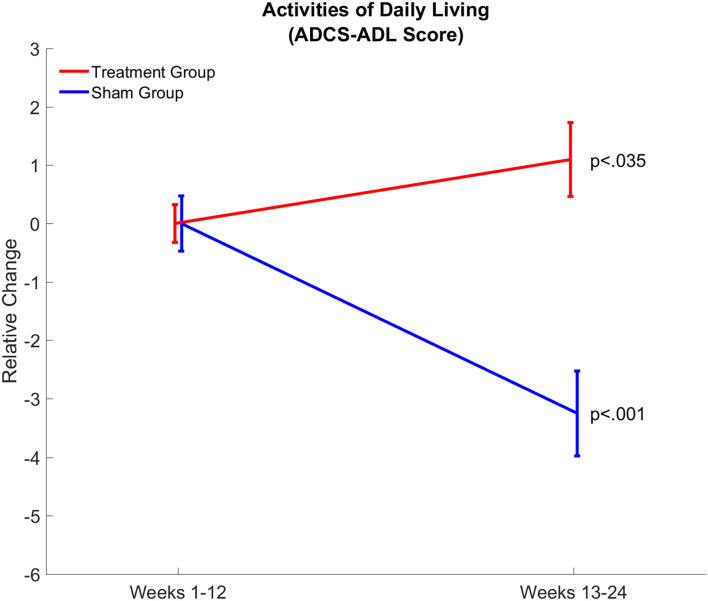
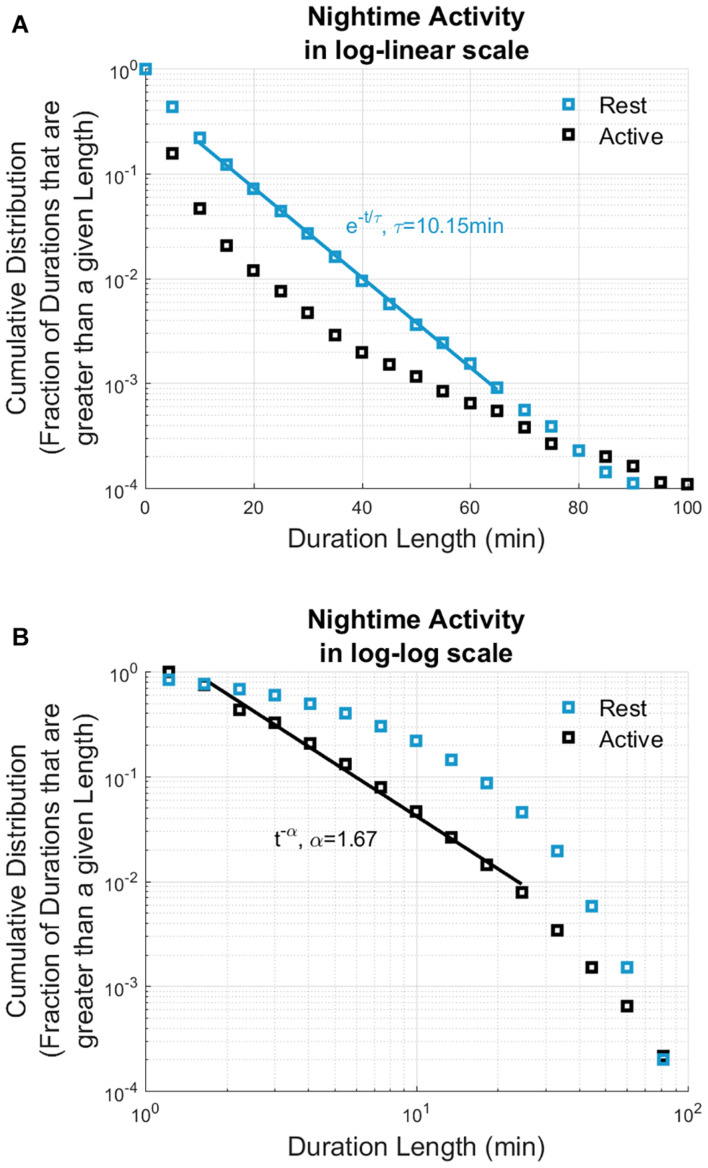
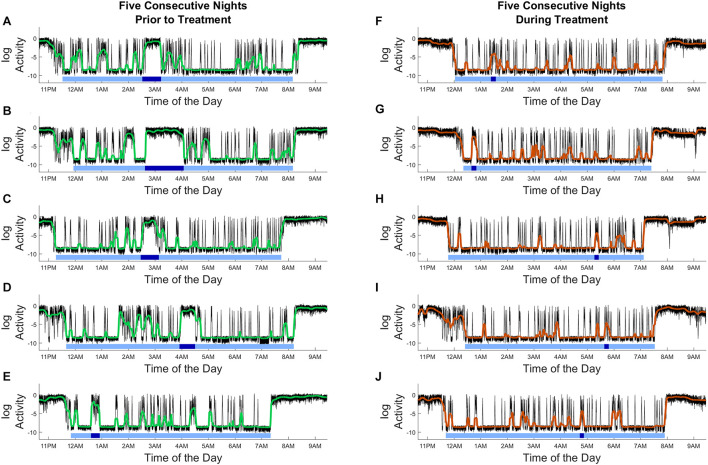
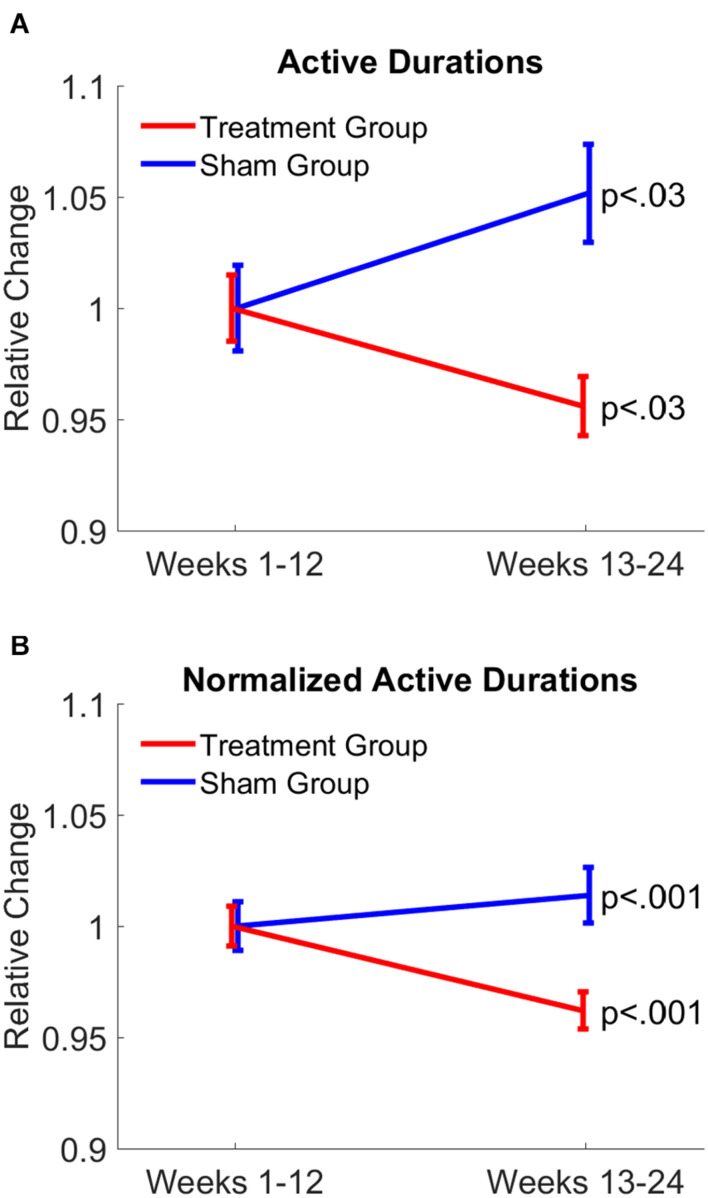
Pathological proteins contributing to Alzheimer's disease (AD) are known to disrupt normal neuronal functions in the brain, leading to unbalanced neuronal excitatory-inhibitory tone, distorted neuronal synchrony, and network oscillations. However, it has been proposed that abnormalities in neuronal activity directly contribute to the pathogenesis of the disease, and in fact it has been demonstrated that induction of synchronized 40 Hz gamma oscillation of neuronal networks by sensory stimulation reverses AD-related pathological markers in transgenic mice carrying AD-related human pathological genes. Based on these findings, the current study evaluated whether non-invasive sensory stimulation inducing cortical 40 Hz gamma oscillation is clinically beneficial for AD patients. Patients with mild to moderate AD ( = 22) were randomized to active treatment group ( = 14; gamma sensory stimulation therapy) or to sham group ( = 8). Participants in the active treatment group received precisely timed, 40 Hz visual and auditory stimulations during eye-closed condition to induce cortical 40 Hz steady-state oscillations in 1-h daily sessions over a 6-month period. Participants in the sham group were exposed to similar sensory stimulation designed to not evoke cortical 40 Hz steady-state oscillations that are observed in the active treatment patients. During the trial, nighttime activities of the patients were monitored with continuous actigraphy recordings, and their functional abilities were measured by Alzheimer's Disease Cooperative Study - Activities of Daily Living (ADCS-ADL) scale. Results of this study demonstrated that 1-h daily therapy was well tolerated throughout the 6-month treatment period by all subjects. Patients receiving gamma sensory stimulation showed significantly reduced nighttime active periods, in contrast, to deterioration in sleep quality in sham group patients. Patients in the sham group also showed the expected, significant decline in ADCS-ADL scores, whereas patients in the gamma sensory stimulation group fully maintained their functional abilities over the 6-month period. These findings confirm the safe application of 40 Hz sensory stimulation in AD patients and demonstrate a high adherence to daily treatment. Furthermore, this is the first time that beneficial clinical effects of the therapy are reported, justifying expanded and longer trials to explore additional clinical benefits and disease-modifying properties of gamma sensory stimulation therapy. clinicaltrials.gov, identifier: NCT03556280.
已知导致阿尔茨海默病(AD)的病理性蛋白质会破坏大脑中正常的神经元功能,导致神经元兴奋-抑制平衡失调、神经元同步性扭曲以及网络振荡异常。然而,有人提出神经元活动异常直接促成了该疾病的发病机制,事实上,已经证明通过感觉刺激诱导神经元网络同步的40赫兹伽马振荡可逆转携带AD相关人类病理基因的转基因小鼠中与AD相关的病理标志物。基于这些发现,当前研究评估了诱导皮层40赫兹伽马振荡的非侵入性感觉刺激对AD患者是否具有临床益处。将轻度至中度AD患者(n = 22)随机分为积极治疗组(n = 14;伽马感觉刺激疗法)或假治疗组(n = 8)。积极治疗组的参与者在闭眼状态下接受精确计时的40赫兹视觉和听觉刺激,以在6个月期间每天进行1小时的疗程中诱导皮层40赫兹稳态振荡。假治疗组的参与者接受类似的感觉刺激,但其设计目的是不诱发在积极治疗患者中观察到的皮层40赫兹稳态振荡。在试验期间,通过连续的活动记录监测患者的夜间活动,并通过阿尔茨海默病协作研究 - 日常生活活动(ADCS-ADL)量表测量他们的功能能力。这项研究的结果表明,所有受试者在整个6个月的治疗期间对每天1小时的治疗耐受性良好。接受伽马感觉刺激的患者夜间活跃期显著减少,相比之下,假治疗组患者的睡眠质量恶化。假治疗组的患者在ADCS-ADL评分上也出现了预期的显著下降,而伽马感觉刺激组的患者在6个月期间完全保持了他们的功能能力。这些发现证实了40赫兹感觉刺激在AD患者中的安全应用,并表明对每日治疗的高度依从性。此外,这是首次报道该疗法的有益临床效果,证明有必要进行扩展和更长时间的试验,以探索伽马感觉刺激疗法的更多临床益处和疾病修饰特性。 clinicaltrials.gov,标识符:NCT03556280。