Hernández-Bule María Luisa, Martínez María Antonia, Trillo María Ángeles, Martínez Lidia, Toledano-Macías Elena, Úbeda Alejandro
Bioelectromagnetism-Research Service, Ramón y Cajal University Hospital, IRYCIS, Madrid 28034, Spain.
Oncol Lett. 2021 Nov;22(5):807. doi: 10.3892/ol.2021.13068. Epub 2021 Sep 23.
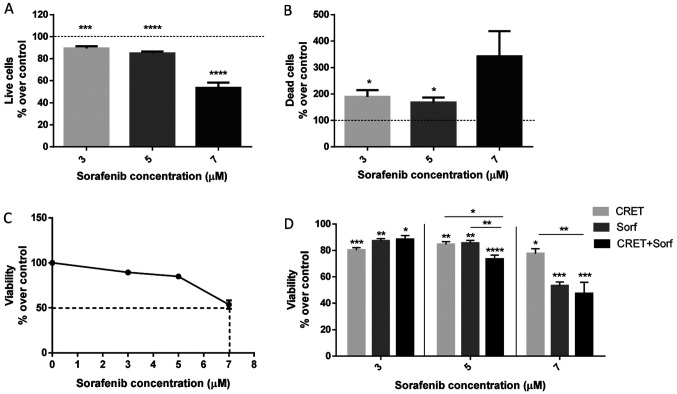
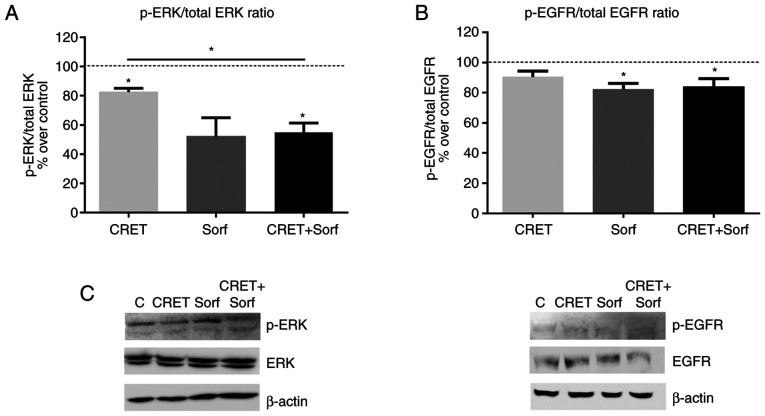
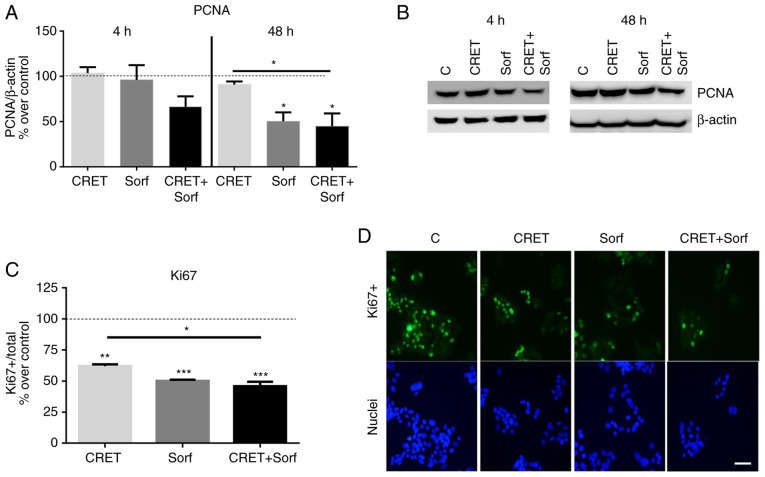
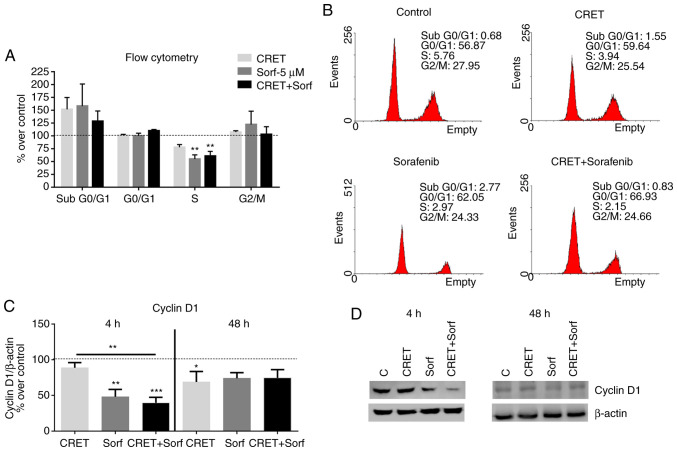
Due to their alleged analgesic, anti-inflammatory and tissue regenerative effects, capacitive-resistive electrothermal therapy (CRET), which is based on non-invasive exposure to radiofrequency (RF) currents, is often applied to chemotherapeutically treated patients with cancer. Our previous studies have demonstrated that subthermal CRET currents can elicit a number of cell responses, including anti-proliferative effects, in the human liver cancer cell line HepG2. Such effects involve significant changes in the regulation of proteins involved in MAPK signaling pathways, which are also implicated in the cancer cell response to standard anticancer drugs such as sorafenib. This overlap in response pathways may lead to competitive, neutralizing or blocking interactions between the electrical and chemical treatments, thus raising questions on the advisability of CRET treatment for their analgesic, anti-inflammatory or other purposes in patients undergoing chemotherapy. The present study analyzed the effects of simultaneous treatment with sorafenib and 448-kHz, subthermal CRET current on the proliferation and viability of HepG2 cell cultures. Cell viability was assessed through Trypan blue or XTT assays, while flow cytometry was applied for cell cycle and apoptosis analysis. The expression of proteins involved in cell proliferation were assessed by immunoblotting and immunofluorescence. The results revealed no evidence to suggest that the electrical treatment counteracted or neutralized the cellular response to sorafenib at the different conditions evaluated. Furthermore, at the standard pharmacological sorafenib concentration, 5 µM, the combined treatment elicited an anti-proliferative response significantly stronger than that induced by each of the treatments when applied separately in HepG2 cells. These data do not support the hypothesis that CRET exposure may inhibit or diminish the effects of a chemotherapeutic drug used in cancer treatment, and highlights the requirement for further investigation into the cell response to the combined action of electrical and chemical treatments.
由于其所谓的镇痛、抗炎和组织再生作用,基于非侵入性暴露于射频(RF)电流的电容电阻电热疗法(CRET)经常应用于接受化疗的癌症患者。我们之前的研究表明,亚热CRET电流可在人肝癌细胞系HepG2中引发多种细胞反应,包括抗增殖作用。这些作用涉及丝裂原活化蛋白激酶(MAPK)信号通路中相关蛋白质调控的显著变化,而这些蛋白质也与癌细胞对索拉非尼等标准抗癌药物的反应有关。这种反应途径的重叠可能导致电疗和化疗之间产生竞争性、中和性或阻断性相互作用,从而引发关于CRET治疗用于化疗患者镇痛、抗炎或其他目的是否明智的疑问。本研究分析了索拉非尼与448 kHz亚热CRET电流同时治疗对HepG2细胞培养物增殖和活力的影响。通过台盼蓝或XTT试验评估细胞活力,同时应用流式细胞术进行细胞周期和凋亡分析。通过免疫印迹和免疫荧光评估参与细胞增殖的蛋白质表达。结果显示,在所评估的不同条件下,没有证据表明电疗会抵消或中和细胞对索拉非尼的反应。此外,在标准药理学索拉非尼浓度5 μM时,联合治疗在HepG2细胞中引发的抗增殖反应明显强于单独应用每种治疗时所诱导的反应。这些数据不支持CRET暴露可能抑制或减弱癌症治疗中使用的化疗药物效果这一假设,并强调需要进一步研究细胞对电疗和化疗联合作用的反应。