Burch Sarah, Di Bella Jose
University of Waterloo, Waterloo, Canada.
Sustain Sci. 2021;16(6):1963-1976. doi: 10.1007/s11625-021-01037-3. Epub 2021 Oct 5.
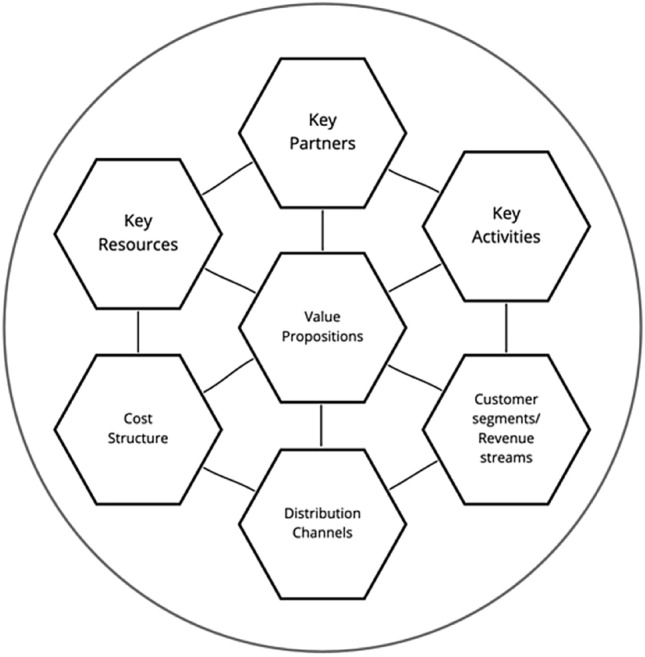
The rapid pace and escalating severity of climate change impacts have made clear that current incremental approaches to pressing global socio-ecological challenges are insufficient to address the root causes of unsustainable development. This has spurred increasing interest in the dynamics of transformation: the actors, capacities and resources needed to fundamentally shift development paths. The private sector is at the core of essential transformative processes necessary to build a future premised on environmental integrity, social inclusivity, and resilience. The activities of the private sector are structured and driven by their underlying business model, which is at its core a set of assumptions about how a business creates, extracts and delivers value. Dominant conceptualizations of the business model remain a narrow imagining of how business interacts with societal processes and shape development patterns. In this article we call for the conceptualization and design of business models anchored in societal purpose and operating within planetary boundaries, apt for the Anthropocene. We identify five building blocks for business models where transdisciplinary sustainability research can accelerate entrepreneurial activity that fosters desirable sustainable pathways by enabling the creation of new capabilities in support of broader transformational processes. This article seeks to inform (and potentially re-orient the efforts of) transdisciplinary scholars engaging the private sector in the co-production of community-based sustainability and resilience-building initiatives. Likewise, the building blocks provide a guide for businesses who aim to deepen their capacity to build new partnerships, identify, and incorporate new information on climate risk into their operations and develop practices, sequences and procedures oriented toward the sustainable development goals and disaster resilience.
气候变化影响的快速步伐和不断升级的严重性已表明,当前应对紧迫全球社会生态挑战的渐进方法不足以解决不可持续发展的根本原因。这激发了人们对转型动态的日益浓厚兴趣:即从根本上转变发展道路所需的行为主体、能力和资源。私营部门处于构建一个基于环境完整性、社会包容性和复原力的未来所必需的关键转型进程的核心。私营部门的活动由其基础商业模式构建并驱动,该商业模式的核心是关于企业如何创造、提取和交付价值的一系列假设。商业模式的主流概念化仍然是对企业如何与社会进程互动并塑造发展模式的狭隘设想。在本文中,我们呼吁对基于社会目的并在地球边界内运作、适用于人类世的商业模式进行概念化和设计。我们确定了商业模式的五个构建要素,跨学科可持续性研究可以通过支持更广泛的转型进程创造新能力,加速促进理想可持续路径的创业活动。本文旨在为跨学科研究人员提供参考(并可能重新引导其努力方向),这些研究人员让私营部门参与基于社区的可持续性和复原力建设倡议的共同生产。同样,这些构建要素为那些旨在深化建立新伙伴关系的能力、识别并将有关气候风险的新信息纳入其运营,以及制定面向可持续发展目标和灾害复原力的实践、顺序和程序的企业提供了指导。