Hunan Key Laboratory of Grain-Oil Deep Process and Quality Control, Hunan Key Laboratory of Processed Food for Special Medical Purpose, Hunan Key Laboratory of Forestry Edible Resources Safety and Processing, National Engineering Laboratory for Deep Process of Rice and Byproducts, Central South University of Forestry and Technology, Changsha, Hunan 41004, China.
Department of Clinic Medicine, Xiangya School of Medicine, Central South University, Changsha 410008, China.
Oxid Med Cell Longev. 2021 Sep 29;2021:2637577. doi: 10.1155/2021/2637577. eCollection 2021.
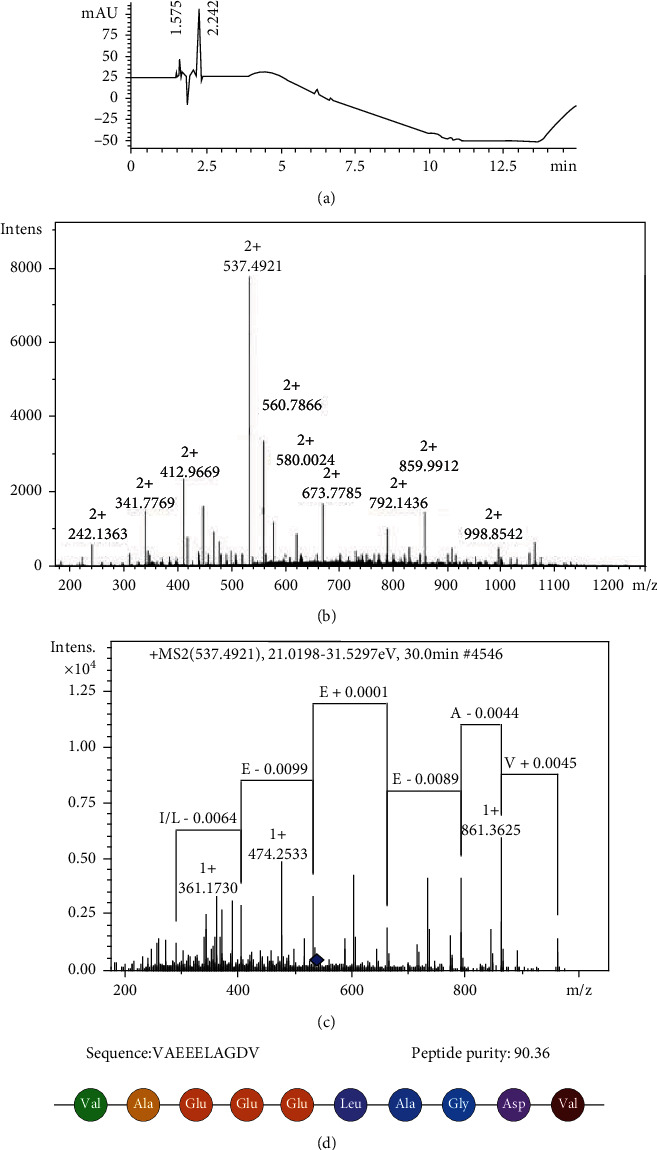
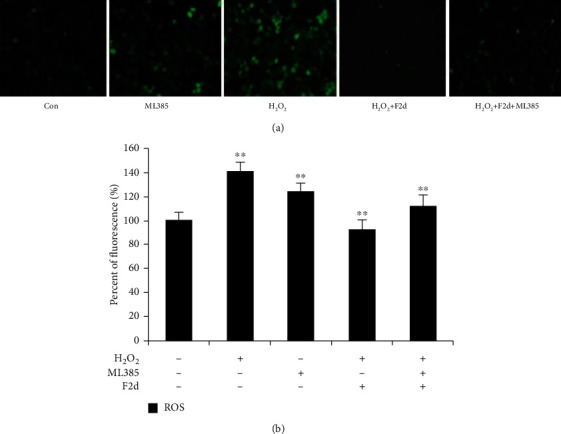
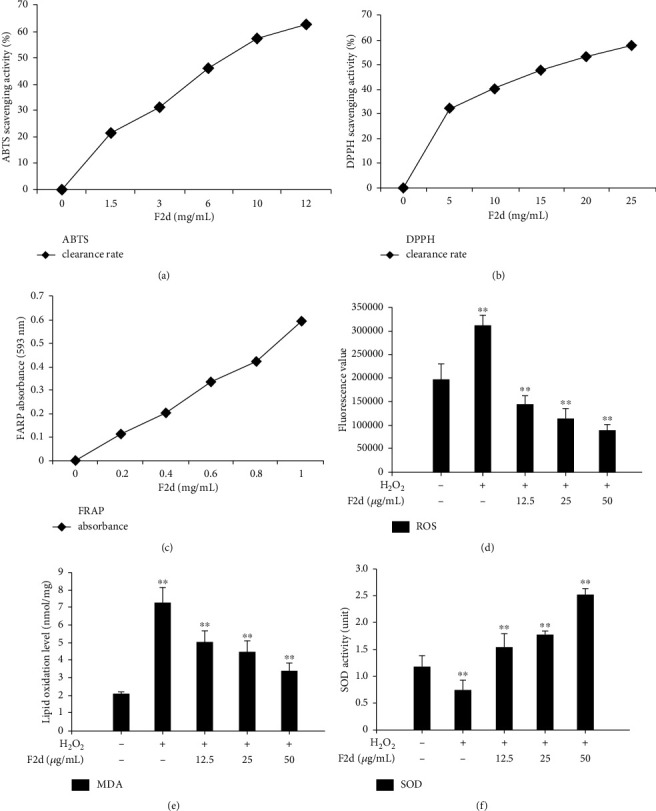
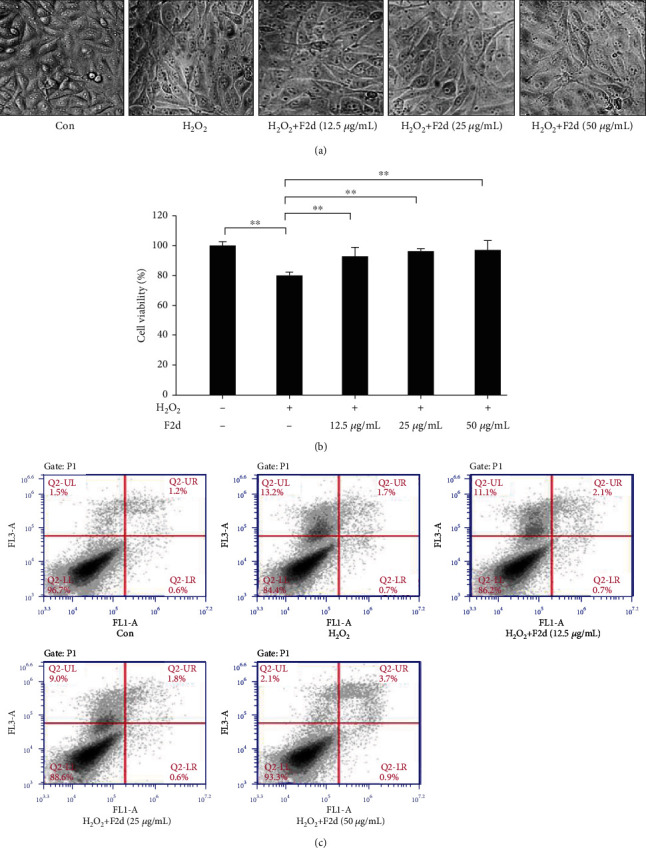
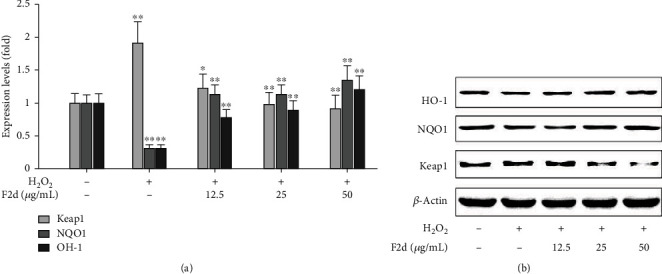
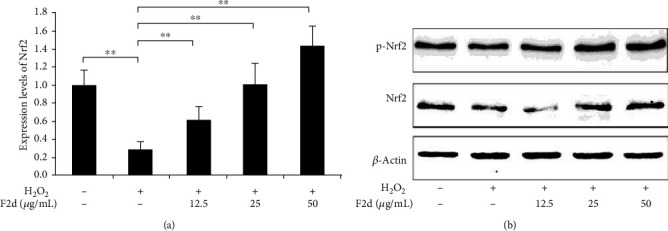
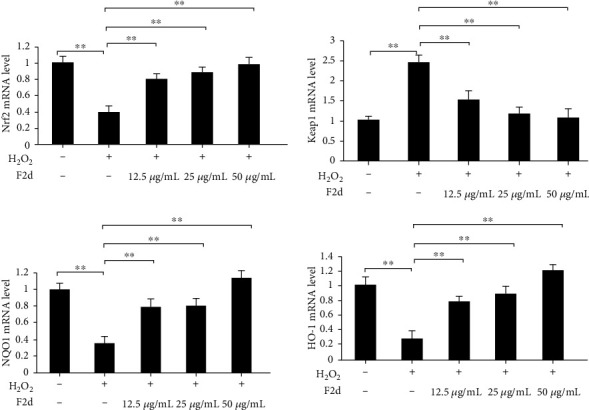
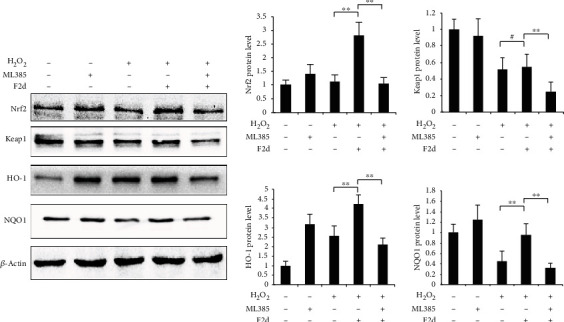
Studies have shown that the peroxidation caused by oxygen free radicals is an important reason of vascular endothelial dysfunction and multiple diseases. In this study, active peptides (F2ds) were isolated from the fermentation product of rice dregs and its antioxidant effects were approved. Human umbilical vein endothelial cells (HUVECs) stimulated by HO were used to evaluate the antioxidation effect and its molecular mechanism in the oxidative stress model. F2d protected HO-induced damage in HUVECs in a dosage-dependent manner. F2d can reduce the expression of Keap1, promote the expression of Nrf2, and activate the downstream target HO-1, NQO1, etc. It means F2d can modulate the Nrf2 signaling pathway. Using Nrf2 inhibitor ML385 to block the Nrf2 activation, the protective function of F2d is partially lost in the damage model. Our results indicated that F2d isolated from rice exerts antioxidant effects via the Nrf2 signaling pathway in HO-induced damage, and the work will benefit to develop functional foods.
研究表明,氧自由基引起的过氧化作用是血管内皮功能障碍和多种疾病的重要原因。本研究从米渣发酵产物中分离出活性肽(F2ds),并证实了其抗氧化作用。用 HO 刺激人脐静脉内皮细胞(HUVECs),在氧化应激模型中评价其抗氧化作用及其分子机制。F2d 以剂量依赖的方式保护 HUVECs 免受 HO 诱导的损伤。F2d 可以降低 Keap1 的表达,促进 Nrf2 的表达,并激活下游靶标 HO-1、NQO1 等。这意味着 F2d 可以调节 Nrf2 信号通路。使用 Nrf2 抑制剂 ML385 阻断 Nrf2 的激活,F2d 在损伤模型中的保护功能部分丧失。我们的结果表明,从米渣中分离出的 F2d 通过 HO 诱导损伤的 Nrf2 信号通路发挥抗氧化作用,这项工作将有助于开发功能性食品。