Han Shuyu, Pei Yaolin, Zhao Rui, Hu Yan, Zhang Lin, Qi Xiang, Zhu Zheng, Sun Wenxiu, Wu Bei
School of Nursing, Fudan University, Shanghai, China.
Rory Meyers College of Nursing, New York University, New York, USA.
Int J Nurs Sci. 2021 Jul 20;8(4):370-379. doi: 10.1016/j.ijnss.2021.07.002. eCollection 2021 Oct 10.
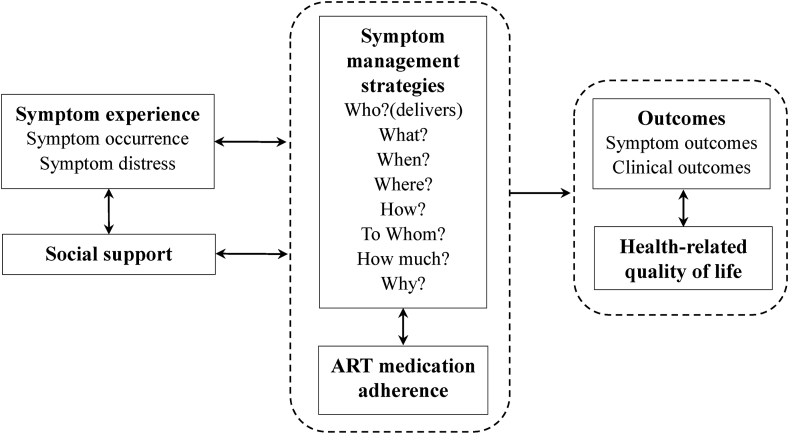
This study aims to evaluate the effects of a symptom management intervention (SMI) based on symptom management group sessions combined with a mobile health (mHealth) application (app) on the knowledge of symptom management, the certainty of symptom self-management, symptom severity, symptom distress, medication adherence, social support, and quality of life among persons living with HIV (PLWH) in China.
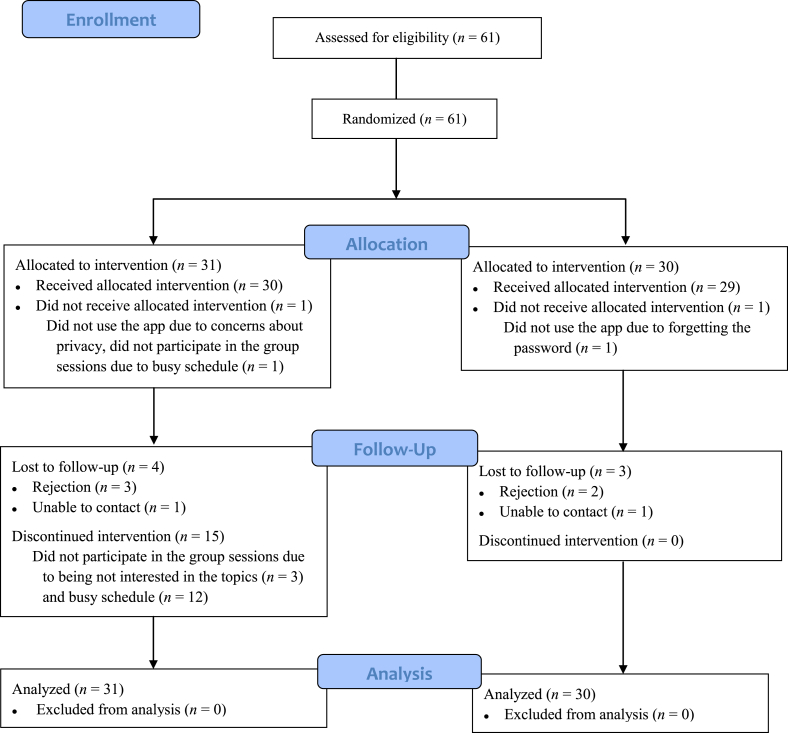
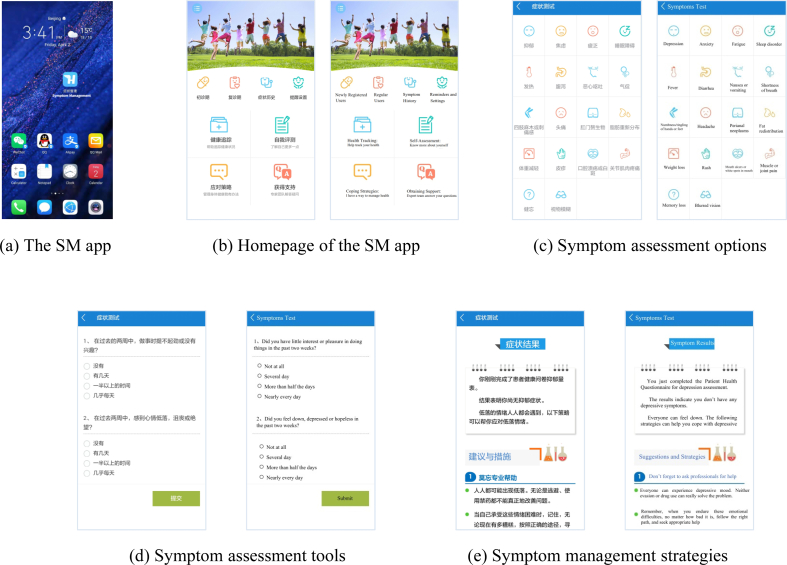
A parallel randomized controlled trial with 61 PLWH was conducted in Shanghai, China. The participants in the control group ( = 30) downloaded the Symptom Management (SM) app according to their needs and preferences, and received routine follow-ups. The participants in the intervention group ( = 31) were guided to download and use the SM app, and received four tailored weekly group sessions at routine follow-ups. Each group session lasted for approximately 2 h and targeted one of the major modules of the SM app. All the outcomes were assessed at baseline and post-intervention. The study was registered with the Chinese Clinical Trial Registry (ChiCTR1900024821).
The symptom management knowledge and certainty of symptom self-management were significantly improved after the intervention (all < 0.01). Compared with the control group, the scores of symptoms reasons knowledge score improved 11.47 points (95% CI: 3.41, 19.53) and scores of symptoms self-management knowledge score improved 12.80 points (95% CI: 4.55, 21.05) in the intervention group after controlling for covariates. However, other outcomes did not show statistically significant differences between the intervention group and the control group ( > 0.05).
The SMI could improve PLWH's symptom management knowledge and certainty of symptom self-management. Multi-center studies with larger sample sizes and longer follow-ups are needed to further understand the effects of SM app on ameliorating symptom severity and symptom distress. More innovative strategies are also needed to promote and maintain the sustainability of the SM app.
本研究旨在评估基于症状管理小组会议并结合移动健康(mHealth)应用程序(app)的症状管理干预(SMI)对中国艾滋病病毒感染者(PLWH)的症状管理知识、症状自我管理的确定性、症状严重程度、症状困扰、药物依从性、社会支持和生活质量的影响。
在中国上海对61名PLWH进行了一项平行随机对照试验。对照组(n = 30)的参与者根据自身需求和偏好下载了症状管理(SM)应用程序,并接受常规随访。干预组(n = 31)的参与者被指导下载并使用SM应用程序,并在常规随访中接受为期四周的量身定制的小组会议。每次小组会议持续约2小时,针对SM应用程序的一个主要模块。所有结局指标在基线和干预后进行评估。该研究已在中国临床试验注册中心注册(ChiCTR1900024821)。
干预后症状管理知识和症状自我管理的确定性显著提高(均P < 0.01)。在控制协变量后,与对照组相比,干预组的症状原因知识得分提高了11.47分(95%CI:3.41,19.53),症状自我管理知识得分提高了12.80分(95%CI:4.55,21.05)。然而,干预组和对照组之间的其他结局指标没有显示出统计学上的显著差异(P > 0.05)。
SMI可以提高PLWH的症状管理知识和症状自我管理的确定性。需要进行更大样本量和更长随访时间的多中心研究,以进一步了解SM应用程序对改善症状严重程度和症状困扰的影响。还需要更多创新策略来促进和维持SM应用程序的可持续性。