Majorca Primary Care Department, Calviá Primary Health Center, Balearic Islands, Spain.
Health Research Institute of the Balearic Islands (IdISBa), Balearic Islands, Spain.
Eur J Gen Pract. 2021 Dec;27(1):286-293. doi: 10.1080/13814788.2021.1960308.
Although insomnia is a very common disorder, few people seek medical help.
To determine the proportion of people who consult a healthcare professional about insomnia and examine reasons for help seeking.
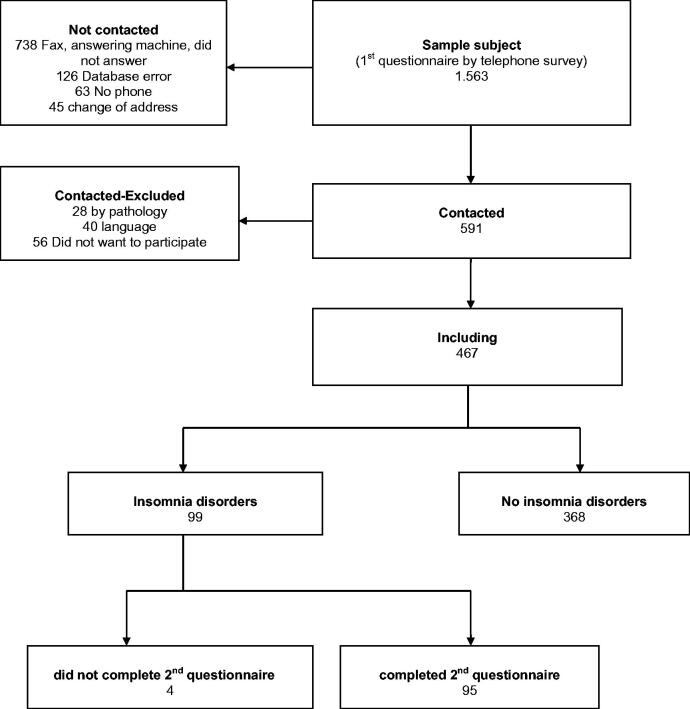
Descriptive study of 99 patients diagnosed with insomnia following a telephone survey of 466 adults assigned to a primary healthcare unit in Majorca (Spain). Data were obtained from interviews and subsequent review of electronic medical records.
Thirty-nine patients (39.8%) consulted at least once with one health care professional; 36(92.2%) consulted a general practitioner. Only 12.2% had an insomnia diagnosis registered in their medical record. Insomnia consultation was not associated with any sociodemographic variables analysed, anxiety, depression or comorbidities. Also, there was no association with sleep quality, duration, and sleep efficiency. Patients with clinical insomnia (OR, 2.48; 95% CI, 1.03-5.94), those who were more worried (OR, 2.93; 95% CI 1.08-7.95) or felt that others noticed the impact of insomnia on their quality of life (OR, 2.48; 95% CI, 1.02-19.08) are more likely to seek medical help. Patients taking sleep medication were 21.54 (95% CI, 7.34-63.20) times more likely to have asked for medical assistance.
Insomnia is an under-reported problem for both patients and doctors. When patients decide to consult for insomnia problems, they first go to the GP, and the vast majority take medications for their sleep problem. Those who consult most are people with more severe insomnia and those who are more worried.
尽管失眠是一种非常常见的疾病,但很少有人寻求医疗帮助。
确定寻求医疗专业人员帮助治疗失眠的人群比例,并探讨寻求帮助的原因。
对 466 名分配到马略卡岛(西班牙)的初级保健单位的成年人进行电话调查后,对 99 名被诊断为失眠的患者进行描述性研究。数据来自访谈和随后对电子病历的审查。
39 名患者(39.8%)至少咨询过一次医疗保健专业人员;36 名患者(92.2%)咨询了全科医生。只有 12.2%的患者在病历中记录了失眠诊断。失眠咨询与分析的任何社会人口变量、焦虑、抑郁或合并症无关。此外,与睡眠质量、持续时间和睡眠效率也没有关联。有临床失眠的患者(OR,2.48;95%CI,1.03-5.94)、更担心的患者(OR,2.93;95%CI,1.08-7.95)或认为他人注意到失眠对其生活质量的影响的患者(OR,2.48;95%CI,1.02-19.08)更有可能寻求医疗帮助。服用睡眠药物的患者(OR,21.54;95%CI,7.34-63.20)更有可能寻求医疗帮助。
失眠对患者和医生来说都是一个报告不足的问题。当患者决定因失眠问题咨询时,他们首先会去看全科医生,绝大多数人会服用药物来解决睡眠问题。那些咨询最多的人是失眠更严重和更担心的人。