Good Heart Clinic, Tainan, Taiwan.
Kang-Ming Senior High School, Tainan, Taiwan.
J Mol Med (Berl). 2021 Dec;99(12):1815-1827. doi: 10.1007/s00109-021-02135-6. Epub 2021 Oct 11.
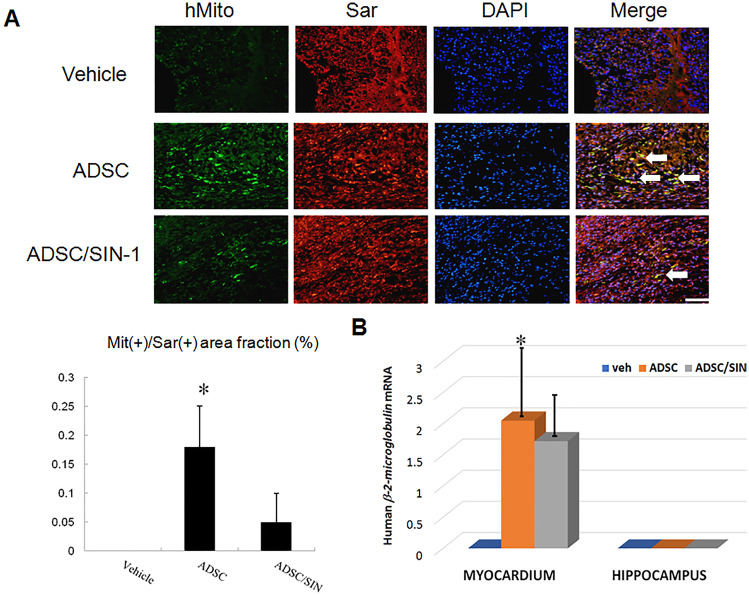
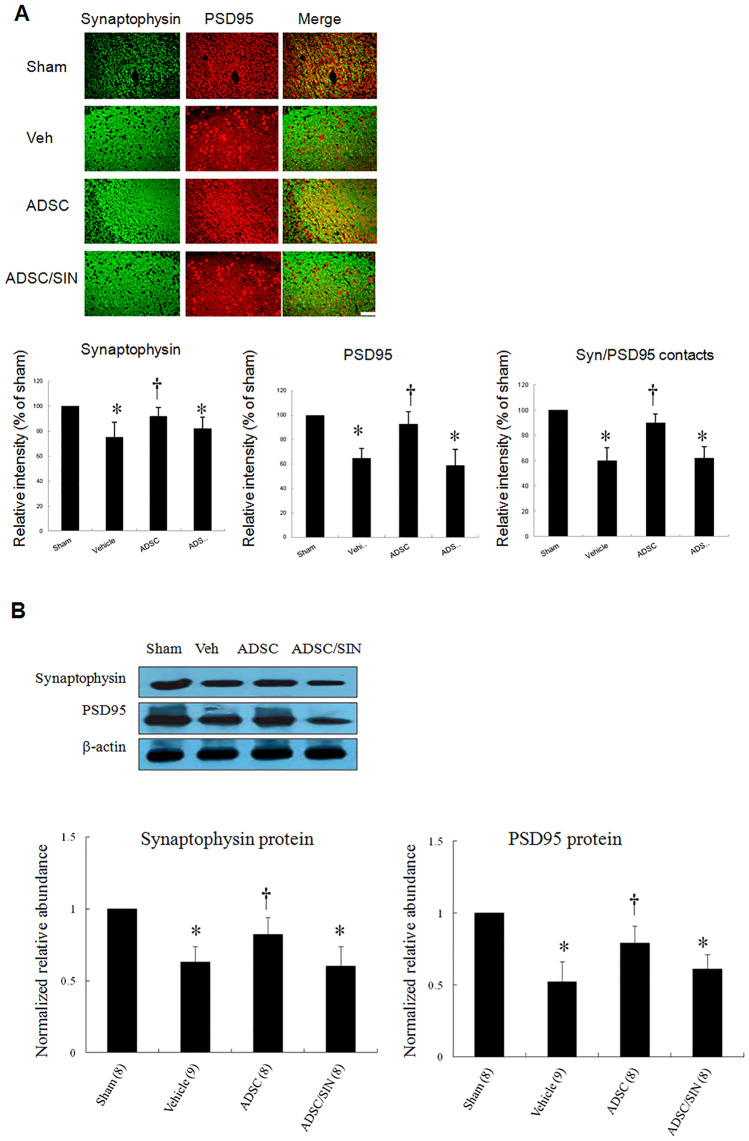
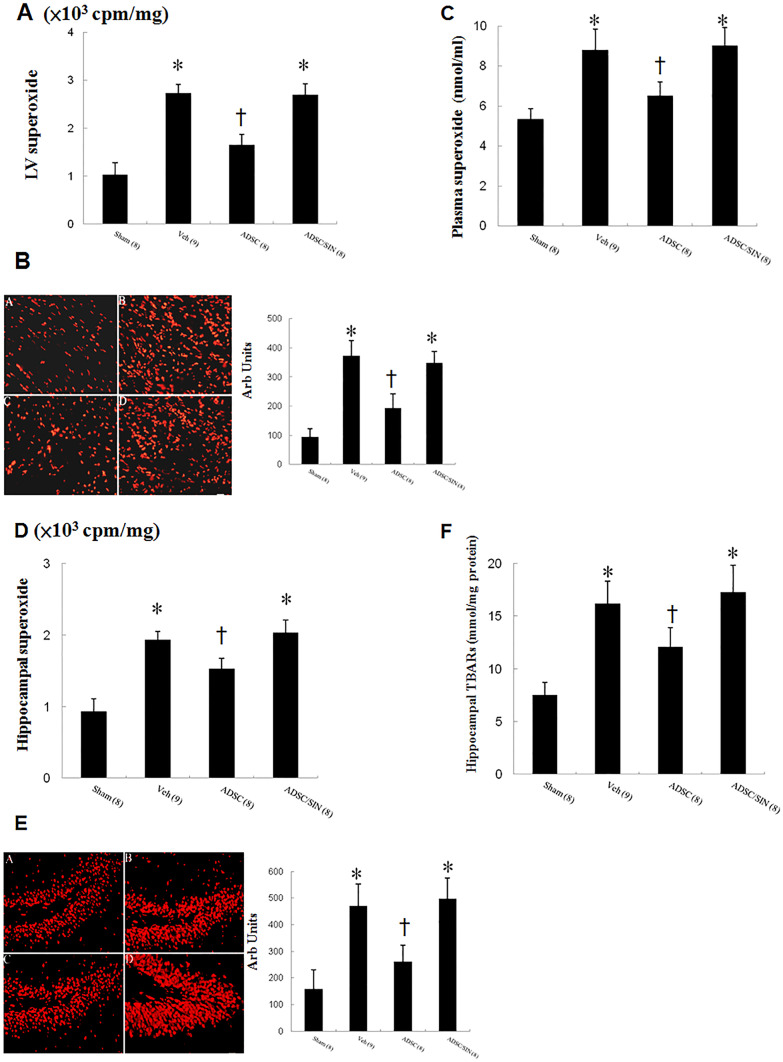
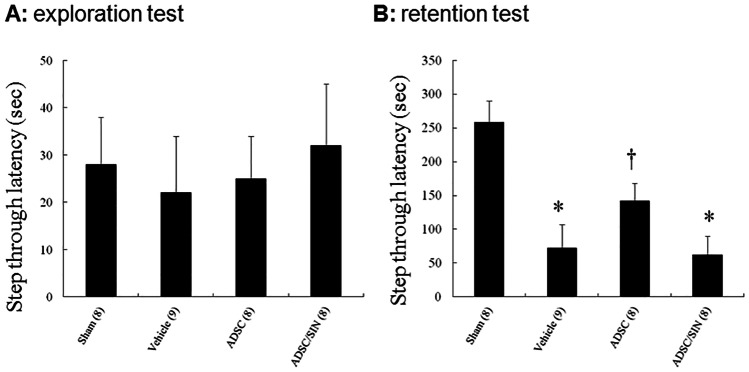
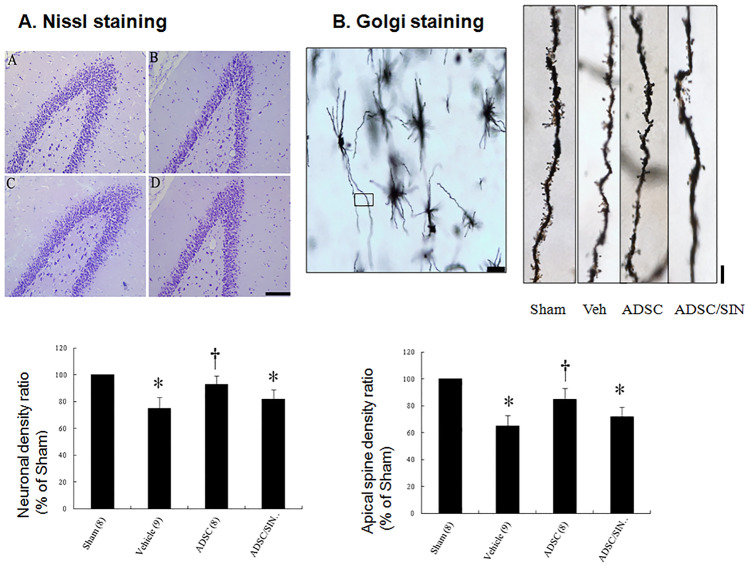
Cognitive impairment is a serious side effect of post-myocardial infarction (MI) course. We have recently demonstrated that human adipose-derived stem cells (hADSCs) ameliorated myocardial injury after MI by attenuating reactive oxygen species (ROS) levels. Here, we studied whether the beneficial effects of intramyocardial hADSC transplantation can extend to the brain and how they may attenuate cognitive dysfunction via modulating ROS after MI. After coronary ligation, male Wistar rats were randomized via an intramyocardial route to receive either vehicle, hADSC transplantation (1 × 10 cells), or the combination of hADSCs and 3-Morpholinosydnonimine (SIN-1, a peroxynitrite donor). Whether hADSCs migrated into the hippocampus was assessed by using human-specific primers in qPCR reactions. Passive avoidance test was used to assess cognitive performance. Postinfarction was associated with increased oxidative stress in the myocardium, circulation, and hippocampus. This was coupled with decreased numbers of dendritic spines as well as a significant downregulation of synaptic plasticity consisting of synaptophysin and PSD95. Step-through latency during passive avoidance test was impaired in vehicle-treated rats after MI. Intramyocardial hADSC injection exerted therapeutic benefits in improving cardiac function and cognitive impairment. None of hADSCs was detected in rat's hippocampus at the 3rd day after intramyocardial injection. The beneficial effects of hADSCs on MI-induced histological and cognitive changes were abolished after adding SIN-1. MI-induced ROS attacked the hippocampus to induce neurodegeneration, resulting in cognitive deficit. The remotely intramyocardial administration of hADSCs has the capacity of improved synaptic neuroplasticity in the hippocampus mediated by ROS, not the cell engraftment, after MI. KEY MESSAGES: Human adipose-derived stem cells (hADSCs) ameliorated injury after myocardial infarction by attenuating reactive oxygen species (ROS) levels. Intramyocardial administration of hADSCs remotely exerted therapeutic benefits in improving cognitive impairment after myocardial infarction. The improved synaptic neuroplasticity in the hippocampus was mediated by hADSC-inhibiting ROS, not by the stem cell engraftment.
认知障碍是心肌梗死后(MI)病程的严重副作用。我们最近证明,人脂肪源性干细胞(hADSCs)通过降低活性氧(ROS)水平改善 MI 后的心肌损伤。在这里,我们研究了心肌内 hADSC 移植的有益效果是否可以扩展到大脑,以及它们如何通过调节 MI 后 ROS 来减轻认知功能障碍。结扎冠状动脉后,雄性 Wistar 大鼠通过心肌内途径随机接受载体、hADSC 移植(1×10 个细胞)或 hADSCs 和 3-吗啉代-sydnonimine(SIN-1,过氧亚硝酸盐供体)的组合。通过 qPCR 反应中使用人特异性引物来评估 hADSCs 是否迁移到海马体。被动回避测试用于评估认知表现。梗死后心肌、循环和海马体的氧化应激增加。这伴随着树突棘数量的减少以及突触可塑性的显著下调,包括突触小体和 PSD95。MI 后,载体处理的大鼠在被动回避测试中的步出潜伏期受损。心肌内 hADSC 注射在改善心脏功能和认知障碍方面发挥了治疗作用。心肌内注射后第 3 天,大鼠海马体中未检测到任何 hADSCs。在添加 SIN-1 后,hADSCs 对 MI 诱导的组织学和认知变化的有益作用被消除。MI 诱导的 ROS 攻击海马体导致神经退行性变,从而导致认知缺陷。ROS 介导的、非细胞移植的、远程心肌内给予 hADSCs 具有改善 MI 后海马体突触神经可塑性的能力。