Division of Psychiatry, Royal Edinburgh Hospital, The University of Edinburgh, Edinburgh, UK.
Centre for Regenerative Medicine, Institute for Regeneration and Repair, The University of Edinburgh, Edinburgh, UK.
Addict Biol. 2022 Jan;27(1):e13100. doi: 10.1111/adb.13100. Epub 2021 Oct 12.
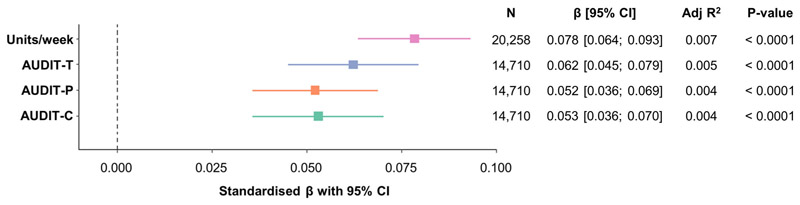
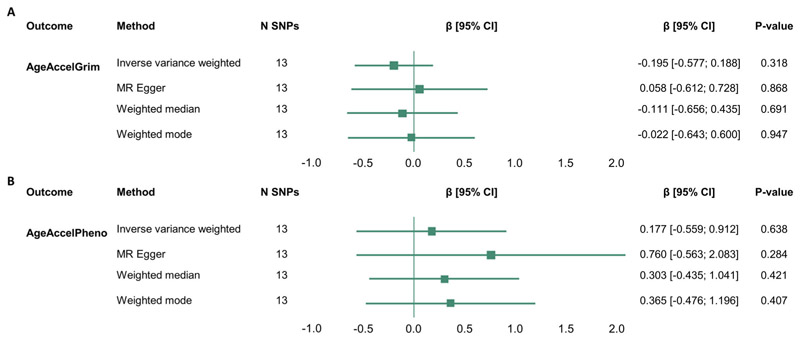
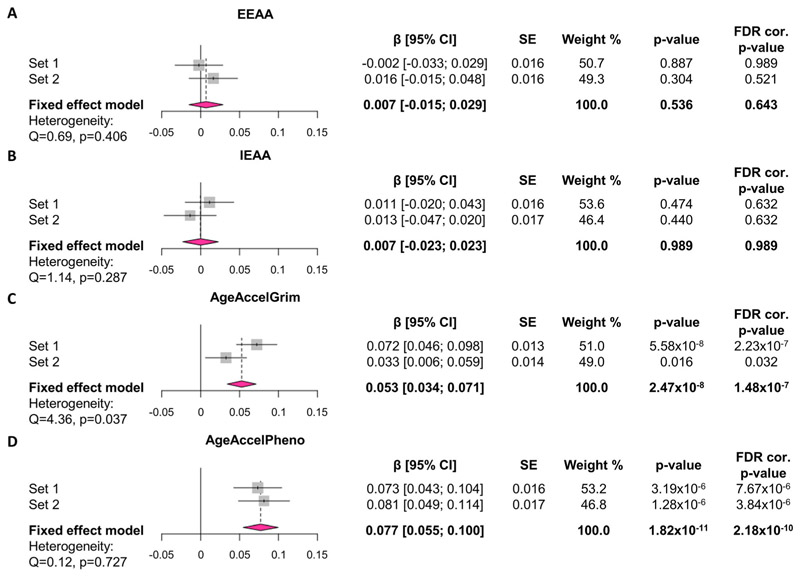
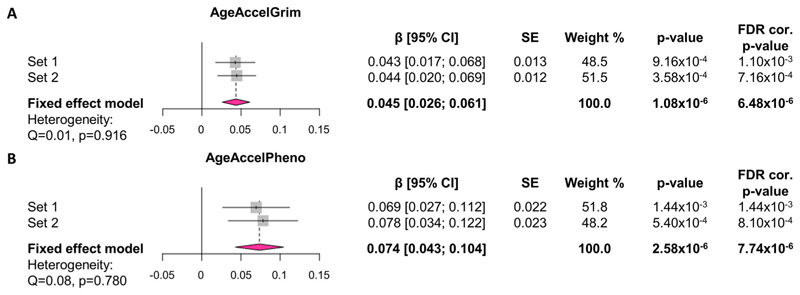
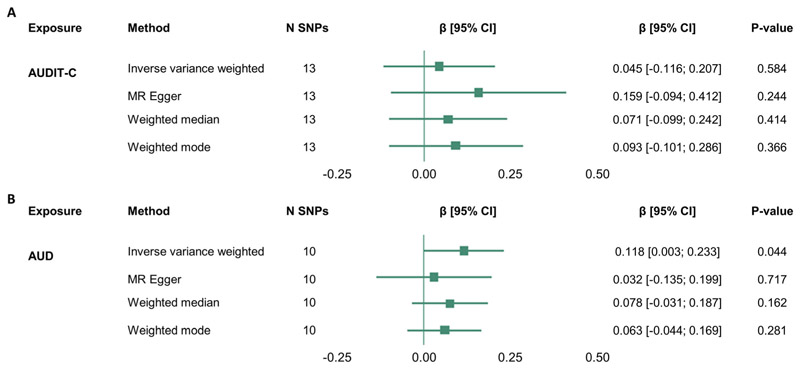
Harmful alcohol use is a leading cause of premature death and is associated with age-related disease. Biological ageing is highly variable between individuals and may deviate from chronological ageing, suggesting that biomarkers of biological ageing (derived from DNA methylation or brain structural measures) may be clinically relevant. Here, we investigated the relationships between alcohol phenotypes and both brain and DNA methylation age estimates. First, using data from UK Biobank and Generation Scotland, we tested the association between alcohol consumption (units/week) or hazardous use (Alcohol Use Disorders Identification Test [AUDIT] scores) and accelerated brain and epigenetic ageing in 20,258 and 8051 individuals, respectively. Second, we used Mendelian randomisation (MR) to test for a causal effect of alcohol consumption levels and alcohol use disorder (AUD) on biological ageing. Alcohol use showed a consistent positive association with higher predicted brain age (AUDIT-C: β = 0.053, p = 3.16 × 10 ; AUDIT-P: β = 0.052, p = 1.6 × 10 ; total AUDIT score: β = 0.062, p = 5.52 × 10 ; units/week: β = 0.078, p = 2.20 × 10 ), and two DNA methylation-based estimates of ageing, GrimAge (units/week: β = 0.053, p = 1.48 × 10 ) and PhenoAge (units/week: β = 0.077, p = 2.18x10 ). MR analyses revealed limited evidence for a causal effect of AUD on accelerated brain ageing (β = 0.118, p = 0.044). However, this result should be interpreted cautiously as the significant effect was driven by a single genetic variant. We found no evidence for a causal effect of alcohol consumption levels on accelerated biological ageing. Future studies investigating the mechanisms associating alcohol use with accelerated biological ageing are warranted.
有害饮酒是导致早逝的主要原因之一,并且与与年龄相关的疾病有关。生物衰老在个体之间差异很大,可能与实际年龄不符,这表明生物衰老的生物标志物(源自 DNA 甲基化或大脑结构测量)可能具有临床相关性。在这里,我们研究了酒精表型与大脑和 DNA 甲基化年龄估算之间的关系。首先,使用来自英国生物库和苏格兰一代的数据,我们分别在 20258 人和 8051 人中测试了饮酒量(单位/周)或危险使用(酒精使用障碍识别测试[AUDIT]评分)与加速大脑和表观遗传衰老之间的关联。其次,我们使用孟德尔随机化(MR)来测试饮酒水平和酒精使用障碍(AUD)对生物衰老的因果影响。酒精使用与更高的预测大脑年龄呈一致的正相关(AUDIT-C:β=0.053,p=3.16×10-5;AUDIT-P:β=0.052,p=1.6×10-5;总 AUDIT 评分:β=0.062,p=5.52×10⁻⁵;单位/周:β=0.078,p=2.20×10-5),以及两个基于 DNA 甲基化的衰老估计值,GrimAge(单位/周:β=0.053,p=1.48×10-5)和 PhenoAge(单位/周:β=0.077,p=2.18x10-5)。MR 分析显示,AUD 对加速大脑衰老的因果影响的证据有限(β=0.118,p=0.044)。然而,由于单个遗传变异的驱动,该结果应谨慎解释。我们没有发现饮酒水平对加速生物衰老有因果影响的证据。未来研究调查与酒精使用相关的加速生物衰老的机制是值得的。