Department of Urology, The First Affiliated Hospital of Dalian Medical University, Dalian, China.
Department of Urology, Shandong Provincial Hospital, Cheeloo College of Medicine, Shandong University, Jinan, China.
Bioengineered. 2021 Dec;12(1):7805-7819. doi: 10.1080/21655979.2021.1976050.
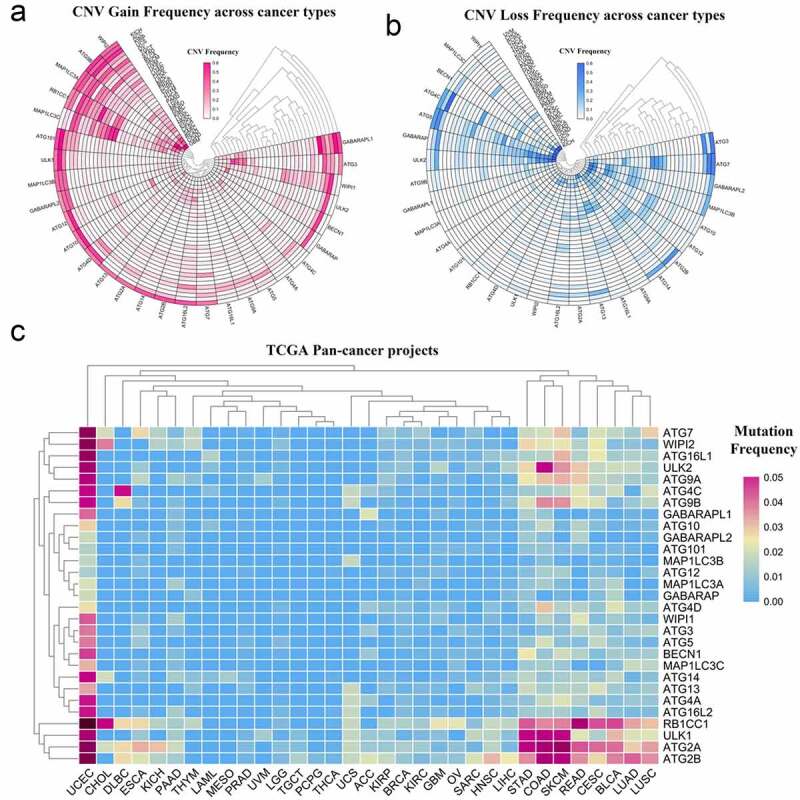
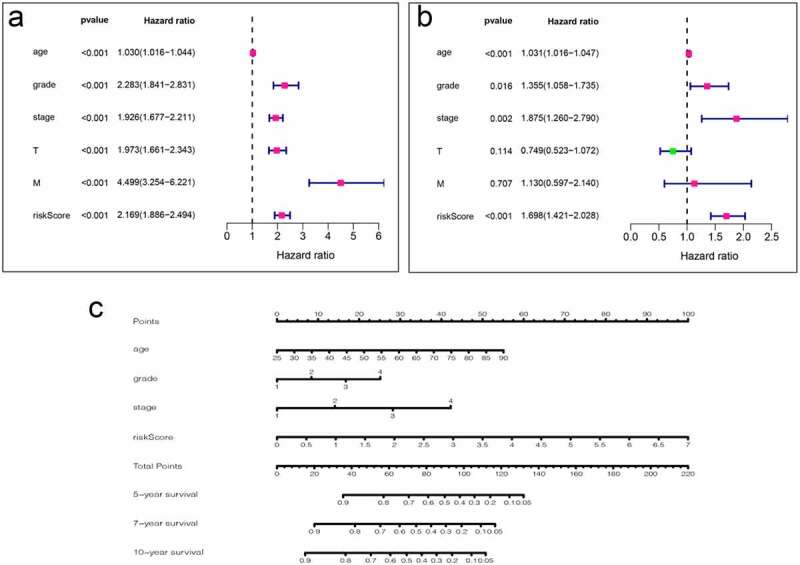
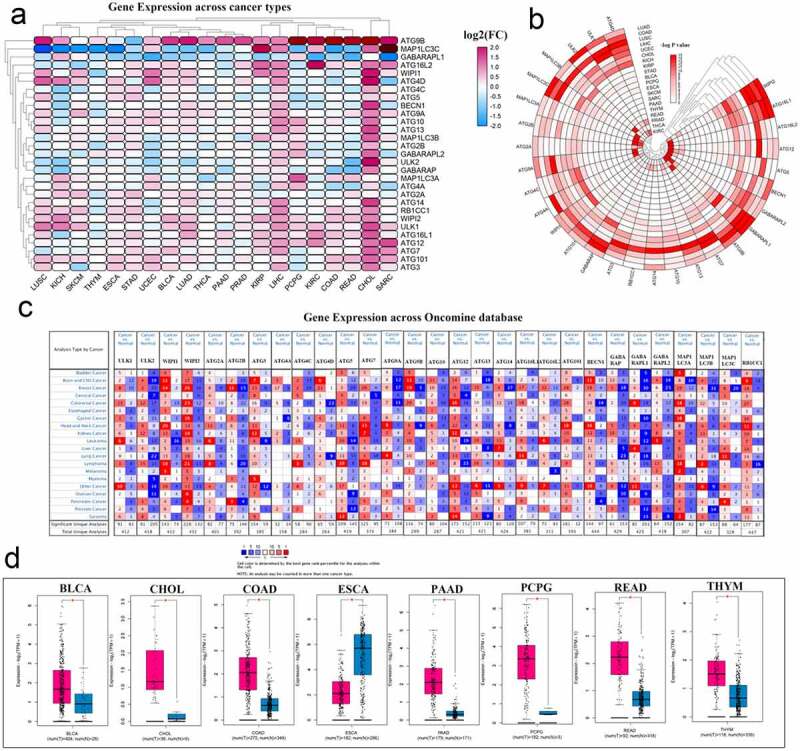
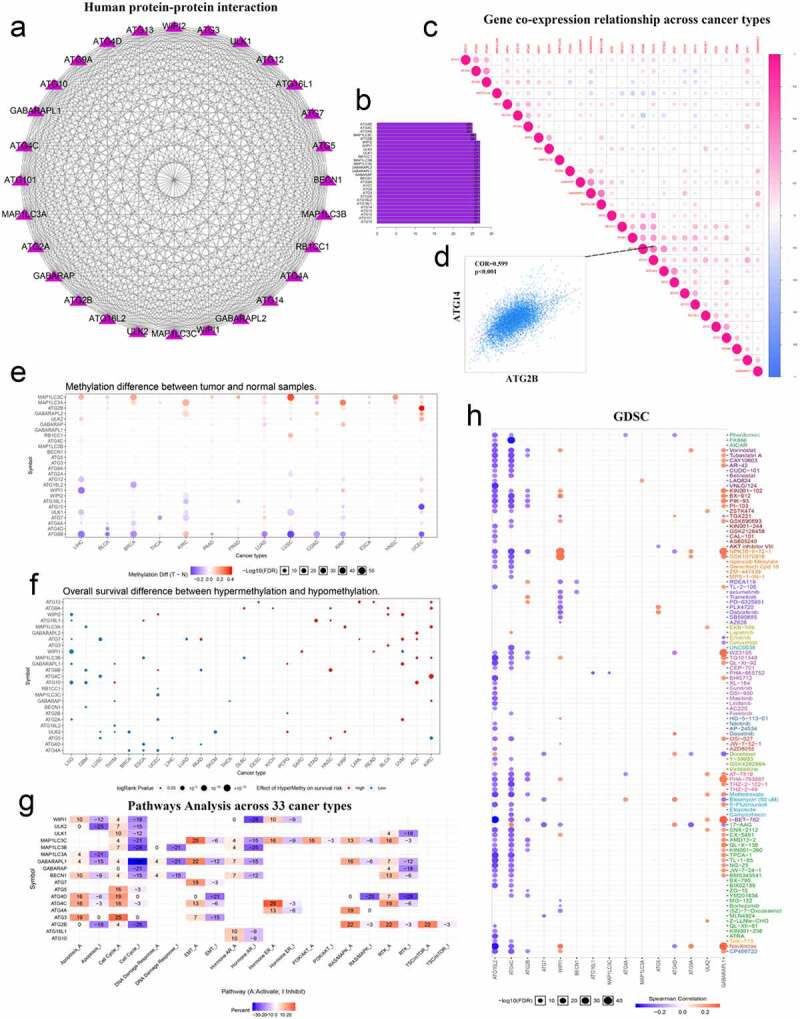
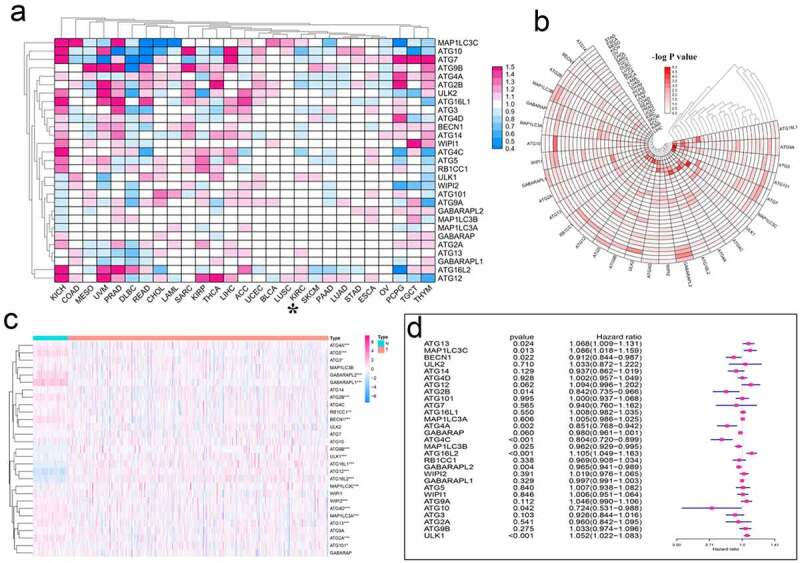
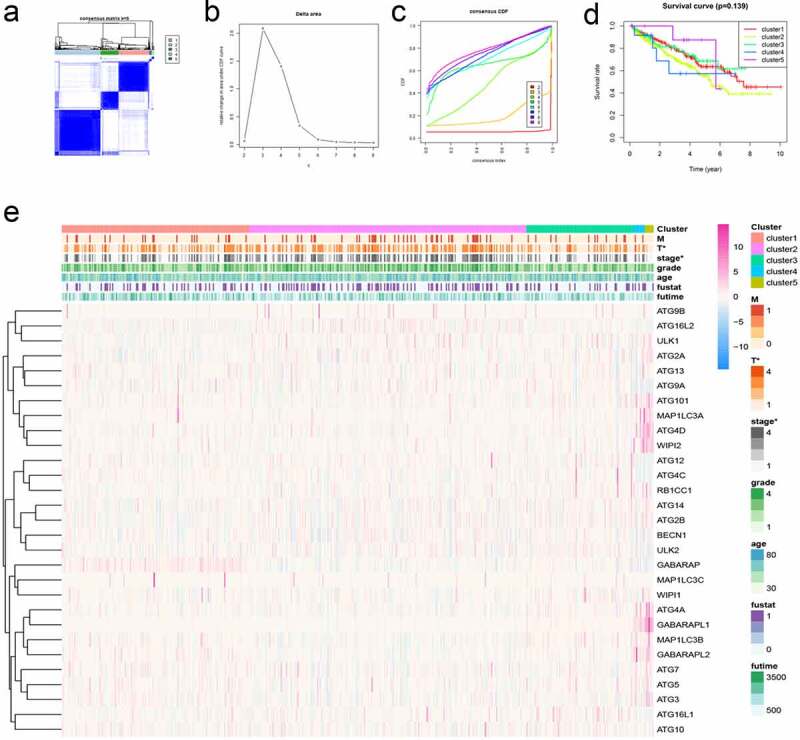
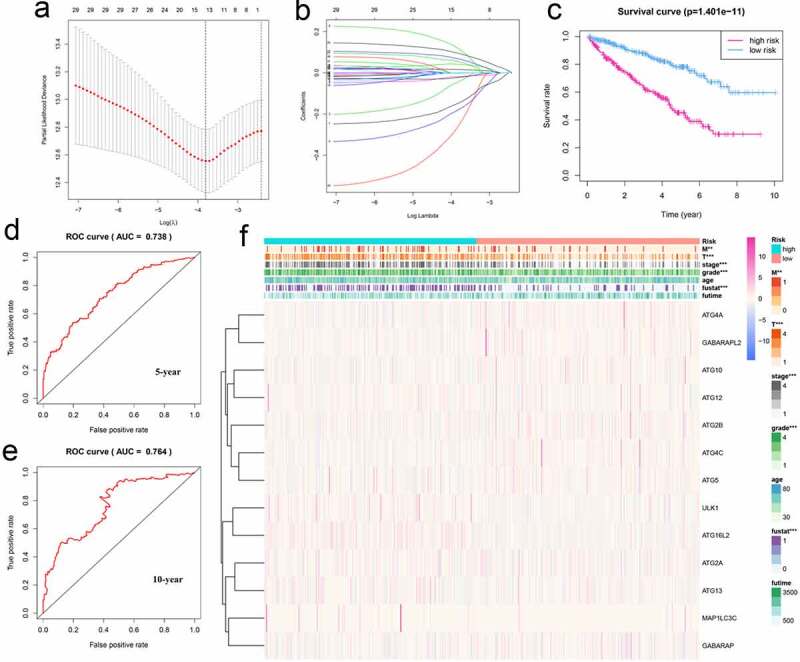
This study aimed to explore the potential role of autophagy-related genes in kidney renal clear cell carcinoma (KIRC) and develop a new prognostic-related risk model. In our research, we used multiple bioinformatics methods to perform a pan-cancer analysis of the CNV, SNV, mRNA expression, and overall survival of autophagy-related genes, and displayed the results in the form of heat maps. We then performed cluster analysis and LASSO regression analysis on these autophagy-related genes in KIRC. In the cluster analysis, we successfully divided patients with KIRC into five clusters and found that there was a clear correlation between the classification and two clinicopathological features: tumor, and stage. In LASSO regression analysis, we used 13 genes to create a new prognostic-related risk model in KIRC. The model showed that the survival rate of patients with KIRC in the high-risk group was significantly lower than that in the low-risk group, and that there was a correlation between this grouping and the patients' metastasis, tumor, stage, grade, and fustat. The results of the ROC curve suggested that this model has good prediction accuracy. The results of multivariate Cox analysis show that the risk score of this model can be used as an independent risk factor for patients with KIRC. In summary, we believe that this research provides valuable data supporting future clinical treatment and scientific research.
本研究旨在探索自噬相关基因在肾透明细胞癌(KIRC)中的潜在作用,并构建新的预后相关风险模型。我们采用多种生物信息学方法对自噬相关基因的 CNV、SNV、mRNA 表达和总生存期进行泛癌分析,并以热图形式展示结果。然后,我们对 KIRC 中的这些自噬相关基因进行聚类分析和 LASSO 回归分析。在聚类分析中,我们成功地将 KIRC 患者分为五个亚群,并且发现分类与两种临床病理特征(肿瘤和分期)之间存在明显的相关性。在 LASSO 回归分析中,我们使用 13 个基因构建了 KIRC 的新预后相关风险模型。该模型表明,KIRC 高风险组患者的生存率明显低于低风险组,并且这种分组与患者的转移、肿瘤、分期、分级和 fustat 有关。ROC 曲线的结果表明该模型具有良好的预测准确性。多因素 Cox 分析的结果表明,该模型的风险评分可作为 KIRC 患者的独立危险因素。综上所述,我们认为本研究为未来的临床治疗和科学研究提供了有价值的数据支持。