Usman Saima, Waseem Naushin H, Nguyen Thuan Khanh Ngoc, Mohsin Sahar, Jamal Ahmad, Teh Muy-Teck, Waseem Ahmad
Centre for Oral Immunobiology and Regenerative Medicine, Institute of Dentistry, Barts and The London School of Medicine and Dentistry, Queen Mary University of London, Turner Str., London E1 2AT, UK.
UCL Institute of Ophthalmology, 11-43 Bath Str., London EC1V 9EL, UK.
Cancers (Basel). 2021 Oct 5;13(19):4985. doi: 10.3390/cancers13194985.
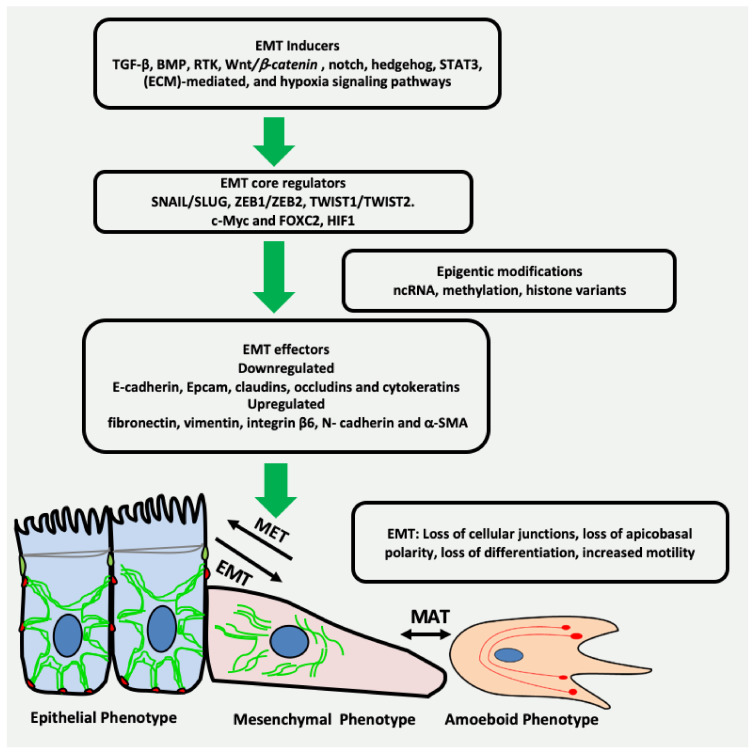
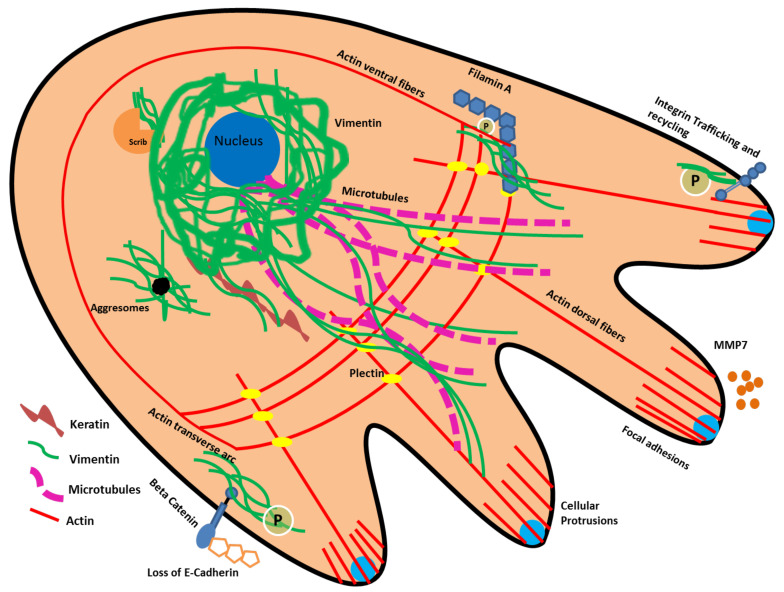
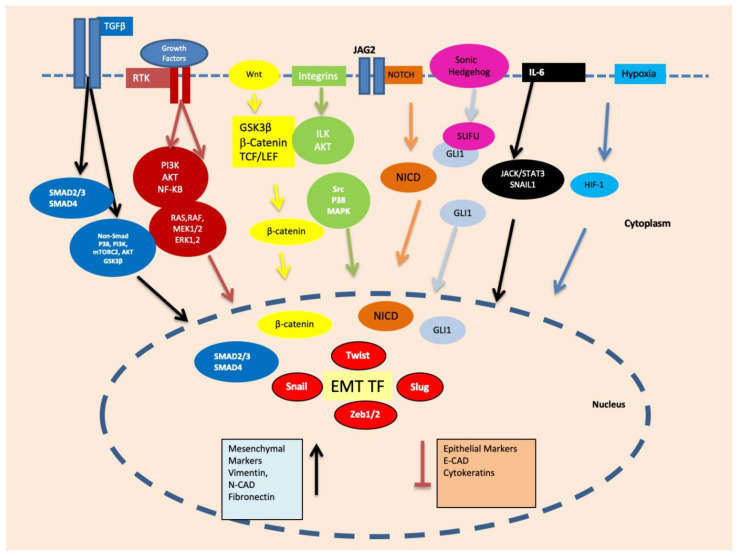
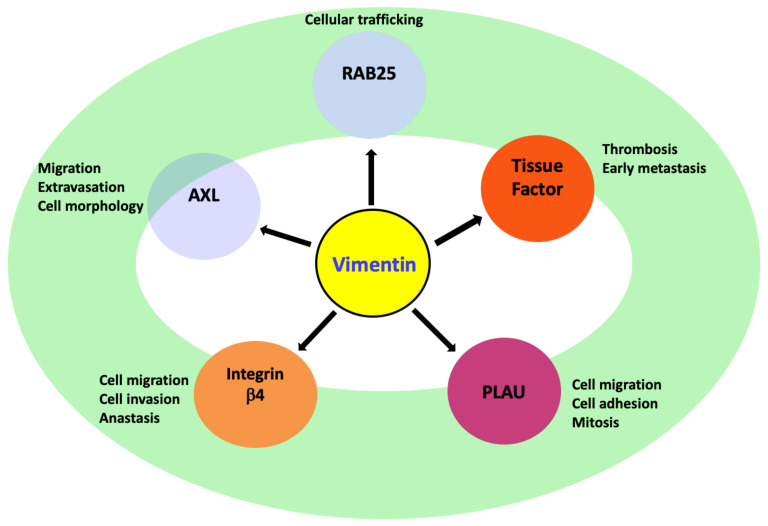
Epithelial-mesenchymal transition (EMT) is a reversible plethora of molecular events where epithelial cells gain the phenotype of mesenchymal cells to invade the surrounding tissues. EMT is a physiological event during embryogenesis (type I) but also happens during fibrosis (type II) and cancer metastasis (type III). It is a multifaceted phenomenon governed by the activation of genes associated with cell migration, extracellular matrix degradation, DNA repair, and angiogenesis. The cancer cells employ EMT to acquire the ability to migrate, resist therapeutic agents and escape immunity. One of the key biomarkers of EMT is vimentin, a type III intermediate filament that is normally expressed in mesenchymal cells but is upregulated during cancer metastasis. This review highlights the pivotal role of vimentin in the key events during EMT and explains its role as a downstream as well as an upstream regulator in this highly complex process. This review also highlights the areas that require further research in exploring the role of vimentin in EMT. As a cytoskeletal protein, vimentin filaments support mechanical integrity of the migratory machinery, generation of directional force, focal adhesion modulation and extracellular attachment. As a viscoelastic scaffold, it gives stress-bearing ability and flexible support to the cell and its organelles. However, during EMT it modulates genes for EMT inducers such as Snail, Slug, Twist and ZEB1/2, as well as the key epigenetic factors. In addition, it suppresses cellular differentiation and upregulates their pluripotent potential by inducing genes associated with self-renewability, thus increasing the stemness of cancer stem cells, facilitating the tumour spread and making them more resistant to treatments. Several missense and frameshift mutations reported in vimentin in human cancers may also contribute towards the metastatic spread. Therefore, we propose that vimentin should be a therapeutic target using molecular technologies that will curb cancer growth and spread with reduced mortality and morbidity.
上皮-间质转化(EMT)是一系列可逆的分子事件,在此过程中上皮细胞获得间质细胞的表型以侵入周围组织。EMT在胚胎发育过程中是一种生理事件(I型),但在纤维化(II型)和癌症转移(III型)过程中也会发生。它是一个多方面的现象,受与细胞迁移、细胞外基质降解、DNA修复和血管生成相关基因的激活所调控。癌细胞利用EMT来获得迁移能力、抵抗治疗药物并逃避免疫。EMT的关键生物标志物之一是波形蛋白,它是一种III型中间丝,通常在间质细胞中表达,但在癌症转移过程中上调。本综述强调了波形蛋白在EMT关键事件中的核心作用,并解释了其在这一高度复杂过程中作为下游以及上游调节因子的作用。本综述还突出了在探索波形蛋白在EMT中的作用方面需要进一步研究的领域。作为一种细胞骨架蛋白,波形蛋白丝支持迁移机制的机械完整性、定向力的产生、粘着斑调节和细胞外附着。作为一种粘弹性支架,它赋予细胞及其细胞器承受压力的能力和灵活的支撑。然而,在EMT过程中,它调节EMT诱导因子如Snail、Slug、Twist和ZEB1/2的基因,以及关键的表观遗传因子。此外,它通过诱导与自我更新相关的基因来抑制细胞分化并上调其多能潜能,从而增加癌症干细胞的干性,促进肿瘤扩散并使其更耐治疗。在人类癌症中报道的波形蛋白的几种错义突变和移码突变也可能有助于转移扩散。因此,我们建议波形蛋白应成为使用分子技术的治疗靶点,这将抑制癌症生长和扩散,降低死亡率和发病率。