Vanin Anatoly F
N.N. Semenov Federal Research Center for Chemical Physics, Russian Academy of Sciences Moscow, 119991 Moscow, Russia.
Int J Mol Sci. 2021 Sep 26;22(19):10356. doi: 10.3390/ijms221910356.
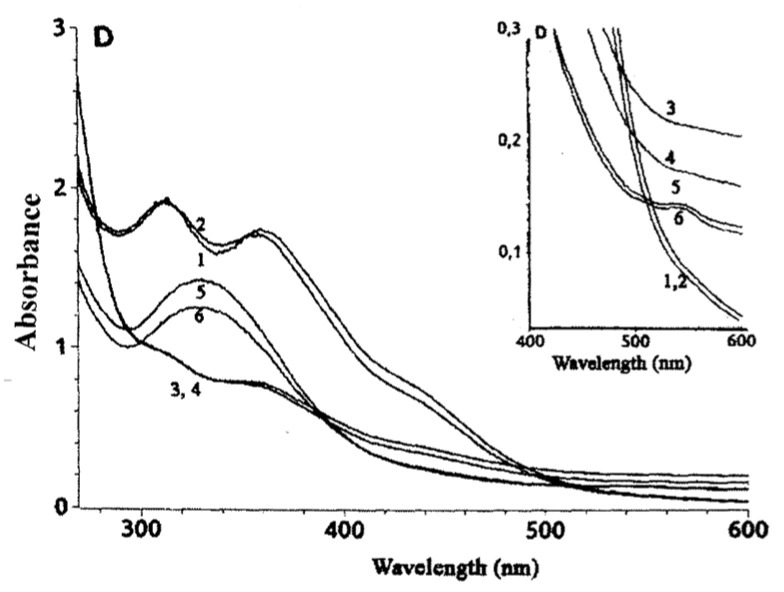
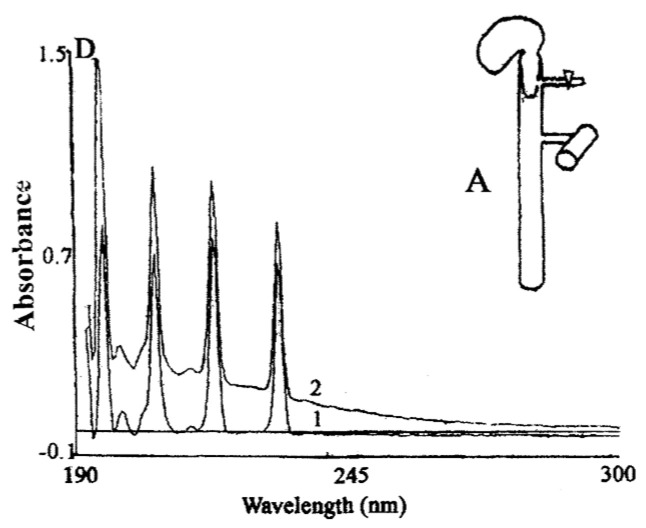
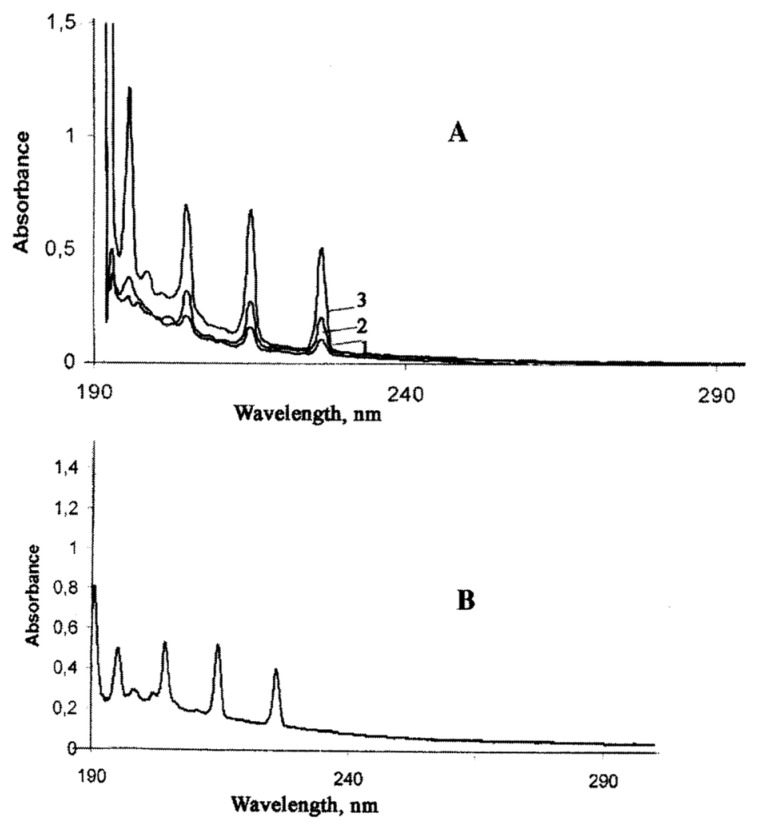
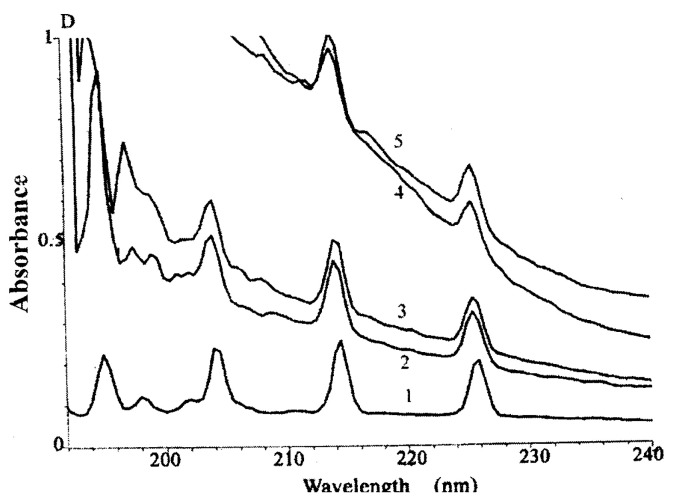
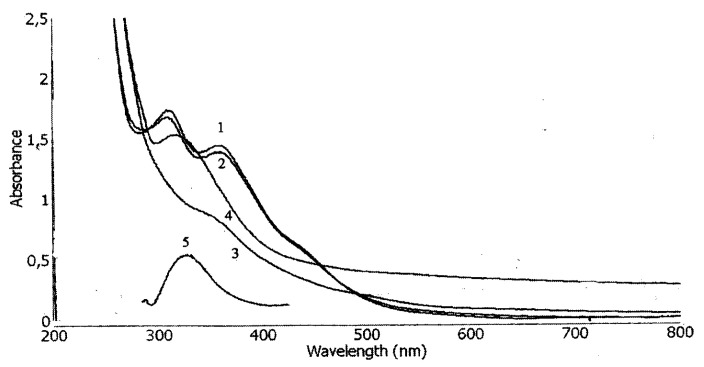
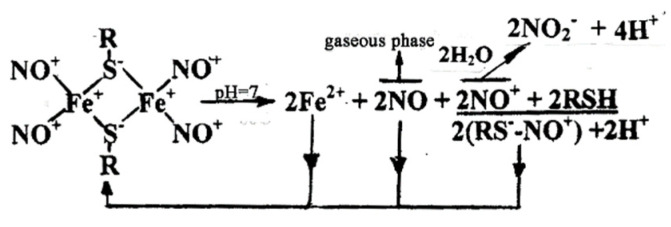
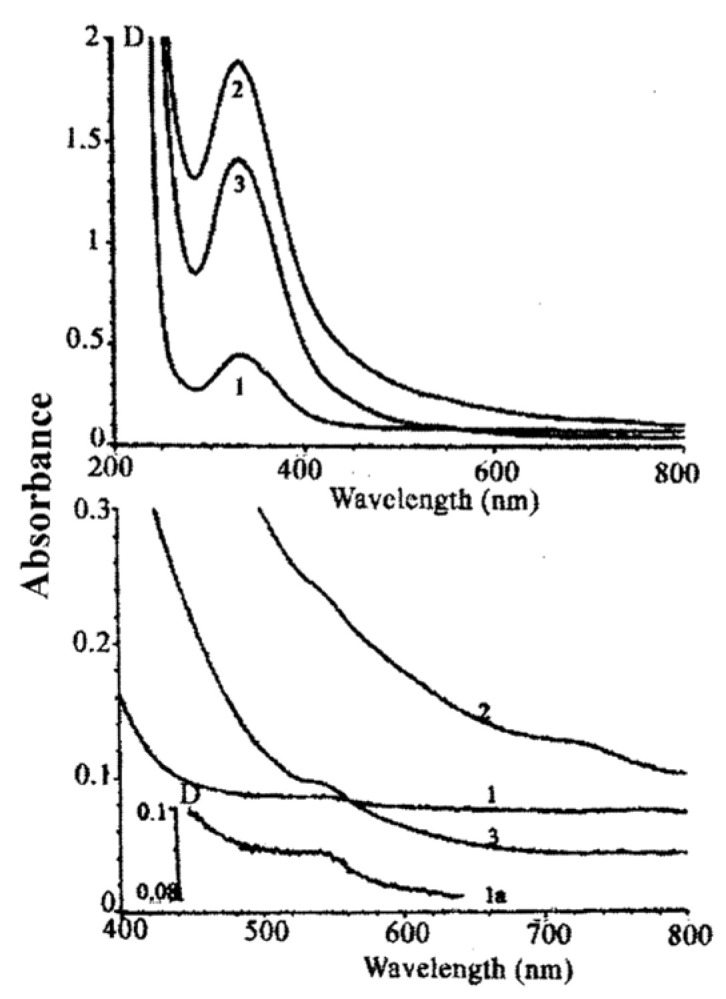
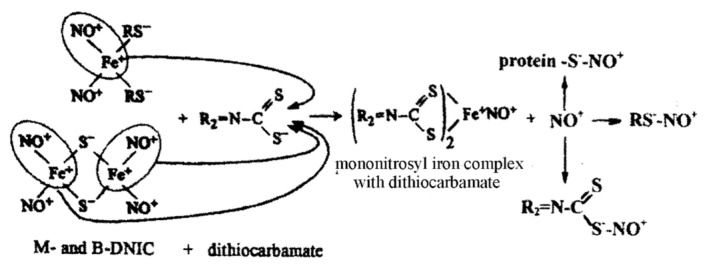
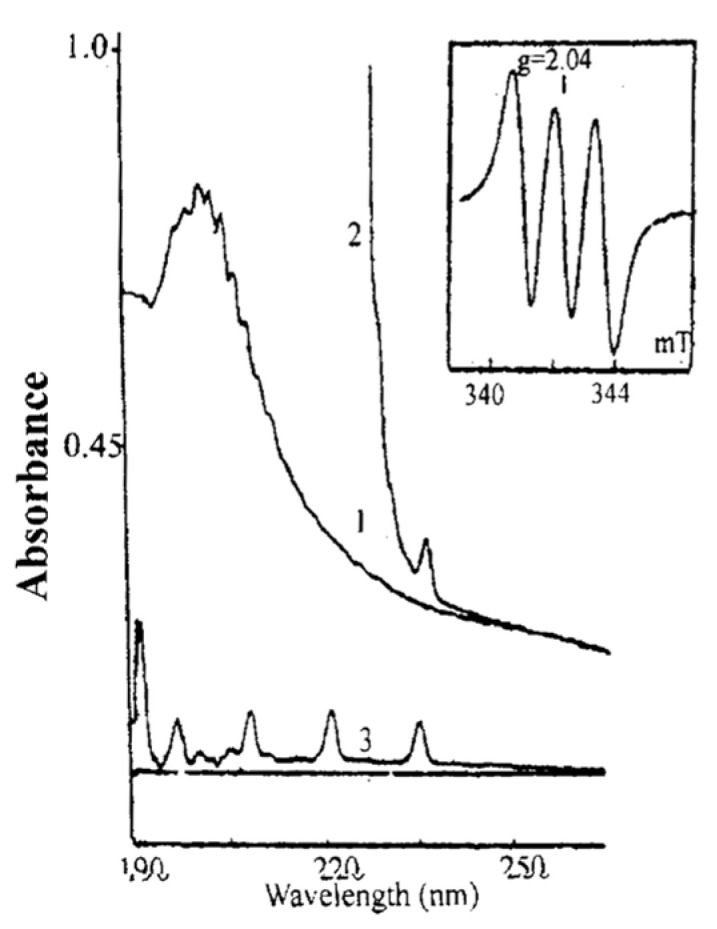
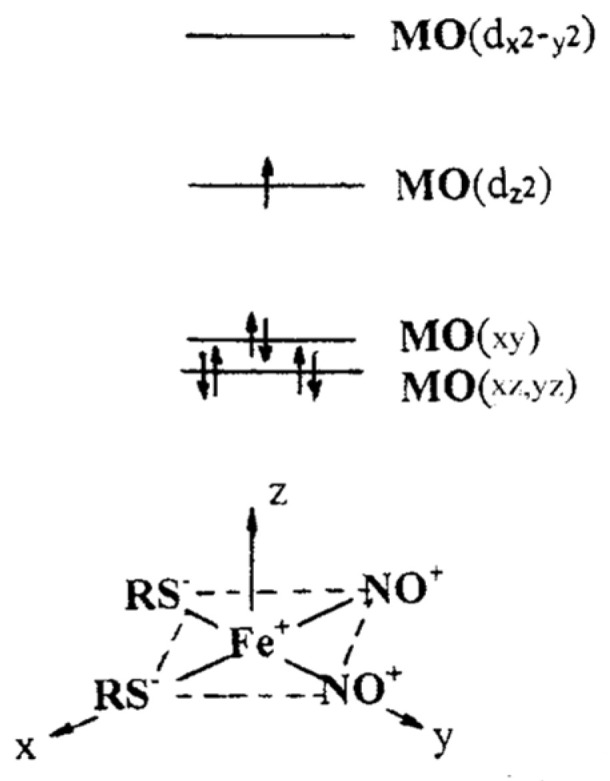
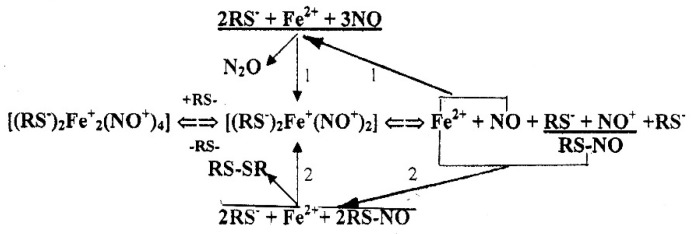
In this article we minutely discuss the so-called "oxidative" mechanism of mononuclear form of dinitrosyl iron complexes (M-DNICs) formations proposed by the author. M-DNICs are proposed to be formed from their building material-neutral NO molecules, Fe ions and anionic non-thiol (L) and thiol (RS) ligands based on the disproportionation reaction of NO molecules binding with divalent ion irons in pairs. Then a protonated form of nitroxyl anion (NO) appearing in the reaction is released from this group and a neutral NO molecule is included instead. As a result, M-DNICs are produced. Their resonance structure is described as [(L)Fe(NO)(NO)], in which nitrosyl ligands are represented by NO molecules and nitrosonium cations in equal proportions. Binding of hydroxyl ions with the latter causes conversion of these cations into nitrite anions at neutral pH values and therefore transformation of DNICs into the corresponding high-spin mononitrosyl iron complexes (MNICs) with the resonance structure described as [(L)Fe(NO)]. In case of replacing L by thiol-containing ligands, which are characterized by high π-donor activity, electron density transferred from sulfur atoms to iron-dinitrosyl groups neutralizes the positive charge on nitrosonium cations, which prevents their hydrolysis, ensuring relatively a high stability of the corresponding M-DNICs with the resonance structure [(RS)Fe (NO, NO)]. Therefore, M-DNICs with thiol-containing ligands, as well as their binuclear analogs (B-DNICs, respective resonance structure [(RS)Fe (NO, NO)]), can serve donors of both NO and NO. Experiments with solutions of B-DNICs with glutathione or N-acetyl-L-cysteine (B-DNIC-GSH or B-DNIC-NAC) showed that these complexes release both NO and NO in case of decomposition in the presence of acid or after oxidation of thiol-containing ligands in them. The level of released NO was measured via optical absorption intensity of NO in the gaseous phase, while the number of released nitrosonium cations was determined based on their inclusion in S-nitrosothiols or their conversion into nitrite anions. Biomedical research showed the ability of DNICs with thiol-containing ligands to be donors of NO and NO and produce various biological effects on living organisms. At the same time, NO molecules released from DNICs usually have a positive and regulatory effect on organisms, while nitrosonium cations have a negative and cytotoxic effect.
在本文中,我们详细讨论了作者提出的单核二亚硝酰基铁配合物(M-DNICs)形成的所谓“氧化”机制。M-DNICs被认为是由其构成物质——中性的NO分子、铁离子以及阴离子非硫醇(L)和硫醇(RS)配体,基于NO分子与二价铁离子成对结合的歧化反应形成的。然后,反应中出现的质子化硝酰阴离子(NO⁻)从该基团中释放出来,取而代之的是一个中性的NO分子。结果,产生了M-DNICs。它们的共振结构被描述为[(L)Fe(NO)(NO)],其中亚硝酰配体由等量的NO分子和亚硝鎓阳离子表示。在中性pH值下,氢氧根离子与后者结合会使这些阳离子转化为亚硝酸根阴离子,从而使DNICs转化为相应的具有共振结构[(L)Fe(NO)]的高自旋单亚硝酰基铁配合物(MNICs)。如果用具有高π供体活性的含硫醇配体取代L,从硫原子转移到二亚硝酰基铁基团的电子密度会中和亚硝鎓阳离子上的正电荷,从而防止它们水解,确保具有共振结构[(RS)Fe(NO,NO)]的相应M-DNICs具有较高的稳定性。因此,含硫醇配体的M-DNICs及其双核类似物(B-DNICs,相应的共振结构[(RS)Fe(NO,NO)])都可以作为NO和NO⁺的供体。用含有谷胱甘肽或N-乙酰-L-半胱氨酸的B-DNICs溶液(B-DNIC-GSH或B-DNIC-NAC)进行的实验表明,这些配合物在酸性条件下分解或其中的含硫醇配体被氧化时会释放出NO和NO⁺。释放的NO水平通过气相中NO的光吸收强度来测量,而释放的亚硝鎓阳离子的数量则根据它们被纳入S-亚硝基硫醇或转化为亚硝酸根阴离子来确定。生物医学研究表明,含硫醇配体的DNICs能够作为NO和NO⁺的供体,并对生物体产生各种生物学效应。同时,从DNICs释放的NO分子通常对生物体具有积极的调节作用,而亚硝鎓阳离子则具有消极的细胞毒性作用。