Immunology Program, Benaroya Research Institute, Seattle, WA 98101, USA.
Department of Microbiology and Immunology, Pennsylvania State University College of Medicine, Hershey, PA 17033, USA.
Int J Mol Sci. 2021 Sep 28;22(19):10464. doi: 10.3390/ijms221910464.
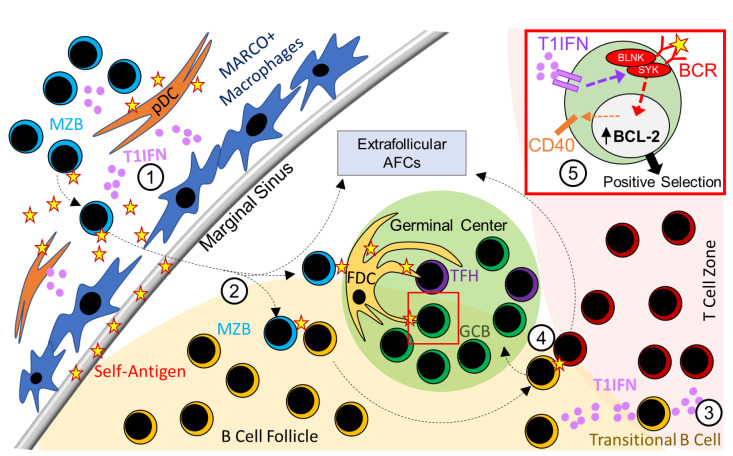
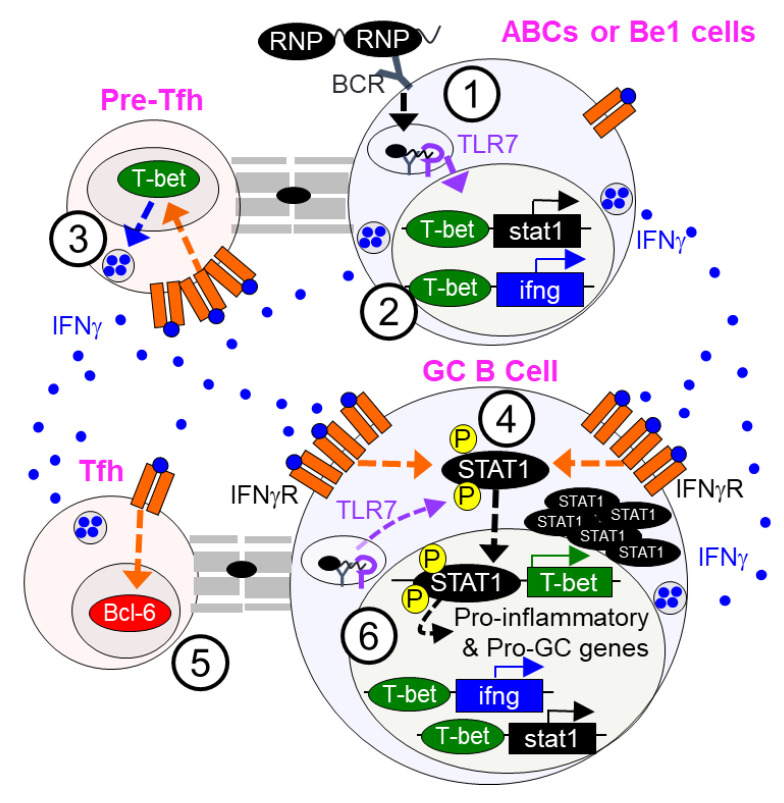
There are three classes of interferons (type 1, 2, and 3) that can contribute to the development and maintenance of various autoimmune diseases, including systemic lupus erythematosus (SLE). Each class of interferons promotes the generation of autoreactive B cells and SLE-associated autoantibodies by distinct signaling mechanisms. SLE patients treated with various type 1 interferon-blocking biologics have diverse outcomes, suggesting that additional environmental and genetic factors may dictate how these cytokines contribute to the development of autoreactive B cells and SLE. Understanding how each class of interferons controls B cell responses in SLE is necessary for developing optimized B cell- and interferon-targeted therapeutics. In this review, we will discuss how each class of interferons differentially promotes the loss of peripheral B cell tolerance and leads to the development of autoreactive B cells, autoantibodies, and SLE.
有三类干扰素(I 型、II 型和 III 型)可导致多种自身免疫性疾病的发生和维持,包括系统性红斑狼疮(SLE)。每类干扰素通过不同的信号机制促进自身反应性 B 细胞和与 SLE 相关的自身抗体的产生。用各种 I 型干扰素阻断生物制剂治疗的 SLE 患者有不同的结局,这表明其他环境和遗传因素可能决定这些细胞因子如何导致自身反应性 B 细胞和 SLE 的发生。了解每类干扰素如何控制 SLE 中的 B 细胞反应,对于开发优化的针对 B 细胞和干扰素的治疗方法是必要的。在这篇综述中,我们将讨论每类干扰素如何通过不同的机制促进外周 B 细胞耐受的丧失,并导致自身反应性 B 细胞、自身抗体和 SLE 的产生。