Department of Rheumatology, The Second Affiliated Hospital of Zhejiang Chinese Medical University, Hangzhou, China.
School of Basic Medical Science, Zhejiang Chinese Medical University, Hangzhou, China.
Front Immunol. 2022 May 23;13:883747. doi: 10.3389/fimmu.2022.883747. eCollection 2022.
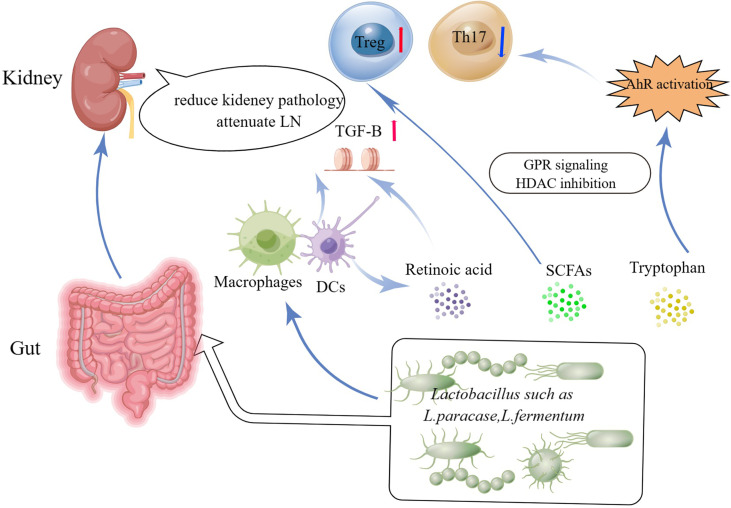
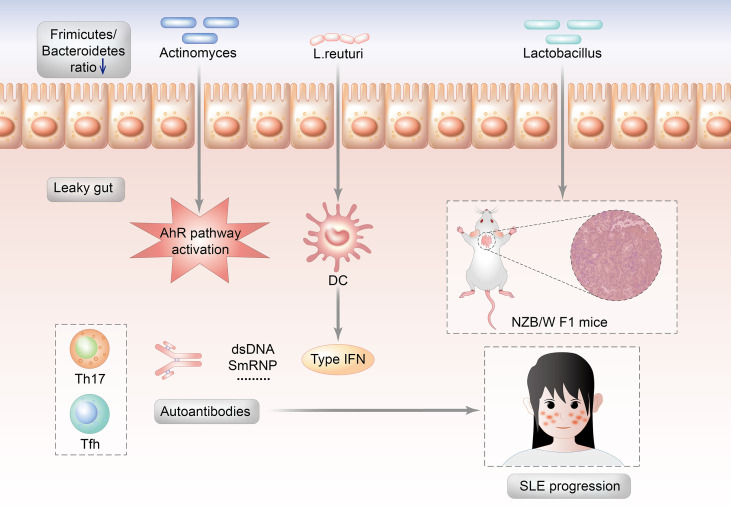
The cause of Systemic Lupus Erythematosus (SLE) remains largely unknown, despite the fact that it is well understood that a complex interaction between genes and environment is required for disease development. Microbiota serve as activators and are essential to immune homeostasis. is thought to be an environmental agent affecting the development of SLE. However, beneficial therapeutic and anti-inflammatory effects of on SLE were also explored. The discovery of involvement in SLE will shed light on how SLE develops, as well as finding microbiota-targeted biomarkers and novel therapies. In this review, we attempt to describe the two sides of in the occurrence, development, treatment and prognosis of SLE. We also discuss the effect of different strains on immune cells, murine lupus, and patients. Finally, we try to illustrate the potential immunological mechanisms of on SLE and provide evidence for further microbiota-targeted therapies.
系统性红斑狼疮(SLE)的病因在很大程度上仍然未知,尽管人们已经清楚地认识到,疾病的发展需要基因和环境之间的复杂相互作用。微生物组作为激活剂,对免疫稳态至关重要。被认为是影响 SLE 发展的环境因素。然而,也探索了对 SLE 的有益治疗和抗炎作用。对 SLE 中微生物组的参与的发现将揭示 SLE 的发展方式,以及寻找针对微生物组的生物标志物和新疗法。在这篇综述中,我们试图描述 在 SLE 的发生、发展、治疗和预后中的正反两面。我们还讨论了不同菌株 的对免疫细胞、鼠狼疮和患者的影响。最后,我们试图阐明 对 SLE 的潜在免疫学机制,并为进一步的针对微生物组的治疗提供证据。