Department of Integrated Biosciences, Graduate School, BK21 Program, Konkuk University, Chungju 27478, Korea.
Department of Biomedical Chemistry, College of Biomedical & Health Science, Konkuk University, Chungju 27478, Korea.
Int J Mol Sci. 2021 Sep 29;22(19):10524. doi: 10.3390/ijms221910524.
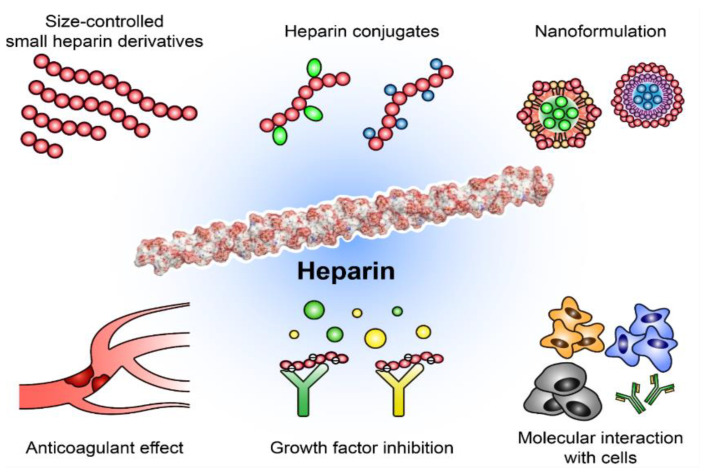
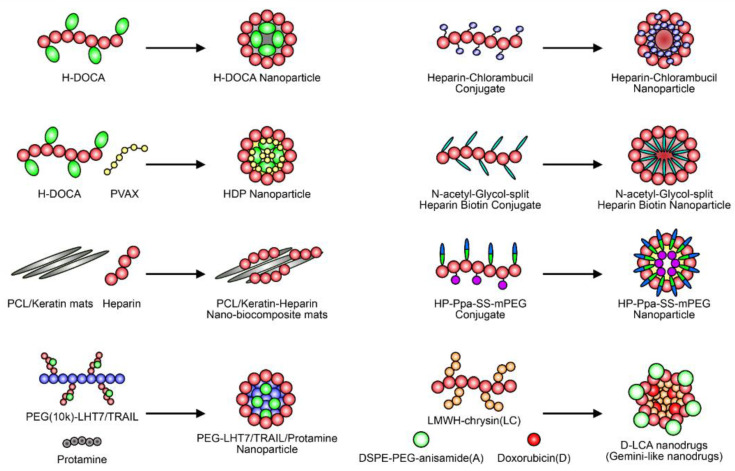
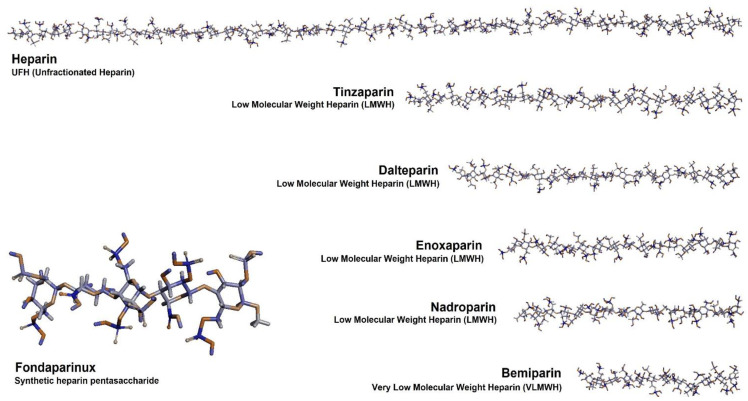
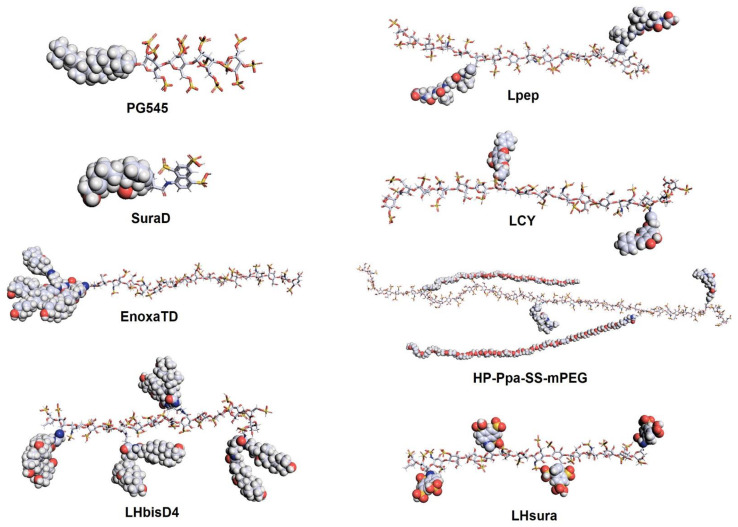
Heparin has been extensively studied as a safe medicine and biomolecule over the past few decades. Heparin derivatives, including low-molecular-weight heparins (LMWH) and heparin pentasaccharide, are effective anticoagulants currently used in clinical settings. They have also been studied as functional biomolecules or biomaterials for various therapeutic uses to treat diseases. Heparin, which has a similar molecular structure to heparan sulfate, can be used as a remarkable biomedicine due to its uniquely high safety and biocompatibility. In particular, it has recently drawn attention for use in drug-delivery systems, biomaterial-based tissue engineering, nanoformulations, and new drug-development systems through molecular formulas. A variety of new heparin-based biomolecules and conjugates have been developed in recent years and are currently being evaluated for use in clinical applications. This article reviews heparin derivatives recently studied in the field of drug development for the treatment of various diseases.
肝素在过去几十年中作为一种安全的药物和生物分子得到了广泛的研究。肝素衍生物,包括低分子量肝素(LMWH)和肝素五糖,是目前临床应用的有效抗凝剂。它们也被研究作为功能性生物分子或生物材料,用于各种治疗用途,以治疗疾病。肝素与硫酸乙酰肝素具有相似的分子结构,由于其具有独特的高安全性和生物相容性,可用作一种显著的生物医学材料。特别是,由于其分子结构,它最近在药物传递系统、基于生物材料的组织工程、纳米制剂和新药开发系统中引起了关注。近年来已经开发出多种新型基于肝素的生物分子和缀合物,目前正在评估其在临床应用中的用途。本文综述了近年来在治疗各种疾病的药物开发领域中研究的肝素衍生物。