Department of Economic Informatics and Cybernetics, Bucharest University of Economic Studies, 010552 Bucharest, Romania.
Faculty of Medicine and Pharmacy, University of Oradea, 410073 Oradea, Romania.
Int J Environ Res Public Health. 2021 Oct 4;18(19):10438. doi: 10.3390/ijerph181910438.
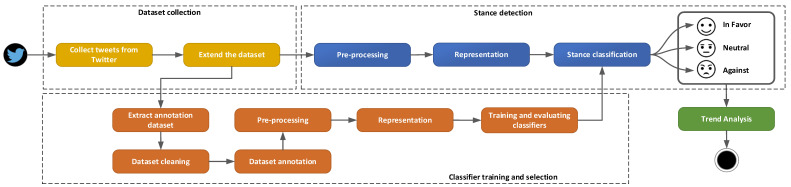
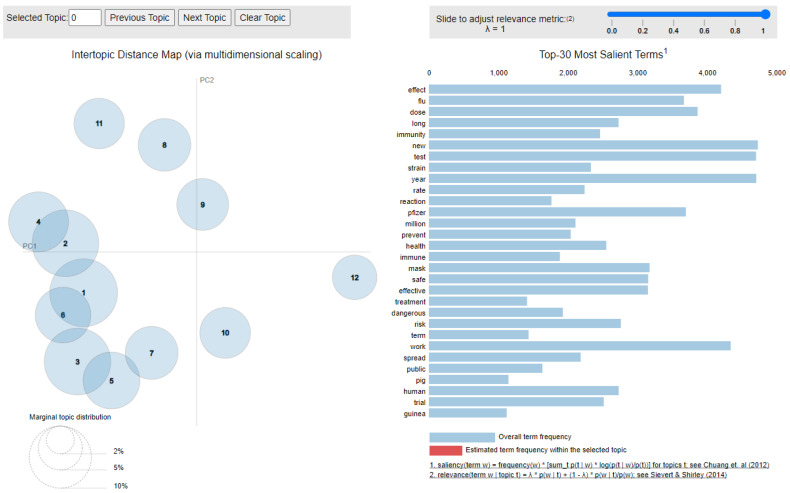
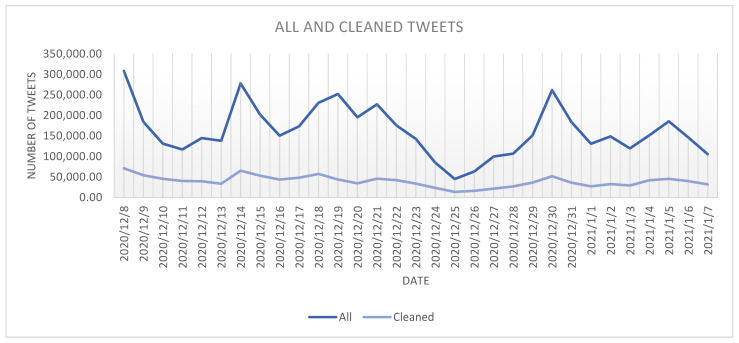
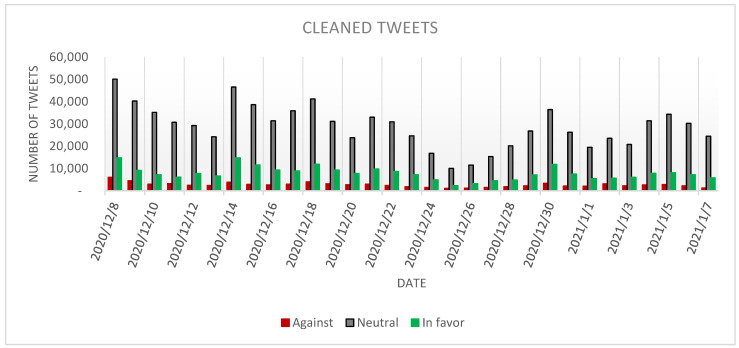
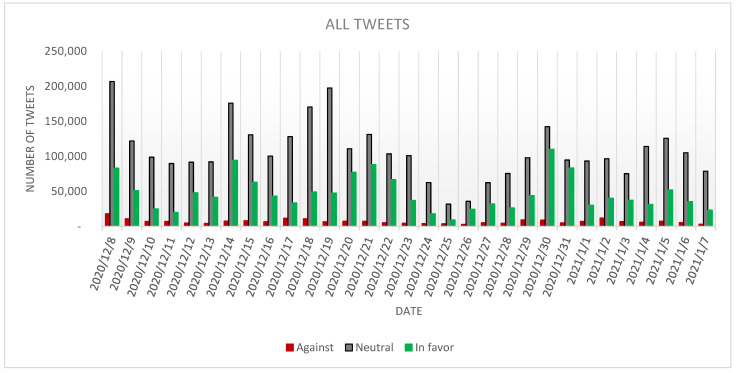
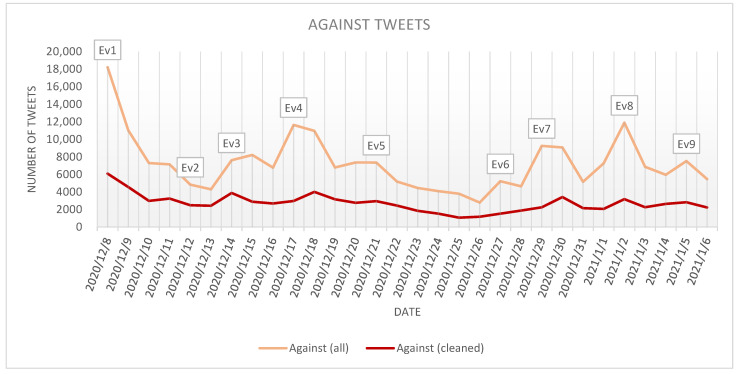
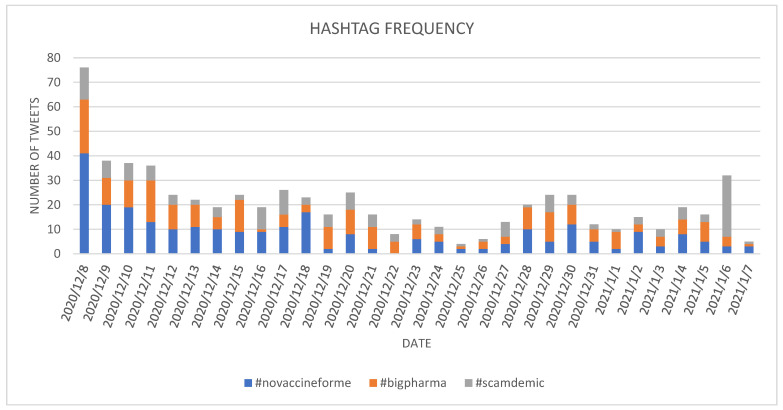
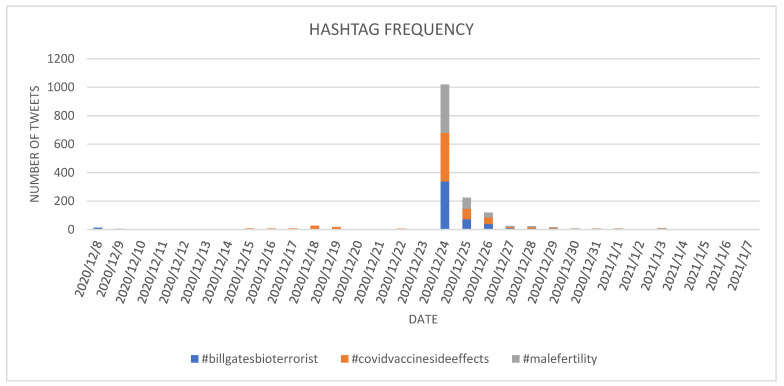
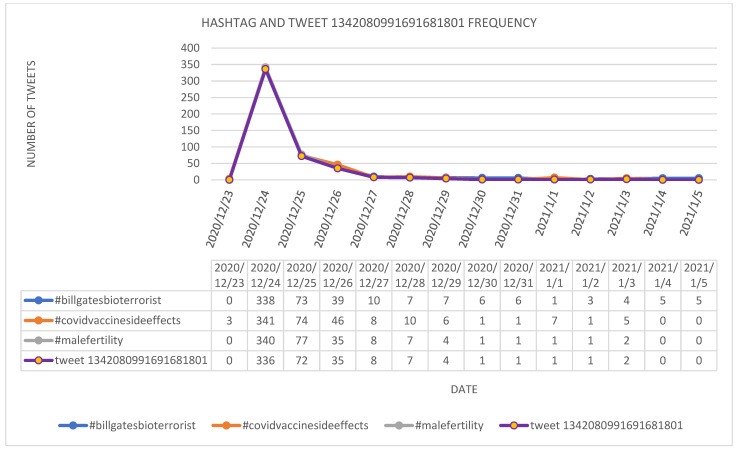
The occurrence of the novel coronavirus has changed a series of aspects related to people's everyday life, the negative effects being felt all around the world. In this context, the production of a vaccine in a short period of time has been of great importance. On the other hand, obtaining a vaccine in such a short time has increased vaccine hesitancy and has activated anti-vaccination speeches. In this context, the aim of the paper is to analyze the dynamics of public opinion on Twitter in the first month after the start of the vaccination process in the UK, with a focus on COVID-19 vaccine hesitancy messages. For this purpose, a dataset containing 5,030,866 tweets in English was collected from Twitter between 8 December 2020-7 January 2021. A stance analysis was conducted after comparing several classical machine learning and deep learning algorithms. The tweets associated to COVID-19 vaccination hesitancy were examined in connection with the major events in the analyzed period, while the main discussion topics were determined using hashtags, n-grams and latent Dirichlet allocation. The results of the study can help the interested parties better address the COVID-19 vaccine hesitancy concerns.
新型冠状病毒的出现改变了与人们日常生活相关的一系列方面,其负面影响在全球范围内都有所体现。在这种情况下,在短时间内生产疫苗显得尤为重要。另一方面,在如此短的时间内获得疫苗增加了人们对疫苗的犹豫,并激活了反疫苗言论。在这种情况下,本文旨在分析英国开始疫苗接种后第一个月 Twitter 上的公众舆论动态,重点关注 COVID-19 疫苗犹豫信息。为此,我们从 2020 年 12 月 8 日至 2021 年 1 月 7 日期间在 Twitter 上收集了包含 5,030,866 条英语推文的数据集。在比较了几种经典的机器学习和深度学习算法后,我们进行了立场分析。结合分析期间的主要事件,检查了与 COVID-19 疫苗接种犹豫相关的推文,同时使用标签、n-gram 和潜在狄利克雷分配确定了主要讨论主题。该研究的结果可以帮助有关方面更好地解决 COVID-19 疫苗犹豫问题。