Küçükali Hüseyin, Ataç Ömer, Palteki Ayşe Seval, Tokaç Ayşe Zülal, Hayran Osman
Department of Public Health, School of Medicine, Istanbul Medipol University, Istanbul 34815, Turkey.
Vaccines (Basel). 2022 Jan 21;10(2):161. doi: 10.3390/vaccines10020161.
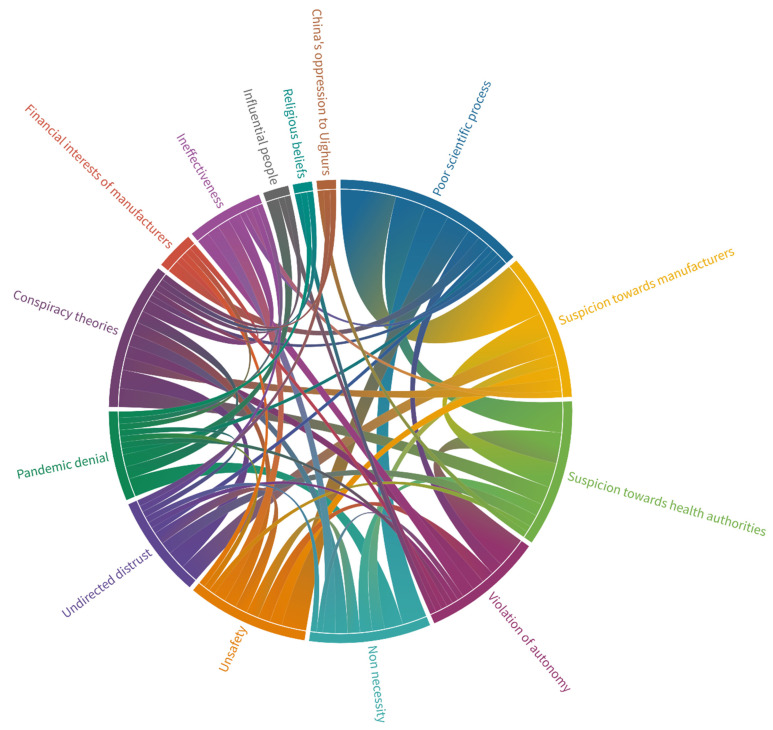
Twitter is a useful source for detecting anti-vaccine content due to the increasing prevalence of these arguments on social media. We aimed to identify the prominent themes about vaccine hesitancy and refusal on social media posts in Turkish during the COVID-19 pandemic. In this qualitative study, we collected public tweets ( = 551,245) that contained a vaccine-related keyword and had been published between 9 December 2020 and 8 January 2021 through the Twitter API. A random sample of tweets ( = 1041) was selected and analyzed by four researchers with the content analysis method. We found that 90.5% of the tweets were about vaccines, 22.6% ( = 213) of the tweets mentioned at least one COVID-19 vaccine by name, and the most frequently mentioned COVID-19 vaccine was CoronaVac (51.2%). We found that 22.0% ( = 207) of the tweets included at least one anti-vaccination theme. Poor scientific processes (21.7%), conspiracy theories (16.4%), and suspicions towards manufacturers (15.5%) were the most frequently mentioned themes. The most co-occurring themes were "poor scientific process" with "suspicion towards manufacturers" ( = 9), and "suspicion towards health authorities" ( = 5). This study may be helpful for health managers, assisting them to identify the major concerns of the population and organize preventive measures through the significant role of social media in early spread of information about vaccine hesitancy and anti-vaccination attitudes.
由于社交媒体上这些观点的日益普遍,推特是检测反疫苗内容的有用来源。我们旨在确定在新冠疫情期间土耳其社交媒体帖子中关于疫苗犹豫和拒绝的突出主题。在这项定性研究中,我们通过推特应用程序编程接口收集了2020年12月9日至2021年1月8日期间发布的包含疫苗相关关键词的公共推文(n = 551,245)。随机抽取了一部分推文(n = 1041),由四名研究人员采用内容分析法进行分析。我们发现90.5%的推文与疫苗有关,22.6%(n = 213)的推文至少提及一种新冠疫苗的名称,提及最多的新冠疫苗是科兴疫苗(51.2%)。我们发现22.0%(n = 207)的推文包含至少一个反疫苗主题。科学过程不完善(21.7%)、阴谋论(16.4%)以及对制造商的怀疑(15.5%)是提及最多的主题。同时出现最多的主题是“科学过程不完善”与“对制造商的怀疑”(n = 9),以及“对卫生当局的怀疑”(n = 5)。这项研究可能有助于卫生管理人员,通过社交媒体在疫苗犹豫和反疫苗态度信息早期传播中的重要作用,帮助他们识别民众的主要担忧并组织预防措施。