Taub Renen, Horesh Danny, Rubin Noa, Glick Ittai, Reem Orit, Shriqui Gitit, Agmon-Levin Nancy
Department of Psychology, Bar-Ilan University, Ramat Gan 5290002, Israel.
Department of Psychiatry, New York University School of Medicine, 1 Park Ave., New York, NY 10016, USA.
J Clin Med. 2021 Sep 28;10(19):4450. doi: 10.3390/jcm10194450.
The psychological effects of systemic lupus erythematosus (SLE) are tremendous. This pilot mixed-methods randomized controlled trial aimed to evaluate the effects of a mindfulness-based stress reduction (MBSR) adapted protocol on psychological distress among SLE patients.
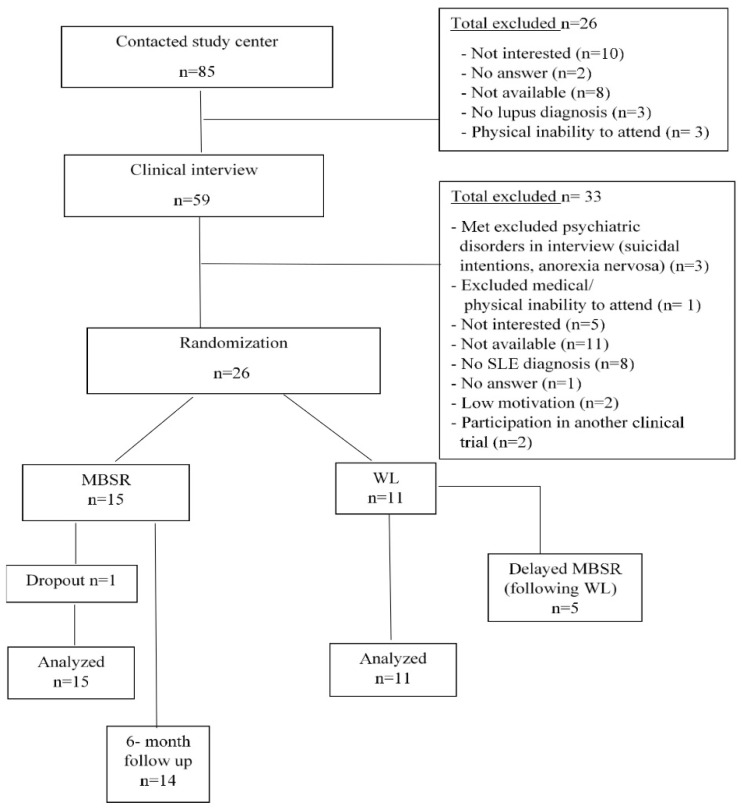
26 SLE patients were randomly assigned to MBSR group therapy ( = 15) or a waitlist (WL) group ( = 11). An adapted MBSR protocol for SLE was employed. Three measurements were conducted: pre-intervention, post-intervention and 6-months follow up. A sub-sample ( = 12) also underwent qualitative interviews to assess their subjective experience of MBSR.
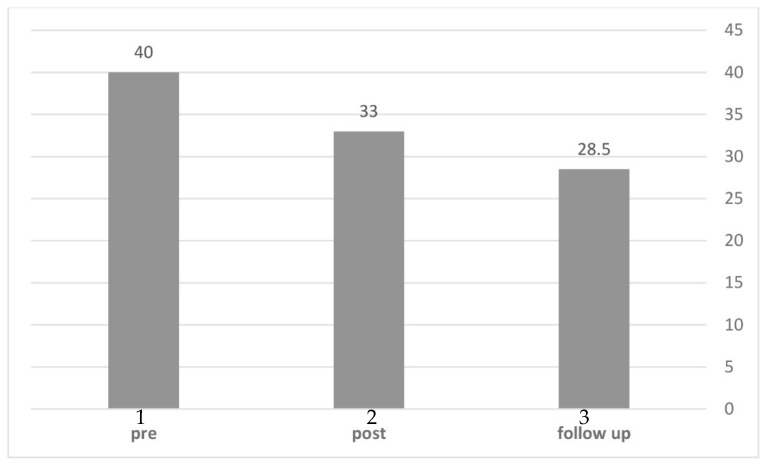
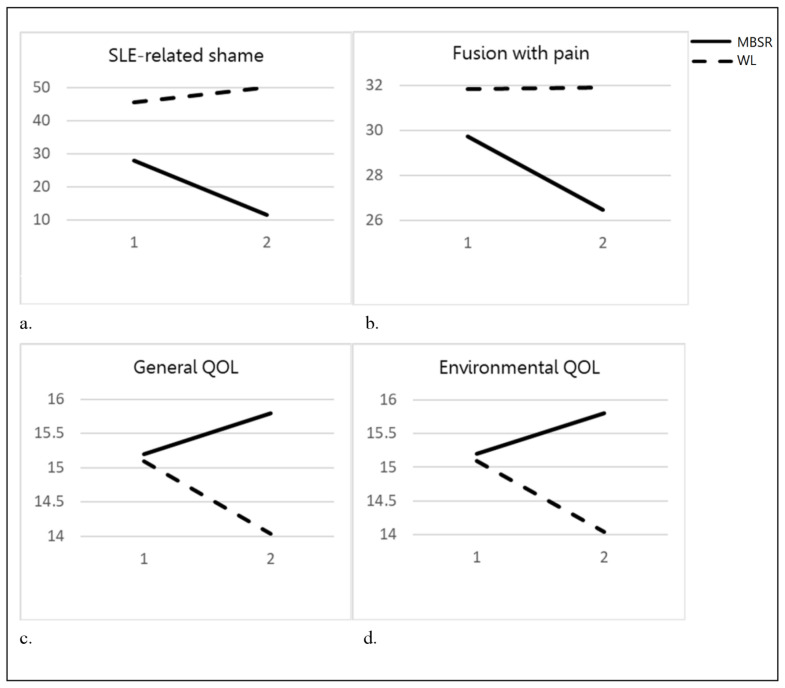
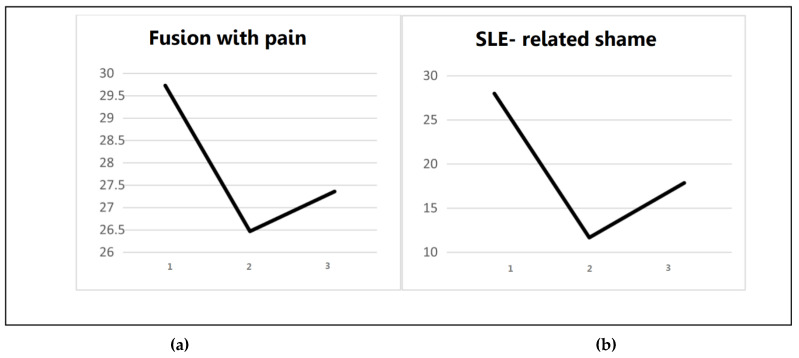
Compared to the WL, the MBSR group showed greater improvements in quality of life, psychological inflexibility in pain and SLE-related shame. Analysis among MBSR participants showed additional improvements in SLE symptoms and illness perception. Improvements in psychological inflexibility in pain and SLE-related shame remained stable over six months, and depression levels declined steadily from pre-treatment to follow-up. Qualitative analysis showed improvements in mindfulness components (e.g., less impulsivity, higher acceptance), as well as reduced stress following MBSR.
These results reveal the significant therapeutic potential of MBSR for SLE patients. With its emphasis on acceptance of negative physical and emotional states, mindfulness practice is a promising treatment option for SLE, which needs to be further applied and studied.
系统性红斑狼疮(SLE)具有巨大的心理影响。这项混合方法的试点随机对照试验旨在评估一种基于正念减压(MBSR)的适应性方案对SLE患者心理困扰的影响。
26名SLE患者被随机分配到MBSR团体治疗组(n = 15)或等待名单(WL)组(n = 11)。采用了一种针对SLE的适应性MBSR方案。进行了三次测量:干预前、干预后和6个月随访。一个子样本(n = 12)还接受了定性访谈,以评估他们对MBSR的主观体验。
与WL组相比,MBSR组在生活质量、疼痛方面的心理灵活性以及与SLE相关的羞耻感方面有更大改善。对MBSR参与者的分析表明,SLE症状和疾病认知方面有额外改善。疼痛方面的心理灵活性和与SLE相关的羞耻感的改善在六个月内保持稳定,抑郁水平从治疗前到随访稳步下降。定性分析表明,正念成分有所改善(例如,更少冲动、更高接纳度),并且MBSR后压力减轻。
这些结果揭示了MBSR对SLE患者具有显著的治疗潜力。正念练习强调接受负面的身体和情绪状态,是SLE一种有前景的治疗选择,有待进一步应用和研究。