Division of Nursing, Department of Neurobiology, Care Science and Society, Karolinska Institutet, Stockholm, Sweden.
Department of Medicine, Huddinge H7, Unit for Gastroenterology and Rheumatology, Karolinska Institutet, Stockholm, Sweden.
Clin Rheumatol. 2018 Jul;37(7):1825-1834. doi: 10.1007/s10067-018-4079-1. Epub 2018 Apr 14.
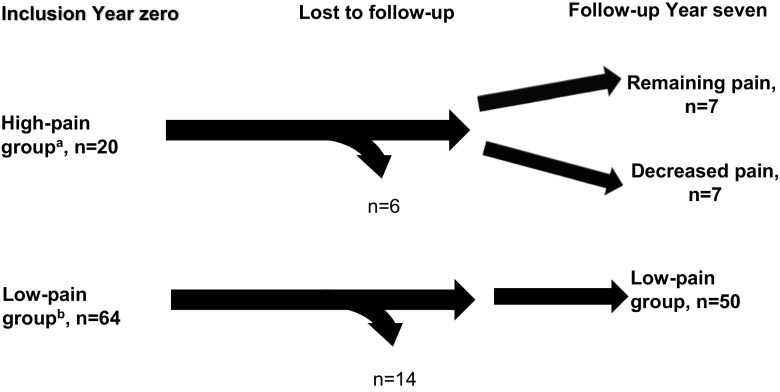
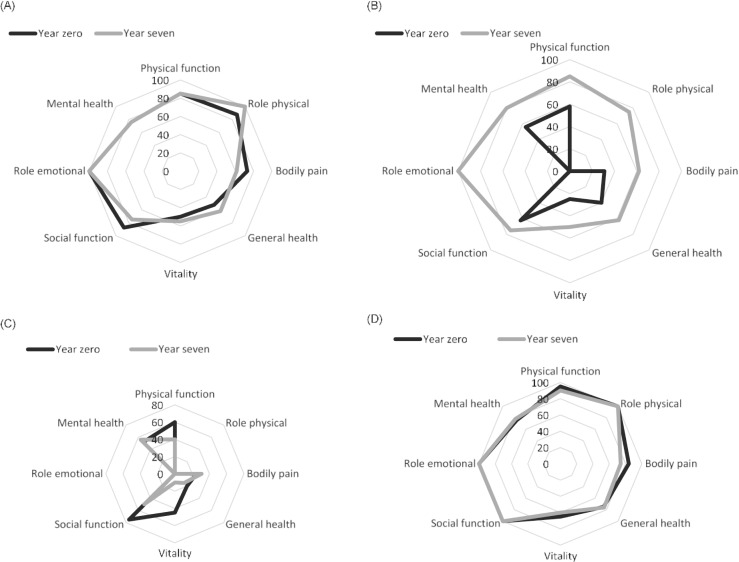
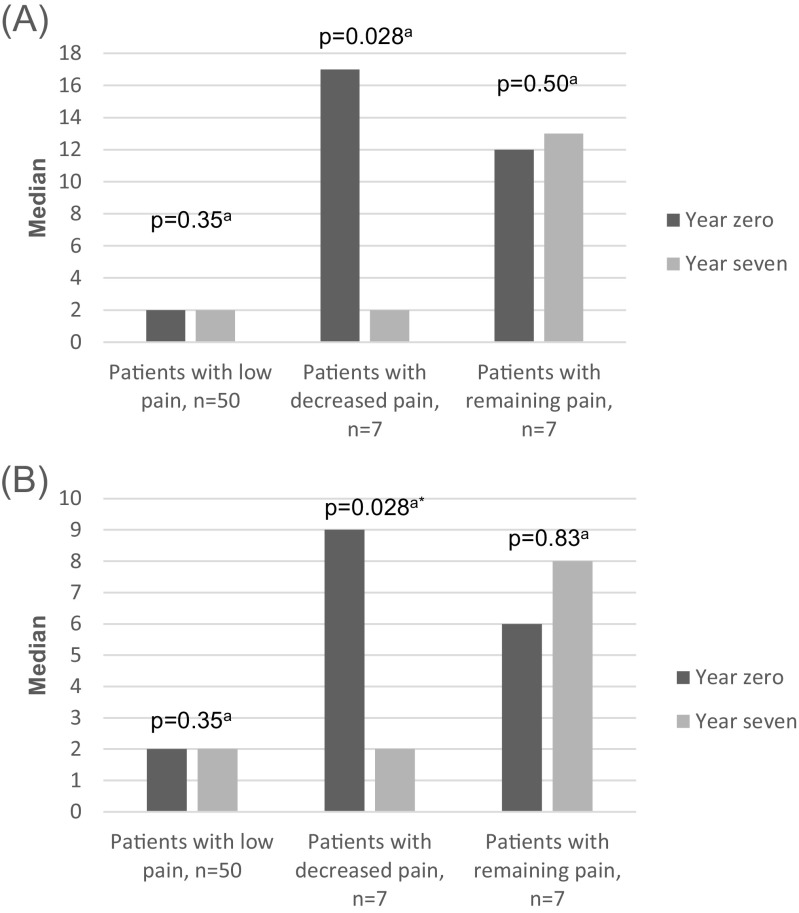
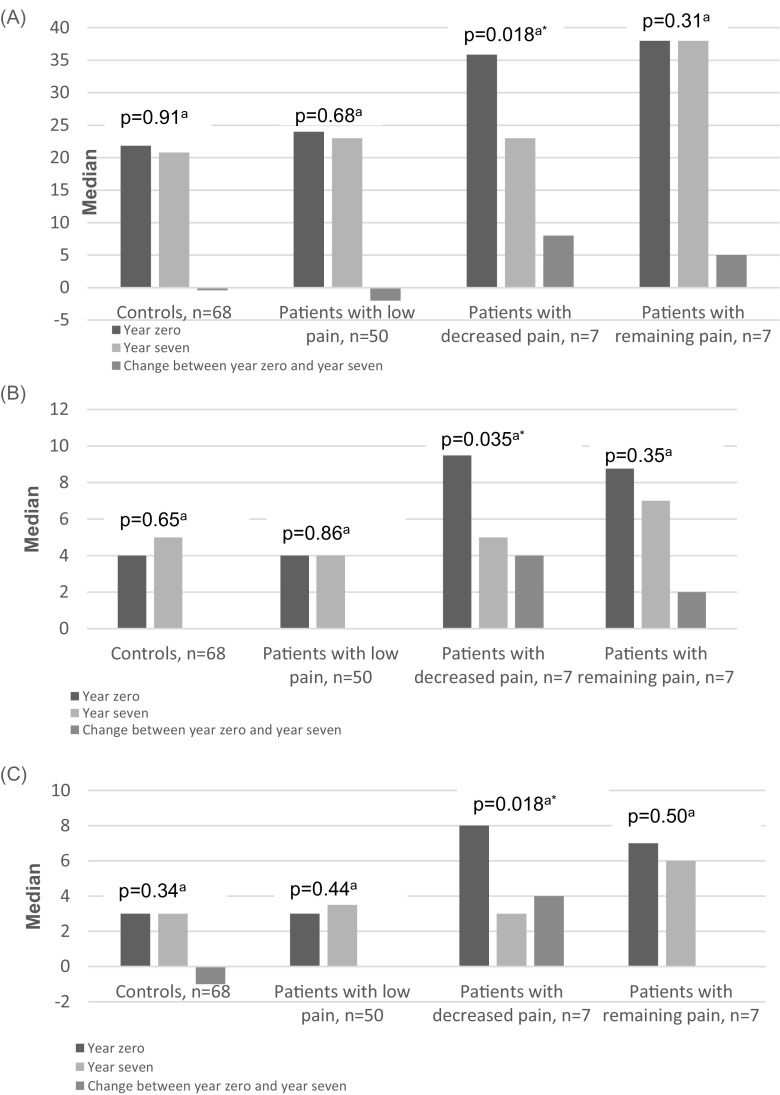
We have previously shown that most patients with systemic lupus erythematosus (SLE) reported low degree of SLE-related pain. However, 24% of the patients reported high degree of SLE-related pain, more fatigue, anxiety and depression, and worse health-related quality of life (HRQoL). To explore SLE-related pain, the presence of long-standing widespread pain, and patient-reported outcomes (PROs) after 7 years. Sixty-four out of 84 patients participated in a 7-year follow-up of the original survey and completed the same questionnaires answered at inclusion: pain (VAS 100 mm), fatigue (MAF), HRQoL (SF-36), anxiety and depression (HADS), and, if appropriate, a pain-drawing. Differences between inclusion and follow-up (change) were calculated. The patients with a low degree of SLE-related pain at inclusion reported no changes at follow-up in pain and PROs except for worsening in physical function in SF-36, median change (IQR) 0 (- 10 to 5), p = 0.024. Half of the patients with high degree of pain at inclusion reported decreased pain at follow-up, median change (IQR) 45 (35 to 65), p = 0.021; fatigue, 8 (8 to 17), p = 0.018; anxiety, 4 (1 to 4), p = 0.035; and depression, 4 (2 to 5), p = 0.018 and improvements in most dimensions of SF-36. The remaining half of the patients reported no changes regarding pain and PROs except for a worsening in vitality in SF-36, 20 (15 to 35), p = 0.0018. All patients with remaining high level of pain indicated long-standing widespread pain. After 7 years, a subgroup of patients with SLE reported remaining high level of SLE-related pain and a high symptom burden, including long-standing widespread pain. Such patients require more observant attention to receive appropriate treatment.
我们之前已经表明,大多数系统性红斑狼疮(SLE)患者报告的 SLE 相关疼痛程度较低。然而,24%的患者报告了高度的 SLE 相关疼痛、更多的疲劳、焦虑和抑郁,以及更差的健康相关生活质量(HRQoL)。为了探讨 SLE 相关疼痛、长期广泛疼痛的存在以及 7 年后患者报告的结局(PROs),我们对 84 名患者中的 64 名进行了 7 年的原始调查随访,并完成了相同的问卷:疼痛(VAS 100mm)、疲劳(MAF)、HRQoL(SF-36)、焦虑和抑郁(HADS),以及,如果合适,疼痛图。计算了纳入和随访(变化)之间的差异。在纳入时报告低度 SLE 相关疼痛的患者,除了 SF-36 的身体机能恶化外,疼痛和 PROs 没有变化,中位数变化(IQR)0(-10 至 5),p=0.024。纳入时报告高度疼痛的患者中有一半报告疼痛减轻,中位数变化(IQR)45(35 至 65),p=0.021;疲劳,8(8 至 17),p=0.018;焦虑,4(1 至 4),p=0.035;抑郁,4(2 至 5),p=0.018,SF-36 的大多数维度都有所改善。另一半患者除了 SF-36 的活力恶化外,疼痛和 PROs 没有变化,20(15 至 35),p=0.0018。所有报告持续高度疼痛的患者均表示存在长期广泛疼痛。7 年后,一小部分 SLE 患者报告仍存在高度的 SLE 相关疼痛和高症状负担,包括长期广泛疼痛。这些患者需要更密切的关注以获得适当的治疗。