Ospitia Nicolas, Aggelis Dimitrios G, Lefever Gerlinde
Department of Mechanics of Materials and Constructions (MeMC), Vrije Universiteit Brussel (VUB), Pleinlaan 2, 1050 Brussels, Belgium.
Sensors (Basel). 2021 Sep 28;21(19):6483. doi: 10.3390/s21196483.
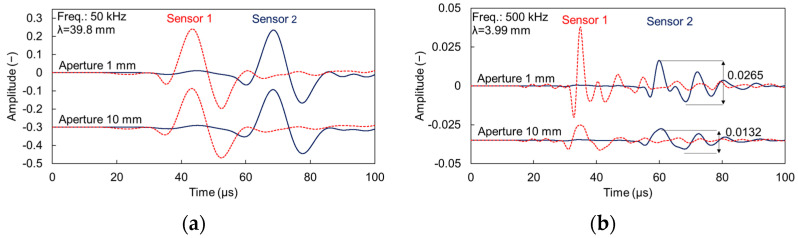
Concrete properties and damage conditions are widely evaluated by ultrasonics. When access is limited, the evaluation takes place from a single surface. In this case, the sensor size plays a crucial role due to the "aperture effect". While this effect is well documented regarding the amplitude or the frequency content of the surface (or Rayleigh) wave pulses, it has not been studied in terms of the wave velocity, although the velocity value is connected to concrete stiffness, porosity, damage degree, and is even empirically used to evaluate compressive strength. In this study, numerical simulations take place where sensors of different sizes are used to measure the surface wave velocity as well as its dependence on frequency (dispersion) and sensor size, showing the strong aperture effect and suggesting rules for reliable measurements on a concrete surface. The numerical trends are also validated by experimental measurements on a cementitious material by sensors of different sizes.
混凝土的性能和损伤状况广泛通过超声波进行评估。当检测受限,评估则从单一表面进行。在这种情况下,由于“孔径效应”,传感器尺寸起着至关重要的作用。虽然关于表面(或瑞利)波脉冲的幅度或频率成分,这种效应已有充分记载,但就波速而言尚未进行研究,尽管波速值与混凝土的刚度、孔隙率、损伤程度相关,甚至凭经验用于评估抗压强度。在本研究中,进行了数值模拟,使用不同尺寸的传感器测量表面波速度及其对频率(频散)和传感器尺寸的依赖性,显示出强烈的孔径效应,并给出了在混凝土表面进行可靠测量的规则。不同尺寸传感器对胶凝材料的实验测量也验证了数值趋势。