Division of Psychiatry, University of Edinburgh, Edinburgh, UK.
UK Dementia Research Institute, Edinburgh Medical School, University of Edinburgh, Edinburgh, UK.
Transl Psychiatry. 2021 Oct 12;11(1):523. doi: 10.1038/s41398-021-01644-9.
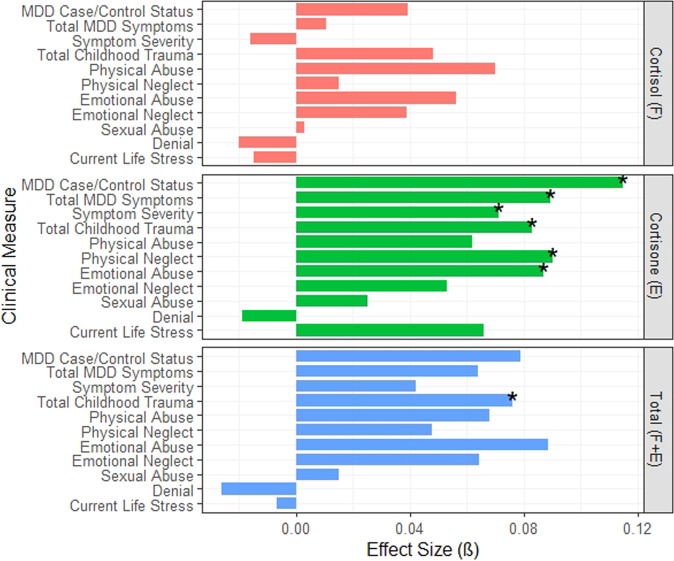
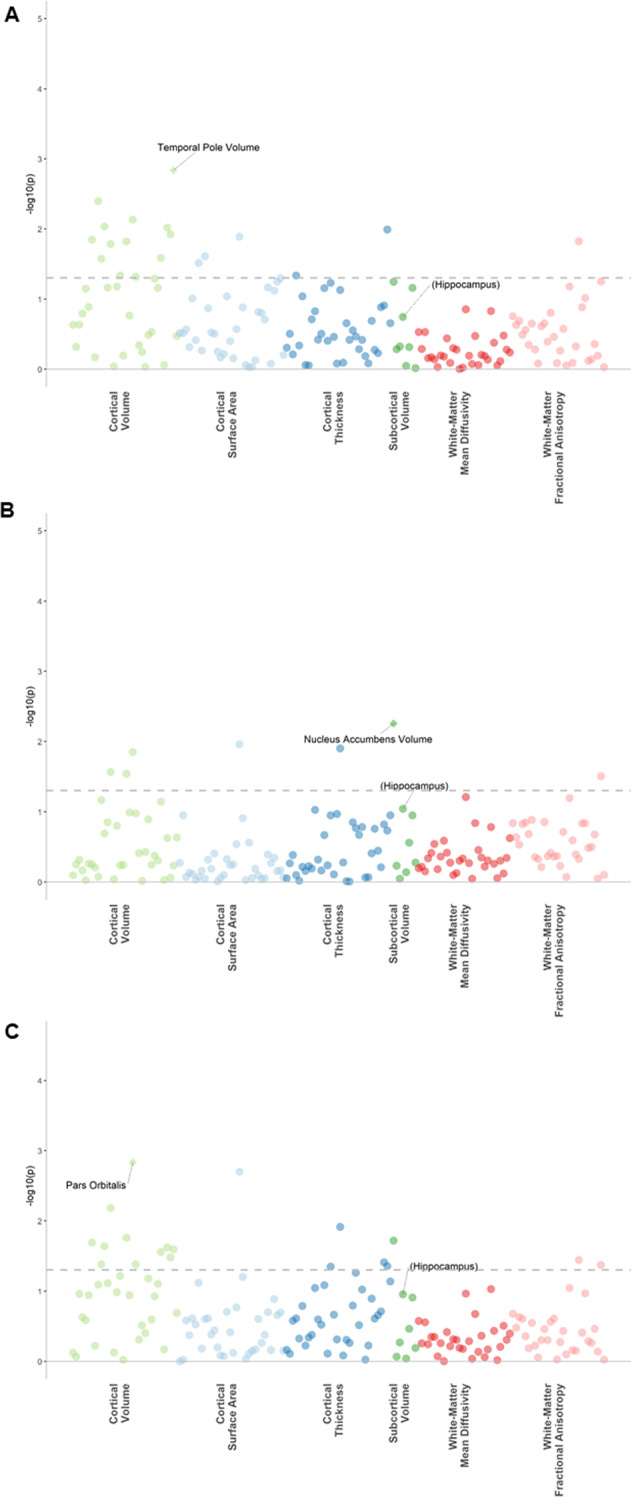
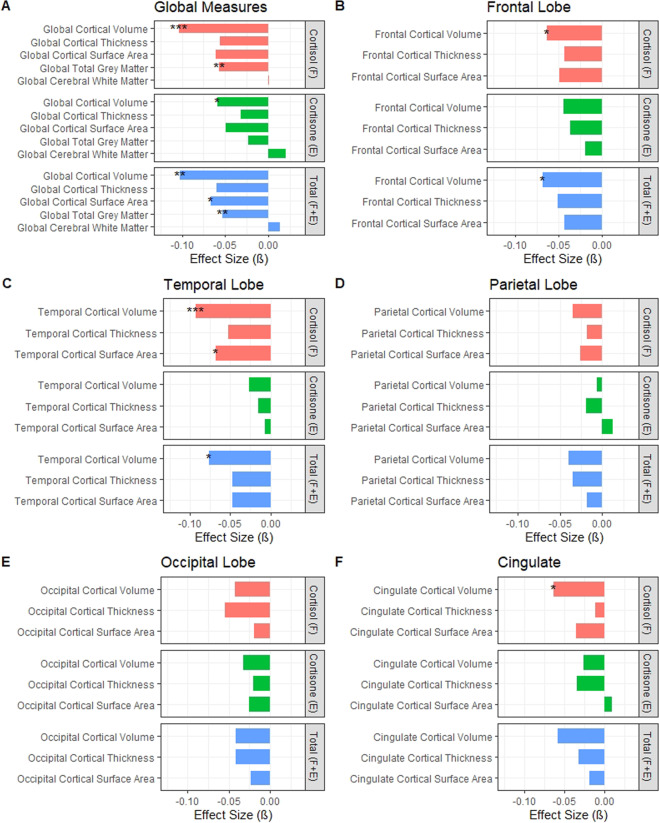
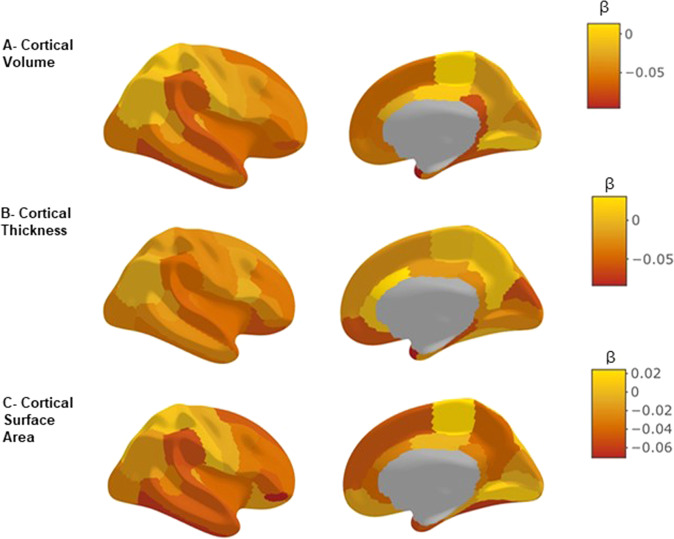
Hypothalamic-pituitary-adrenal (HPA) axis dysregulation has been commonly reported in major depressive disorder (MDD), but with considerable heterogeneity of results; potentially due to the predominant use of acute measures of an inherently variable/phasic system. Chronic longer-term measures of HPA-axis activity have yet to be systematically examined in MDD, particularly in relation to brain phenotypes, and in the context of early-life/contemporaneous stress. Here, we utilise a temporally stable measure of cumulative HPA-axis function (hair glucocorticoids) to investigate associations between cortisol, cortisone and total glucocorticoids with concurrent measures of (i) lifetime-MDD case/control status and current symptom severity, (ii) early/current-life stress and (iii) structural neuroimaging phenotypes, in N = 993 individuals from Generation Scotland (mean age = 59.1 yrs). Increased levels of hair cortisol were significantly associated with reduced global and lobar brain volumes with reductions in the frontal, temporal and cingulate regions (β = -0.057 to -0.104, all P < 0.05). Increased levels of hair cortisone were significantly associated with MDD (lifetime-MDD status, current symptoms, and severity; β = 0.071 to 0.115, all P = < 0.05), with early-life adversity (β = 0.083, P = 0.017), and with reduced global and regional brain volumes (global: β = -0.059, P = 0.043; nucleus accumbens: β = -0.075, P = 0.044). Associations with total glucocorticoids followed a similar pattern to the cortisol findings. In this large community-based sample, elevated glucocorticoids were significantly associated with MDD, with early, but not later-life stress, and with reduced global and regional brain phenotypes. These findings provide important foundations for future mechanistic studies to formally explore causal relationships between early adversity, chronic rather than acute measures of glucocorticoids, and neurobiological associations relevant to the aetiology of MDD.
下丘脑-垂体-肾上腺 (HPA) 轴失调在重度抑郁症 (MDD) 中较为常见,但结果存在较大差异;这可能是由于主要使用固有变量/阶段性系统的急性测量方法所致。MDD 中尚未系统地检查 HPA 轴活动的慢性长期测量,特别是在与脑表型相关的情况下,以及在早期/同时应激的情况下。在这里,我们利用 HPA 轴功能的一种时间稳定的测量方法(头发皮质醇)来研究皮质醇、皮质酮和总皮质激素与以下方面的相关性:(i) 终生 MDD 病例/对照状态和当前症状严重程度,(ii) 早期/当前生活应激,(iii) 结构神经影像学表型,在来自苏格兰一代 (平均年龄=59.1 岁) 的 993 个人中进行了研究。头发皮质醇水平升高与大脑整体和脑叶体积减少有关,与额、颞和扣带回区域减少有关(β=-0.057 至-0.104,所有 P<0.05)。头发皮质酮水平升高与 MDD(终生 MDD 状态、当前症状和严重程度;β=0.071 至 0.115,所有 P<0.05)、早期生活逆境(β=0.083,P=0.017)以及大脑整体和区域体积减少有关(整体:β=-0.059,P=0.043;伏隔核:β=-0.075,P=0.044)。总皮质激素的相关性与皮质醇的发现相似。在这个大型社区样本中,升高的皮质激素与 MDD 显著相关,与早期但不是晚期生活应激,以及与大脑整体和区域表型减少有关。这些发现为未来的机制研究提供了重要基础,以正式探索早期逆境、皮质醇的慢性而非急性测量方法与与 MDD 发病机制相关的神经生物学关联之间的因果关系。