The Pirbright Institute, Pirbright, Woking, Surrey, UK.
J Virol. 2022 Jan 12;96(1):e0134021. doi: 10.1128/JVI.01340-21. Epub 2021 Oct 13.
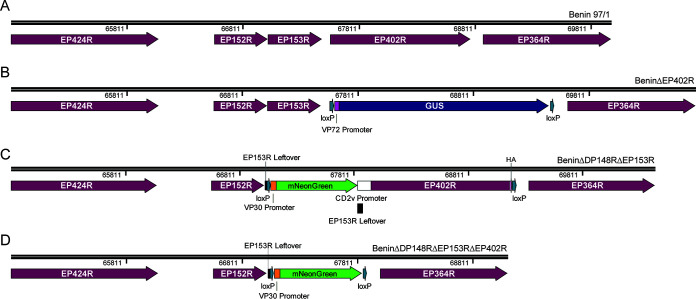
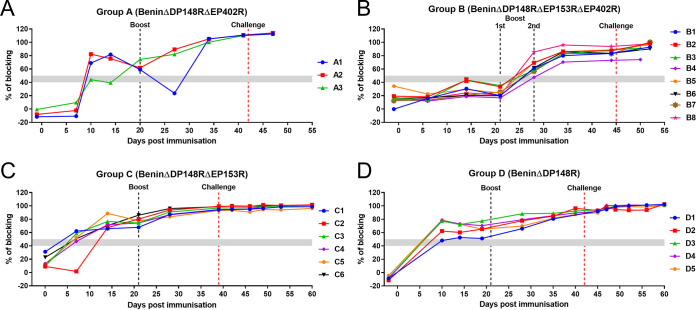
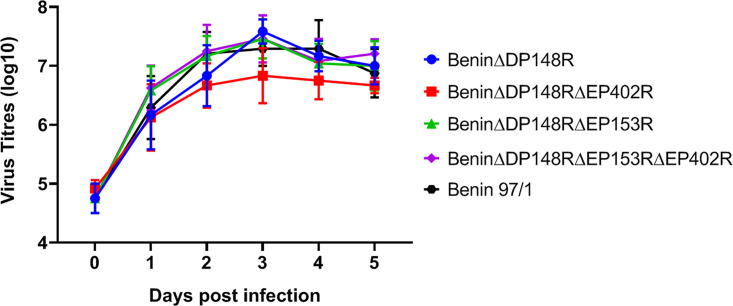
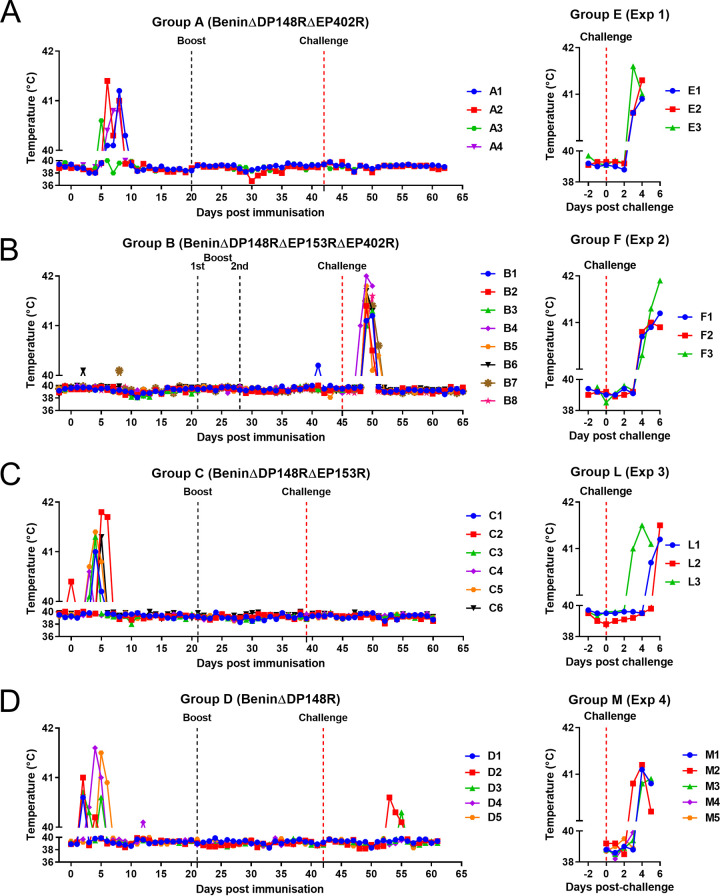
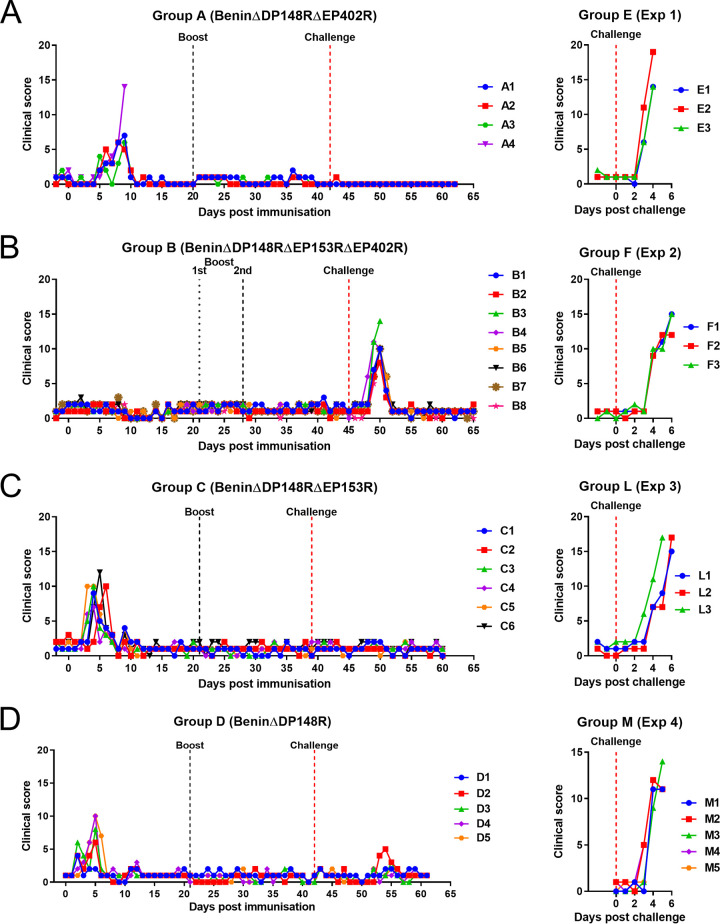
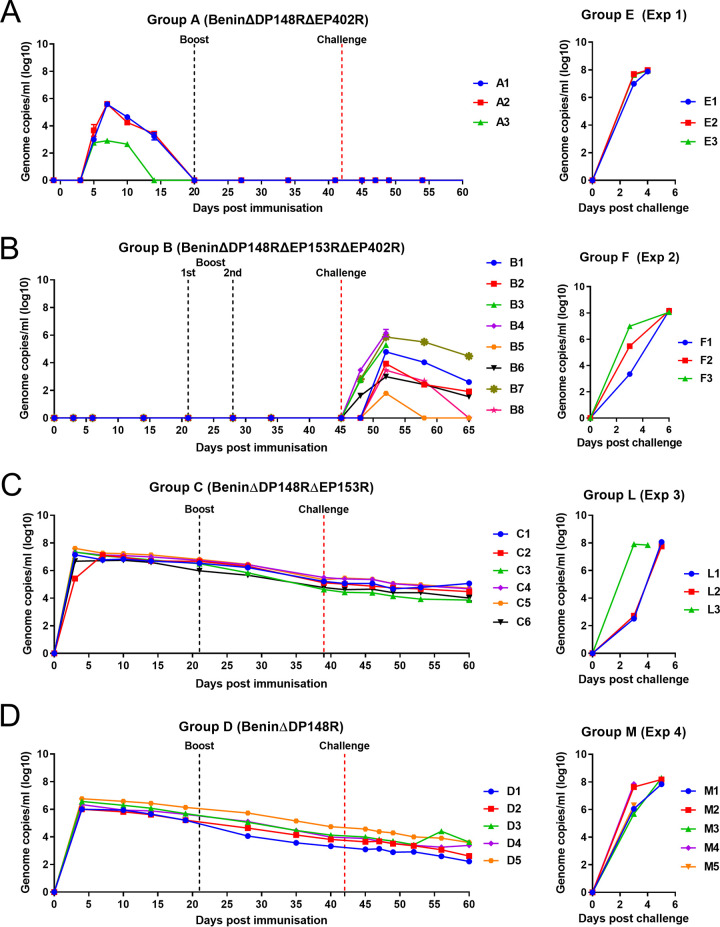
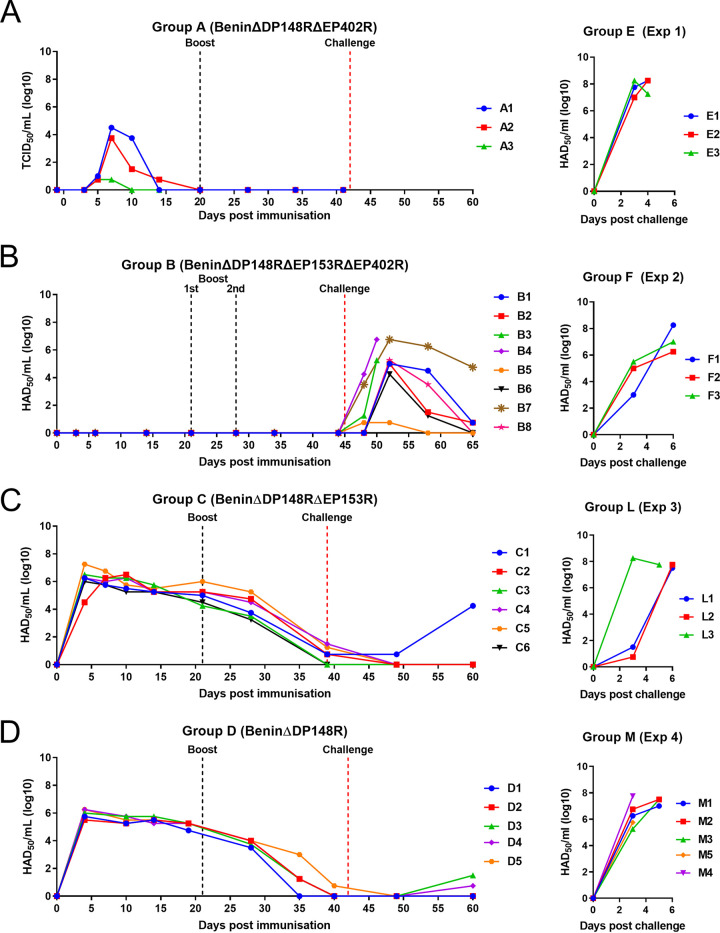
The limited knowledge on the role of many of the approximately 170 proteins encoded by African swine fever virus restricts progress toward vaccine development. Previously, the DP148R gene was deleted from the genome of genotype I virulent Benin 97/1 isolate. This virus, BeninΔDP148R, induced transient moderate clinical signs after immunization and high levels of protection against challenge. However, the BeninΔDP148R virus and genome persisted in blood over a prolonged period. In the current study, deletion of either EP402R or EP153R genes individually or in combination from BeninΔDP148R genome was shown not to reduce virus replication in macrophages . However, deletion of EP402R dramatically reduced the period of infectious virus persistence in blood in immunized pigs from 28 to 14 days and virus genome from 59 to 14 days while maintaining high levels of protection against challenge. The additional deletion of EP153R (BeninΔDP148RΔEP153RΔEP402R) further attenuated the virus, and no viremia or clinical signs were observed postimmunization. This was associated with decreased protection and detection of moderate levels of challenge virus in blood. Interestingly, the deletion of EP153R alone from BeninΔDP148R did not result in further virus attenuation and did not reduce the period of virus persistence in blood. These results show that EP402R and EP153R have a synergistic role in reducing clinical signs and levels of virus in blood. African swine fever virus (ASFV) causes a disease of domestic pigs and wild boar which results in death of almost all infected animals. The disease has a high economic impact, and no vaccine is available. We investigated the role of two ASFV proteins, called EP402R and EP153R, in determining the levels and length of time virus persists in blood from infected pigs. EP402R causes ASFV particles and infected cells to bind to red blood cells. Deletion of the EP402R gene dramatically reduced virus persistence in blood but did not reduce the level of virus. Deletion of the EP153R gene alone did not reduce the period or level of virus persistence in blood. However, deleting both EP153R and EP402R resulted in undetectable levels of virus in blood and no clinical signs showing that the proteins act synergistically. Importantly, the infected pigs were protected following infection with the wild-type virus that kills pigs.
关于非洲猪瘟病毒(ASFV)编码的大约 170 种蛋白质中的许多蛋白质的作用的知识有限,这限制了疫苗开发的进展。以前,从基因型 I 强毒贝宁 97/1 分离株的基因组中删除了 DP148R 基因。这种病毒,贝宁ΔDP148R,在免疫后引起短暂的中度临床症状,并对攻毒具有高水平的保护。然而,贝宁ΔDP148R 病毒及其基因组在血液中持续存在很长时间。在本研究中,单独或组合删除 EP402R 或 EP153R 基因,从贝宁ΔDP148R 基因组中没有减少巨噬细胞中的病毒复制。然而,EP402R 的缺失显著降低了免疫猪血液中传染性病毒持续时间,从 28 天减少到 14 天,病毒基因组从 59 天减少到 14 天,同时保持对攻毒的高水平保护。额外删除 EP153R(贝宁ΔDP148RΔEP153RΔEP402R)进一步减弱了病毒,免疫后没有观察到病毒血症或临床症状。这与保护力降低以及在血液中检测到中等水平的攻毒病毒有关。有趣的是,单独从贝宁ΔDP148R 中删除 EP153R 并没有导致病毒进一步衰减,也没有减少病毒在血液中的持续时间。这些结果表明,EP402R 和 EP153R 在降低临床症状和血液中病毒水平方面具有协同作用。非洲猪瘟病毒(ASFV)引起家猪和野猪的疾病,导致几乎所有感染动物死亡。该疾病具有很高的经济影响,并且没有疫苗可用。我们研究了两种 ASFV 蛋白,称为 EP402R 和 EP153R,在确定感染猪血液中病毒持续时间和水平中的作用。EP402R 导致 ASFV 颗粒和感染细胞与红细胞结合。EP402R 基因的缺失显著降低了血液中的病毒持续时间,但没有降低病毒水平。单独删除 EP153R 基因不会降低病毒在血液中的持续时间或水平。然而,同时删除 EP153R 和 EP402R 会导致血液中无法检测到病毒,并且没有临床症状表明这两种蛋白具有协同作用。重要的是,感染猪在感染野生型病毒后得到了保护,这种病毒会杀死猪。