Institute for Digestive Research, Lithuanian University of Health Sciences, Kaunas, Lithuania.
Institute of Clinical Molecular Biology, Christian-Albrechts-University of Kiel, Kiel, Germany.
Clin Transl Gastroenterol. 2021 Sep 24;12(9):e00403. doi: 10.14309/ctg.0000000000000403.
Gastric cancer (GC) diagnosis in late stages and high mortality rates are the main issues that require new noninvasive molecular tools. We aimed to assess somatic mutational profiles in GC tissue and plasma cell-free DNA (cfDNA), evaluate their concordance rate, and analyze the role of multilayer molecular profiling to predict disease state and prognosis.
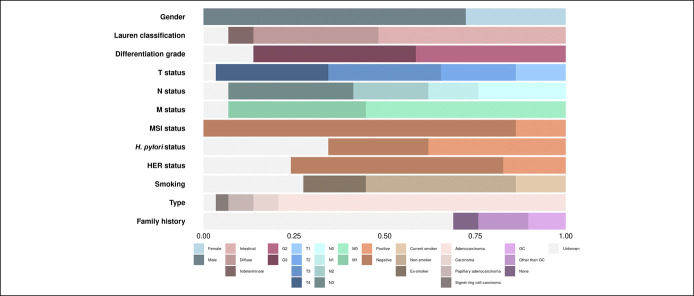
Treatment-naive GC patient group (n = 29) was selected. Whole exome sequencing (WES) of GC tissue was performed, and a unique 38-gene panel for deep targeted sequencing of plasma cfDNA was developed. Oncoproteins were measured by enzyme-linked immunosorbent assay, and other variables such as tumor mutational burden and microsatellite instability were evaluated using WES data.
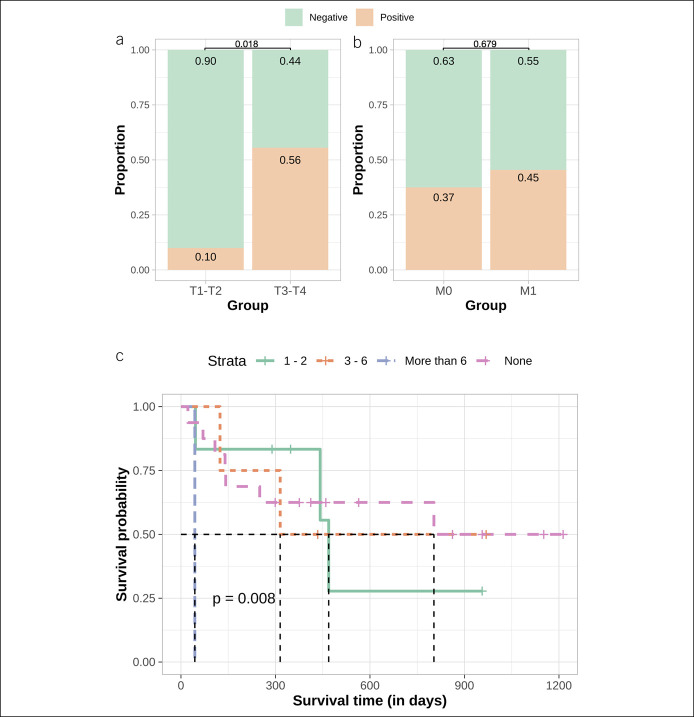
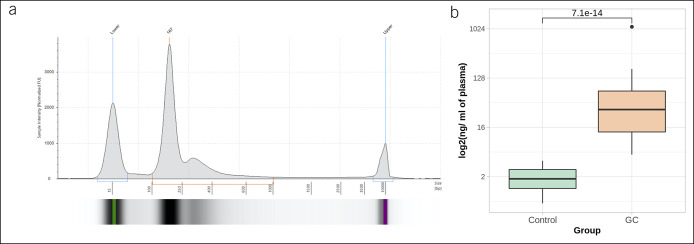
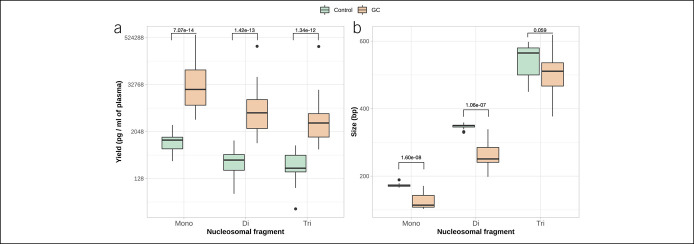
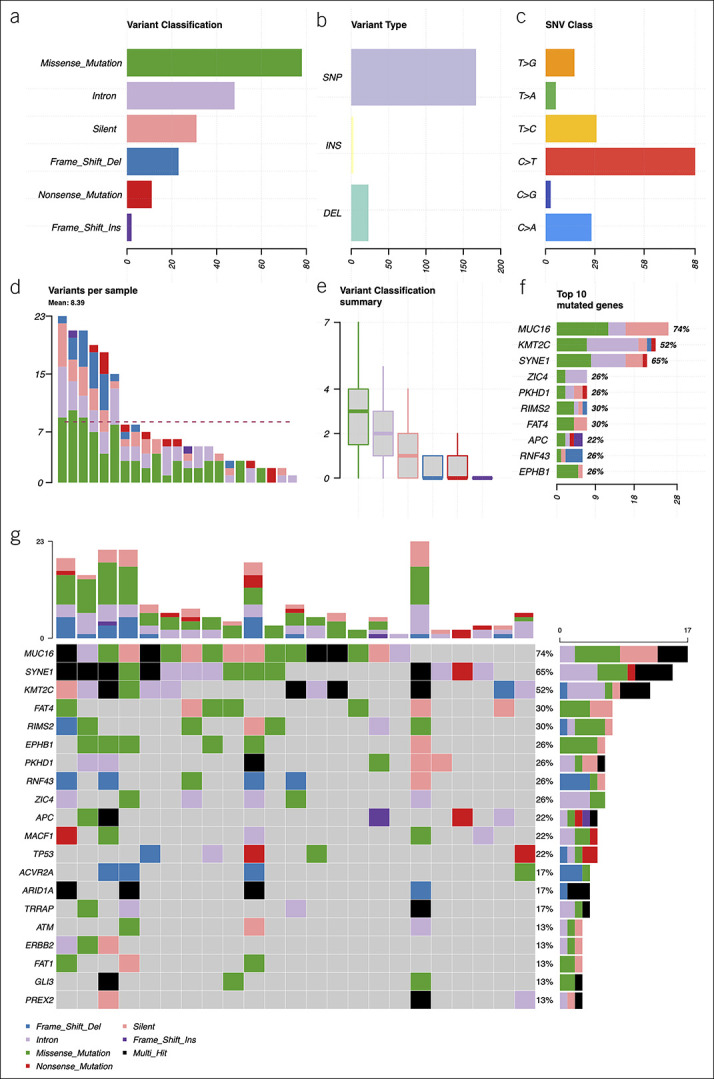
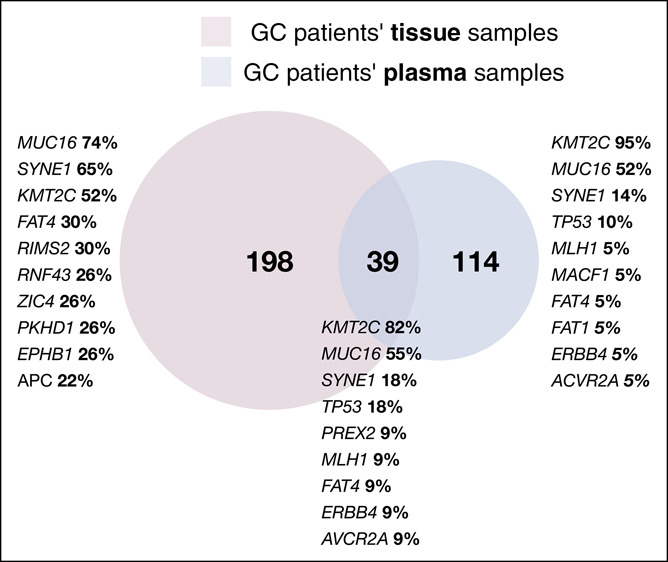
The yield of cfDNA was increased 43.6-fold; the integrity of fragments was decreased in GC compared with controls. WES analysis of cancerous tissue and plasma cfDNA (targeted sequencing) mutational profiles revealed 47.8% concordance. The increased quantity of GC tissue-derived alterations detected in cfDNA was associated with worse patients' survival. Analysis of importance of multilayer variables and receiver operating characteristic curve showed that combination of 2 analytes: (i) quantity of tissue matching alterations and (ii) presence of any somatic alteration in plasma cfDNA resulted in area under curve 0.744 when discriminating patients with or without distant metastasis. Furthermore, cfDNA sequence alterations derived from tumor tissue were detected in patients who had even relatively small GC tumors (T1-T2).
Our results indicate that quantitative and qualitative cfDNA mutational profile analysis is a promising tool for evaluating GC disease status or poorer prognosis.
胃癌(GC)的晚期诊断和高死亡率是需要新的非侵入性分子工具的主要问题。我们旨在评估 GC 组织和血浆无细胞 DNA(cfDNA)中的体细胞突变谱,评估其一致性率,并分析多层分子谱分析在预测疾病状态和预后中的作用。
选择未经治疗的 GC 患者组(n=29)。对 GC 组织进行全外显子组测序(WES),并开发了一种用于深度靶向测序血浆 cfDNA 的独特 38 基因面板。通过酶联免疫吸附测定法测量癌蛋白,并用 WES 数据评估其他变量,如肿瘤突变负担和微卫星不稳定性。
cfDNA 的产量增加了 43.6 倍;与对照组相比,片段的完整性在 GC 中降低。癌症组织和血浆 cfDNA(靶向测序)突变谱的 WES 分析显示 47.8%的一致性。在 cfDNA 中检测到更多源自 GC 组织的改变与患者生存状况恶化相关。分析多层变量的重要性和接收者操作特征曲线表明,当区分有无远处转移的患者时,组合 2 种分析物:(i)组织匹配改变的数量和(ii)血浆 cfDNA 中存在任何体细胞改变的数量,曲线下面积为 0.744。此外,源自肿瘤组织的 cfDNA 序列改变在即使是相对较小的 GC 肿瘤(T1-T2)的患者中也被检测到。
我们的结果表明,定量和定性 cfDNA 突变谱分析是评估 GC 疾病状态或预后较差的有前途的工具。