CAS Key Laboratory of Genome Science & Information, Beijing Institute of Genomics, Chinese Academy of Sciences/China National Center for Bioinformation, Beijing, China.
Institute for Stem Cell and Regeneration, Chinese Academy of Sciences, Beijing, China.
Blood Adv. 2021 Dec 14;5(23):5396-5409. doi: 10.1182/bloodadvances.2021005167.
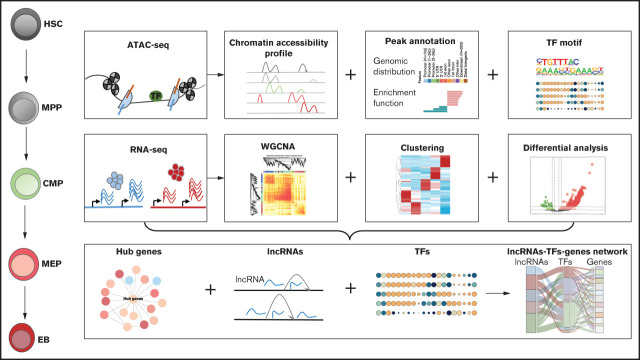
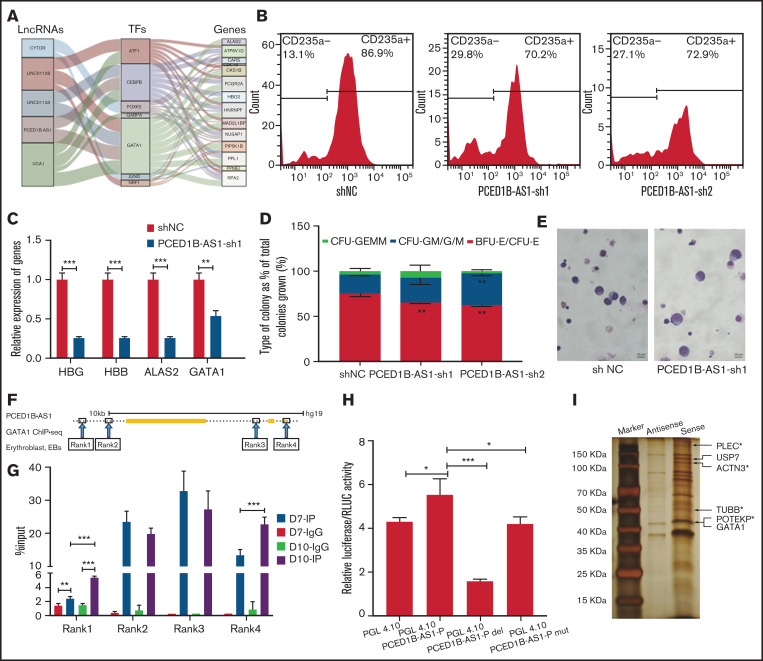
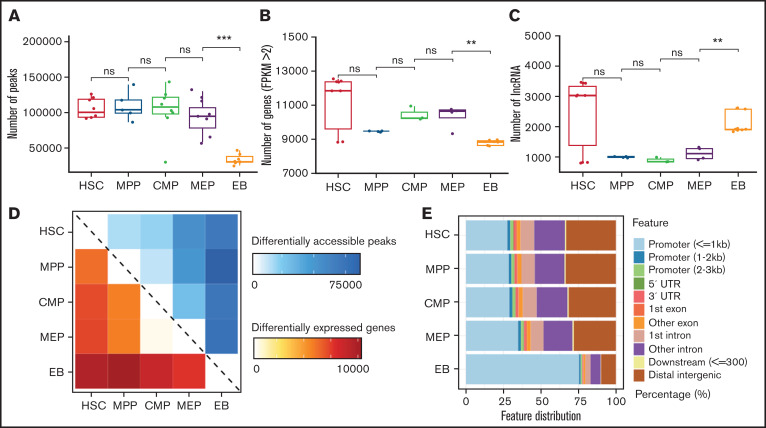
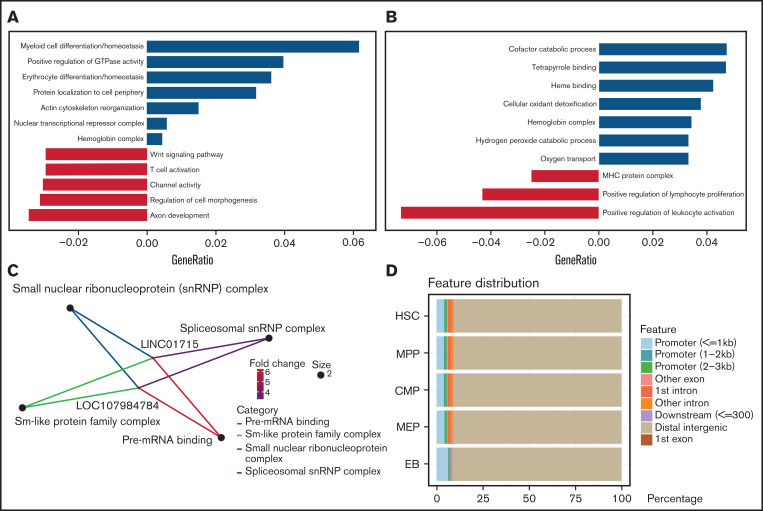
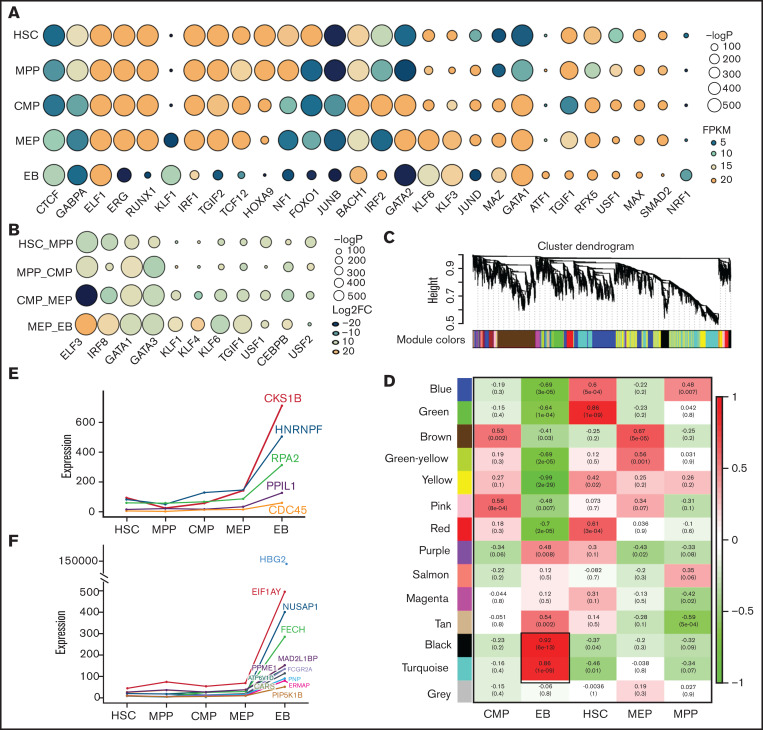
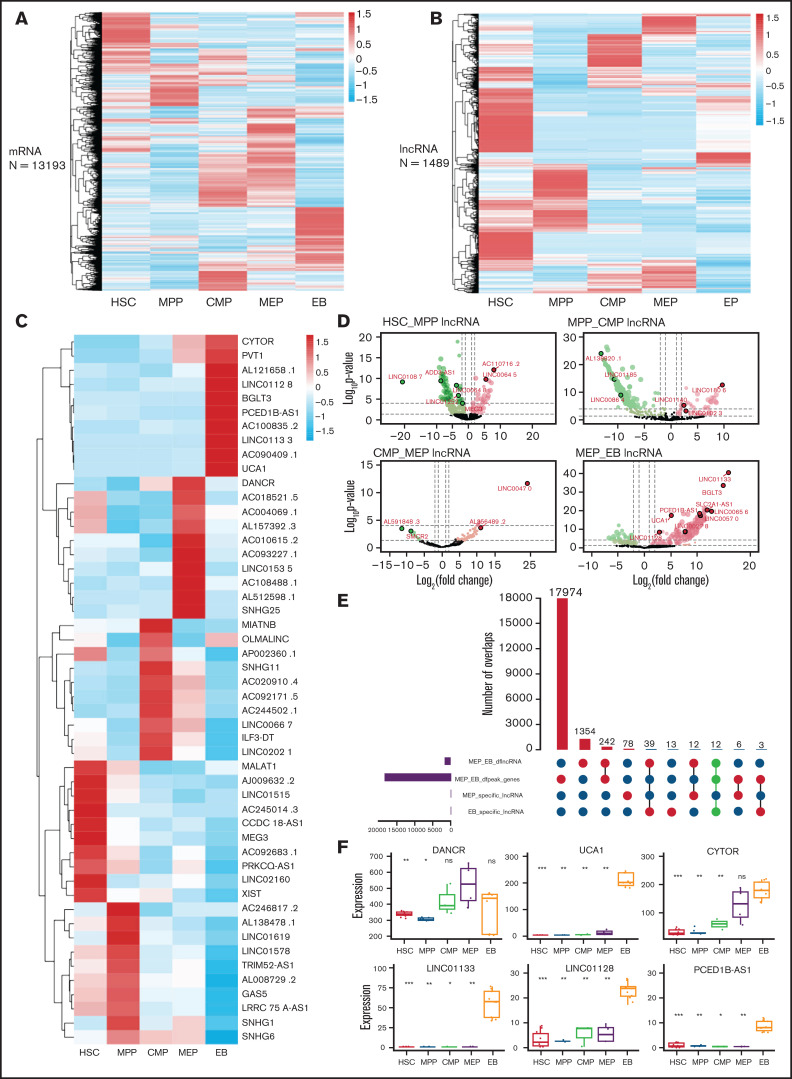
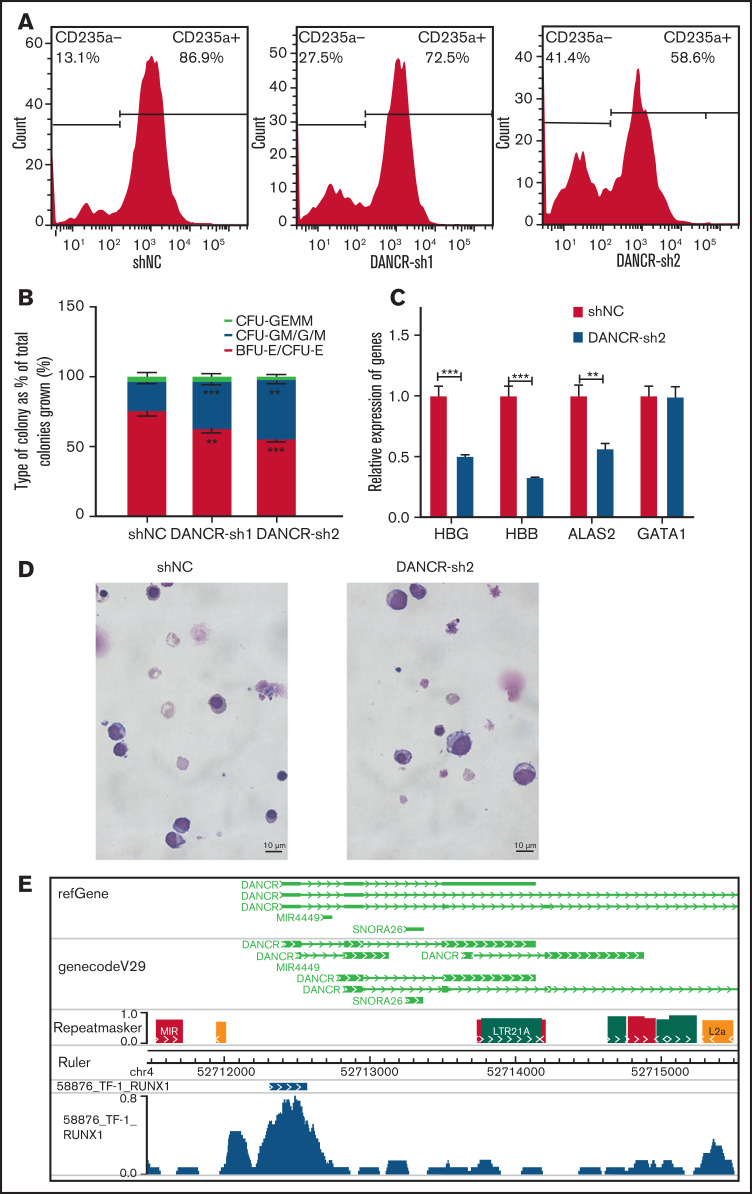
Erythroid differentiation is a dynamic process regulated by multiple factors, whereas the interaction between long noncoding RNAs (lncRNAs) and chromatin accessibility and its influence on erythroid differentiation remains unclear. To elucidate this interaction, we used hematopoietic stem cells, multipotent progenitor cells, common myeloid progenitor cells, megakaryocyte-erythroid progenitor cells, and erythroblasts from human cord blood as an erythroid differentiation model to explore the coordinated regulatory functions of lncRNAs and chromatin accessibility by integrating RNA-seq and ATAC-seq data. We revealed that the integrated network of chromatin accessibility and lncRNAs exhibits stage-specific changes throughout the erythroid differentiation process and that the changes at the erythroblast stage of maturation are dramatic. We identified a subset of stage-specific lncRNAs and transcription factors (TFs) that associate with chromatin accessibility during erythroid differentiation, in which lncRNAs are key regulators of terminal erythroid differentiation via an lncRNA-TF-gene network. LncRNA PCED1B-AS1 was revealed to regulate terminal erythroid differentiation by coordinating GATA1 dynamically binding to the chromatin and interacting with the cytoskeleton network during erythroid differentiation. DANCR, another lncRNA that is highly expressed at the megakaryocyte-erythroid progenitor cell stage, was verified to promote erythroid differentiation by compromising megakaryocyte differentiation and coordinating with chromatin accessibility and TFs, such as RUNX1. Overall, our results identify the associated network of lncRNAs and chromatin accessibility in erythropoiesis and provide novel insights into erythroid differentiation and abundant resources for further study.
红细胞分化是一个受多种因素调控的动态过程,而长链非编码 RNA(lncRNA)与染色质可及性的相互作用及其对红细胞分化的影响尚不清楚。为了阐明这种相互作用,我们使用造血干细胞、多能祖细胞、共同髓系祖细胞、巨核细胞-红细胞祖细胞和来自人脐血的红细胞作为红细胞分化模型,通过整合 RNA-seq 和 ATAC-seq 数据来探索 lncRNA 和染色质可及性的协调调控功能。我们揭示了染色质可及性和 lncRNA 的整合网络在整个红细胞分化过程中表现出阶段特异性变化,并且在成熟的红细胞阶段的变化是显著的。我们确定了一组在红细胞分化过程中与染色质可及性相关的特定阶段的 lncRNA 和转录因子(TFs),其中 lncRNA 通过 lncRNA-TF-基因网络是终端红细胞分化的关键调节剂。lncRNA PCED1B-AS1 通过协调 GATA1 在红细胞分化过程中动态结合染色质并与细胞骨架网络相互作用,被揭示为调节终端红细胞分化的关键调节剂。另一种在巨核细胞-红细胞祖细胞阶段高度表达的 lncRNA DANCR,被证实通过损害巨核细胞分化并与染色质可及性和 TF(如 RUNX1)协调来促进红细胞分化。总的来说,我们的研究结果确定了红细胞生成中 lncRNA 和染色质可及性的相关网络,为红细胞分化提供了新的见解,并为进一步研究提供了丰富的资源。