Student Scientific Society, Department of Gastrointestinal Surgery, Medical University of Silesia, Katowice, Poland.
Department of Gastrointestinal Surgery, Medical University of Silesia, Katowice, Poland.
Med Sci Monit. 2021 Oct 14;27:e932809. doi: 10.12659/MSM.932809.
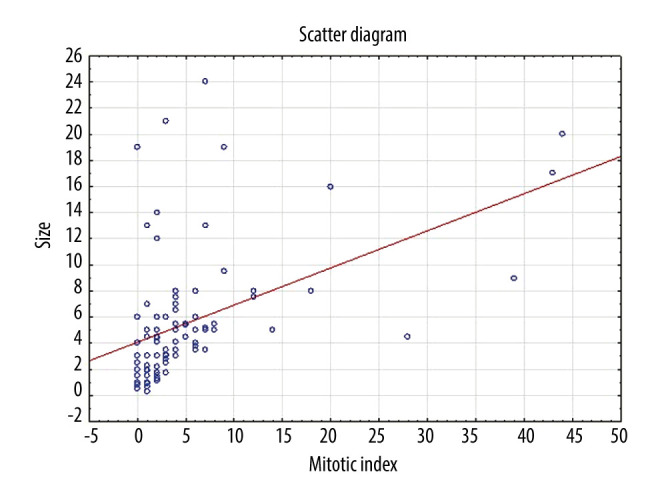
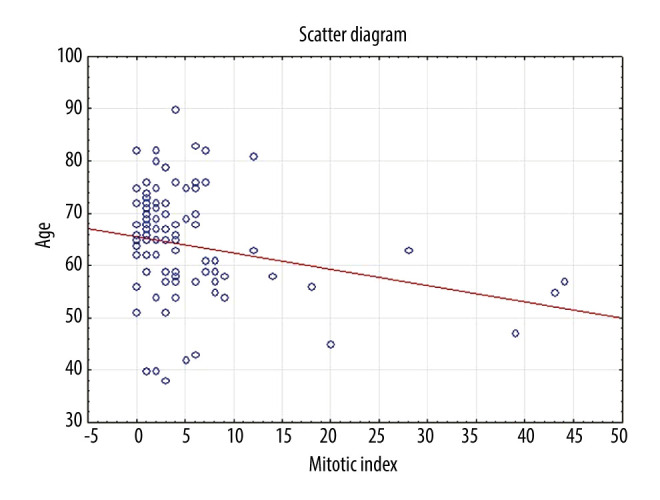
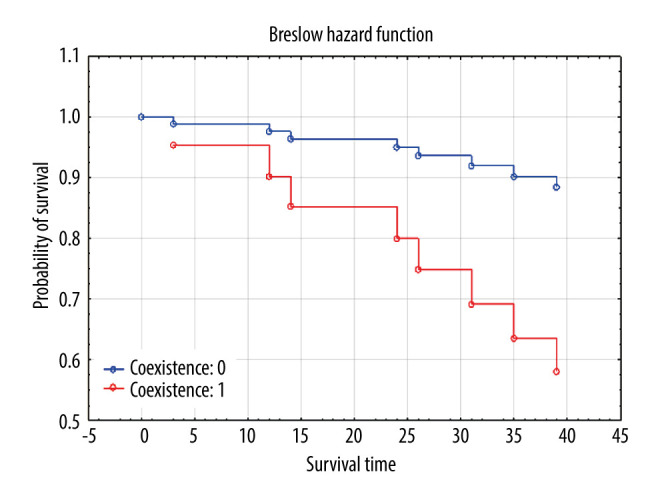
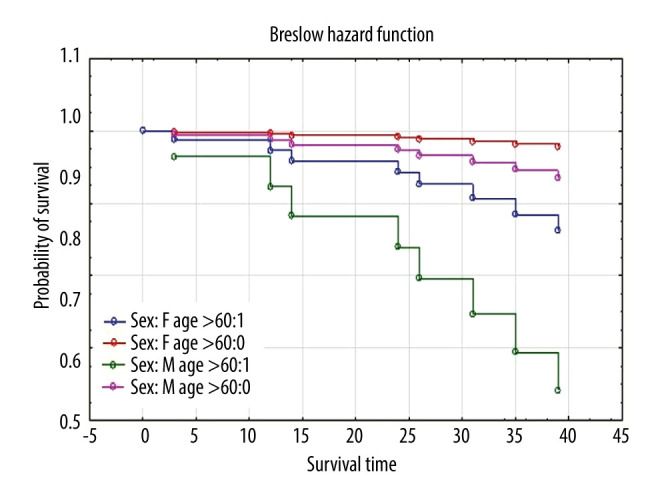
BACKGROUND Gastrointestinal stromal tumors (GISTs) arise in the smooth muscle pacemaker interstitial cells of Cajal, or similar cells. The aim of this retrospective study between 2009 and 2019 from a single center in Poland was to assess the selected prognostic factors (location, tumor size, mitotic index, body mass index (BMI), length of hospital stay, age, sex, and coexistent neoplasm) and to investigate postoperative outcomes in 98 patients with GIST of the upper, middle, and lower gastrointestinal tract. MATERIAL AND METHODS Between 2009 and 2019, 98 patients (50 women and 48 men) with an average age of 63.8 years (range from 38 to 90 years) were operated on for GIST in the Department of Gastrointestinal Surgery in Katowice, Poland. Based on the intraoperative and postoperative investigations, the tumor size and mitotic index were determined in each case. RESULTS A statistically significant correlation between age and mitotic index (MI) was found (p=0.02). The higher the MI, the younger the age of the patients. However, regardless of sex, younger patients had a tendency to survive longer. A >60-year-old male patient's probability of survival was around 65% after 40 months. Higher mitotic index was also associated with larger tumor size (p<0.0001). Female patients had a tendency to survive longer than males. CONCLUSIONS The findings from this small retrospective study support the importance of preoperative evaluation and frequent postoperative follow-up for patients with GIST of the gastrointestinal tract, particularly in older male patients, and patients with malignant comorbidities, which are associated with increased mortality.
胃肠道间质瘤(GIST)起源于平滑肌起搏细胞间质细胞 Cajal 或类似细胞。本研究回顾性分析了 2009 年至 2019 年波兰某单一中心的 98 例上、中、下消化道 GIST 患者的部分预后因素(位置、肿瘤大小、有丝分裂指数、体重指数(BMI)、住院时间、年龄、性别和并存肿瘤),并探讨了这些患者的术后结局。
2009 年至 2019 年,波兰卡托维兹胃肠外科系对 98 例(女性 50 例,男性 48 例)平均年龄 63.8 岁(38-90 岁)的 GIST 患者进行了手术。根据术中及术后检查,确定了每个病例的肿瘤大小和有丝分裂指数。
发现年龄和有丝分裂指数(MI)之间存在显著的相关性(p=0.02)。MI 越高,患者的年龄越小。然而,无论性别如何,年轻患者的生存时间都有延长的趋势。40 个月后,年龄>60 岁的男性患者的生存率约为 65%。较高的有丝分裂指数也与较大的肿瘤大小相关(p<0.0001)。女性患者的生存时间长于男性。
这项小型回顾性研究的结果支持对胃肠道 GIST 患者进行术前评估和频繁的术后随访的重要性,尤其是对老年男性患者和患有恶性合并症的患者,这些患者的死亡率较高。