Kumar Satyendra, Rugvedi Padmanabha, Mani Kamaraj, Gupta Arun
Dabur Research and Development Centre, Dabur India Limited, Sahibabad, Ghaziabad, India.
Dabur Research and Development Centre, Dabur India Limited, Sahibabad, Ghaziabad, India.
J Ayurveda Integr Med. 2021 Oct-Dec;12(4):649-656. doi: 10.1016/j.jaim.2021.06.022. Epub 2021 Oct 11.
Particulate matter (PM) is the major component of air pollution, which includes emissions from both anthropogenic and natural sources. PM, with aerodynamic diameter of 2.5 ± 10 μm can remain in the air for a long time and be deposited in the lungs through inhalation and hence, is a major threat to human health.
The objective of the present study was to examine the protective effect of Chyawanprash (CP) on PM-induced pulmonary disease through estimation of cytokines and immunoglobulins.
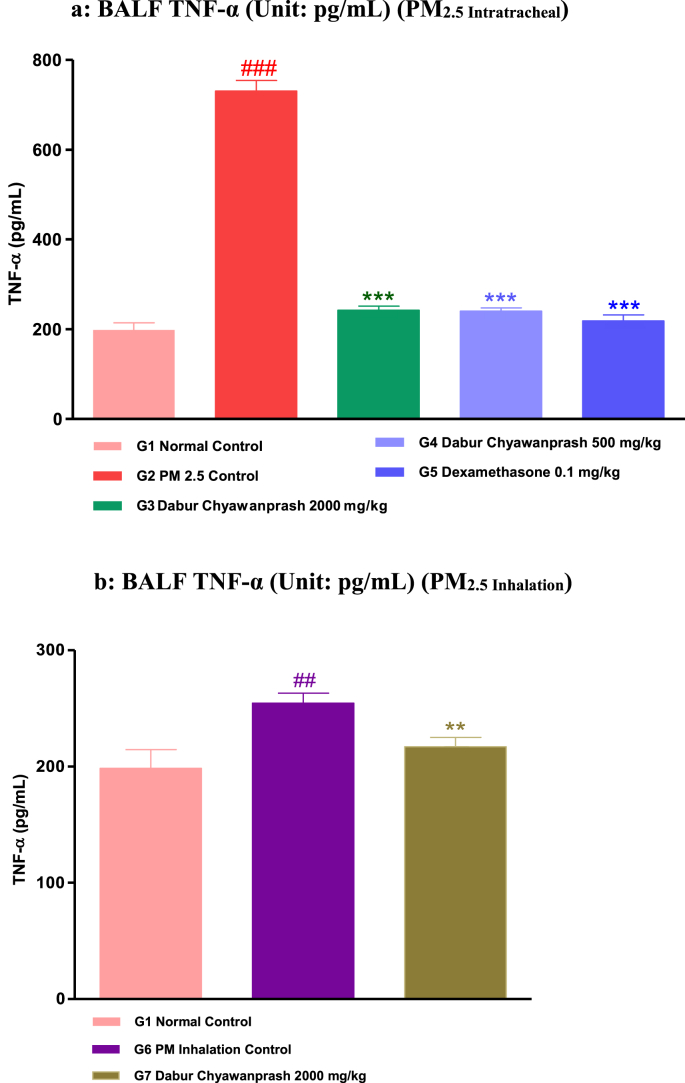
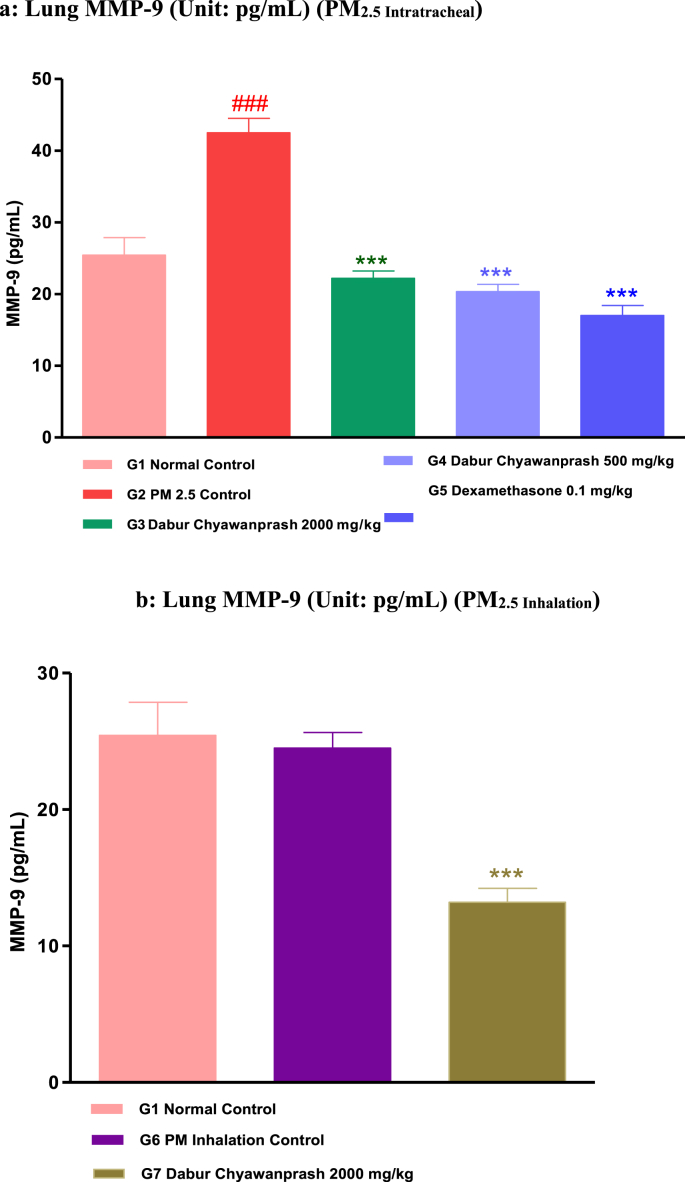
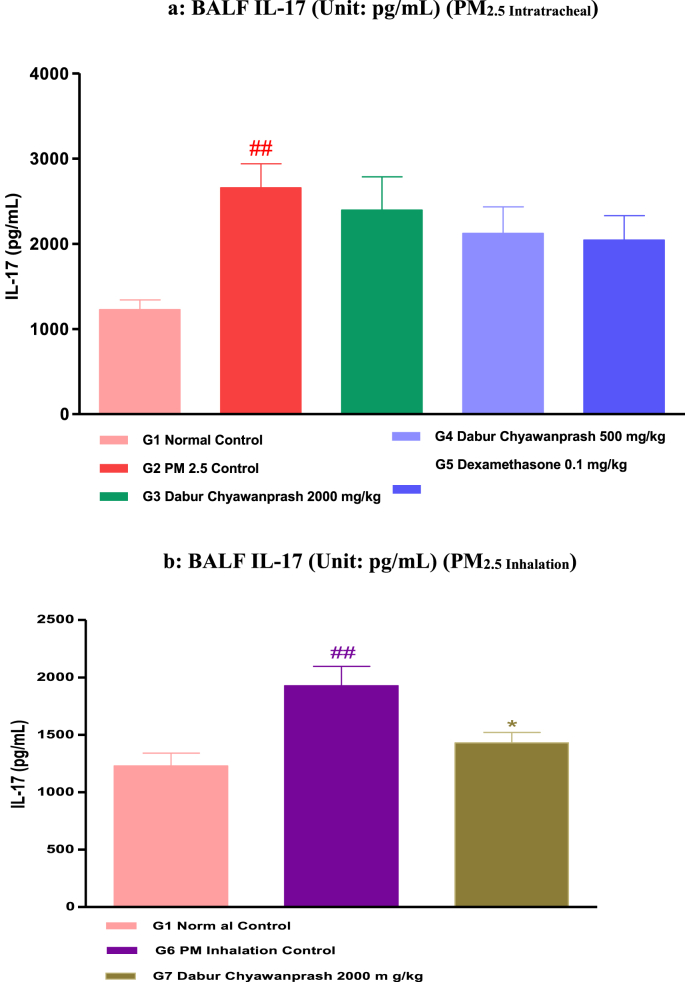
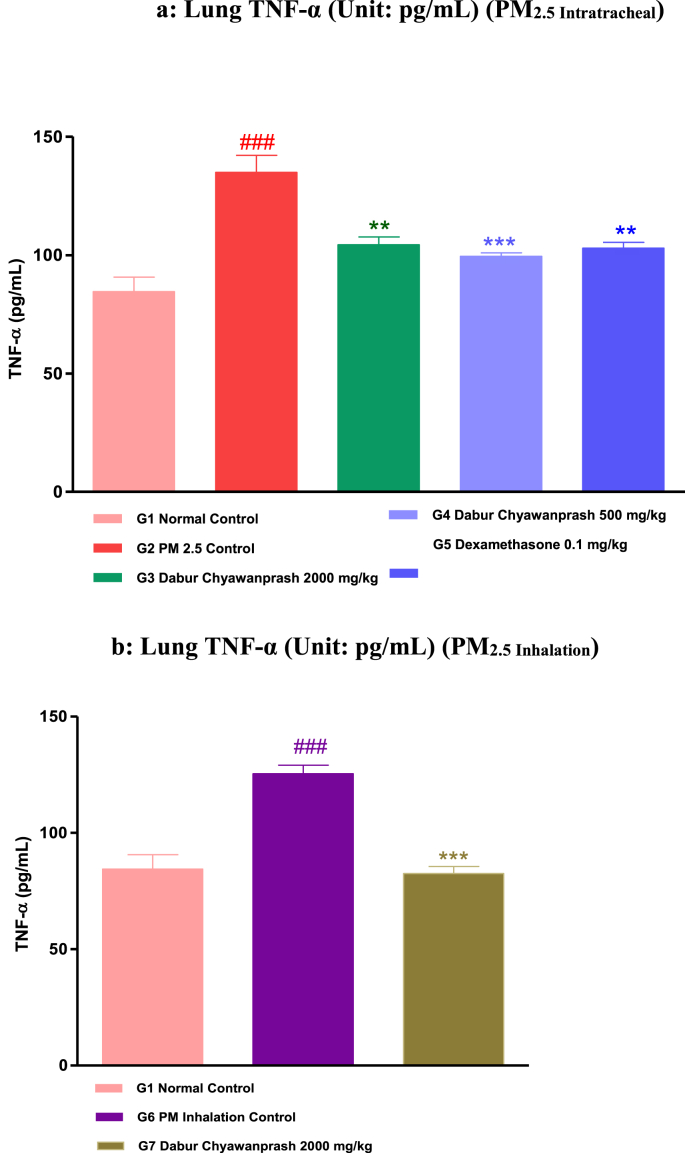
CP, standard drug, and vehicle (Group G1 to Group G7) were administered orally at the dose volume of 10 ml/kg, for 28 consecutive days (Prophylactic treatment; i.e., Day 1 to Day 28) and next 10 days (i.e., Day 29 to Day 38) of co-treatment with inducing agent PM intratracheally. Animals of group G6 (Inhalation + control) and G7 (Inhalation + CP) were exposed group-wise to PM aerosol (2 mg/5 ml, 15 min) via inhalation in histamine chamber on Days 29, 31, 33, 35, and 37. On Day 38, animals were anesthetised and blood and broncho alveolar lavage fluid (BALF) were collected. Animals were sacrificed and lungs were collected for histology.
Prophylactic benefit of CP against pulmonary pathology was evidenced by the inhibition of inflammatory cytokines (BALF: TNF a, IFN-g, IL-7, IL-6 and lung: TNFa, Histamine and IL-6), chemokines (Lung: MMP-9), inflammatory cell infiltration (cell counts in BALF), and histopatholoy in experimental mice model.
These findings suggest that CP has potential benefit in protecting from harmful effects caused by air pollutants such as PM.
颗粒物(PM)是空气污染的主要成分,其来源包括人为源和自然源排放。空气动力学直径为2.5±10μm的PM可在空气中长时间停留,并通过吸入沉积在肺部,因此是对人类健康的主要威胁。
本研究的目的是通过评估细胞因子和免疫球蛋白来检测恰瓦南普拉什(CP)对PM诱导的肺部疾病的保护作用。
以10ml/kg的剂量体积口服给予CP、标准药物和赋形剂(G1组至G7组),连续28天(预防性治疗,即第1天至第28天),接下来10天(即第29天至第38天)与诱导剂PM进行气管内联合治疗。G6组(吸入+对照)和G7组(吸入+CP)的动物在第29、31、33、35和37天通过组胺室吸入PM气雾剂(2mg/5ml,15分钟)。在第38天,将动物麻醉并收集血液和支气管肺泡灌洗液(BALF)。处死动物并收集肺组织进行组织学检查。
CP对肺部病理的预防作用通过抑制炎性细胞因子(BALF:TNF-α、IFN-γ、IL-7、IL-6;肺组织:TNF-α、组胺和IL-6)、趋化因子(肺组织:MMP-9)、炎性细胞浸润(BALF中的细胞计数)以及实验小鼠模型中的组织病理学得以证明。
这些发现表明CP在保护免受PM等空气污染物造成的有害影响方面具有潜在益处。