Inserm, CHU Lille, U995-LIRIC-Lille Inflammation Research International Center, Univ. Lille, F-59000, Lille, France.
Inserm U1019, CNRS UMR 8204, Institut Pasteur de Lille- CIIL - Center for Infection and Immunity of Lille, Univ. Lille, F-59000, Lille, France.
Part Fibre Toxicol. 2017 Nov 22;14(1):46. doi: 10.1186/s12989-017-0227-z.
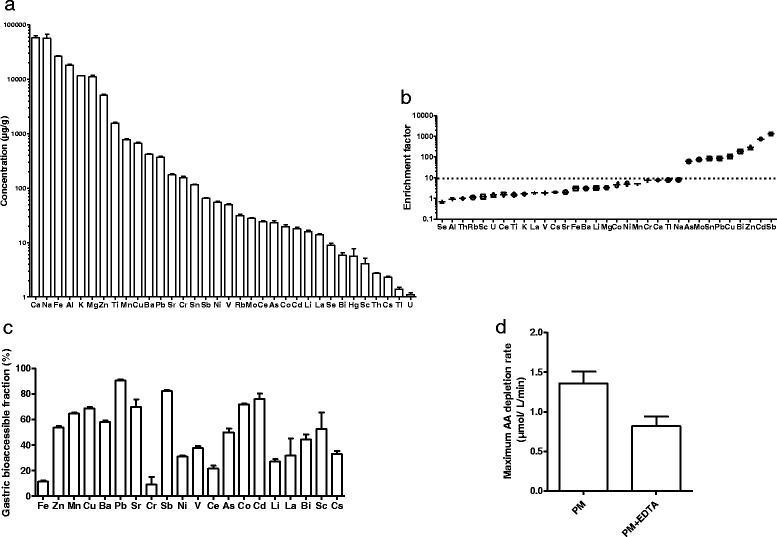
Air pollution is a recognized aggravating factor for pulmonary diseases and has notably deleterious effects on asthma, bronchitis and pneumonia. Recent studies suggest that air pollution may also cause adverse effects in the gastrointestinal tract. Accumulating experimental evidence shows that immune responses in the pulmonary and intestinal mucosae are closely interrelated, and that gut-lung crosstalk controls pathophysiological processes such as responses to cigarette smoke and influenza virus infection. Our first aim was to collect urban coarse particulate matter (PM) and to characterize them for elemental content, gastric bioaccessibility, and oxidative potential; our second aim was to determine the short-term effects of urban coarse PM inhalation on pulmonary and colonic mucosae in mice, and to test the hypothesis that the well-known antioxidant N-acetyl-L-cysteine (NAC) reverses the effects of PM inhalation.
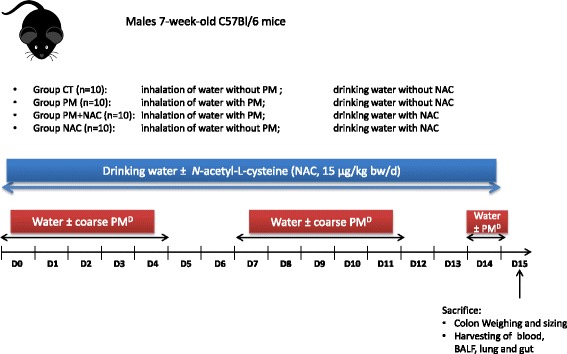
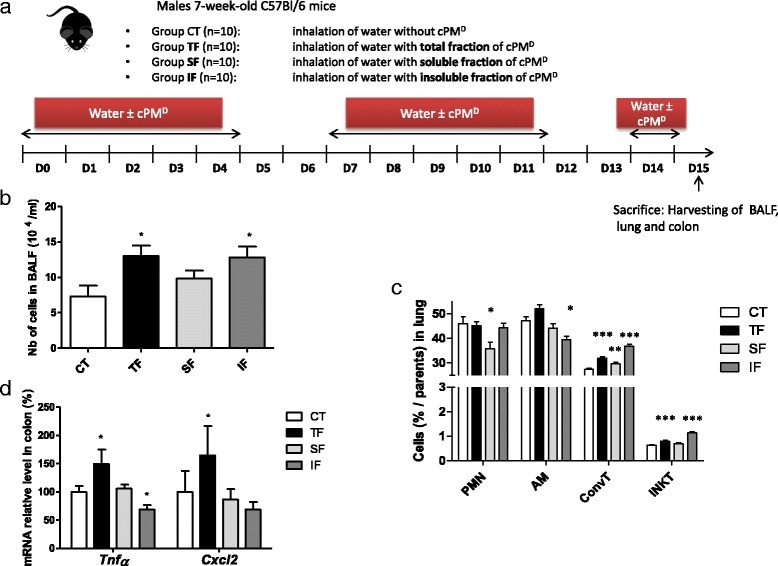
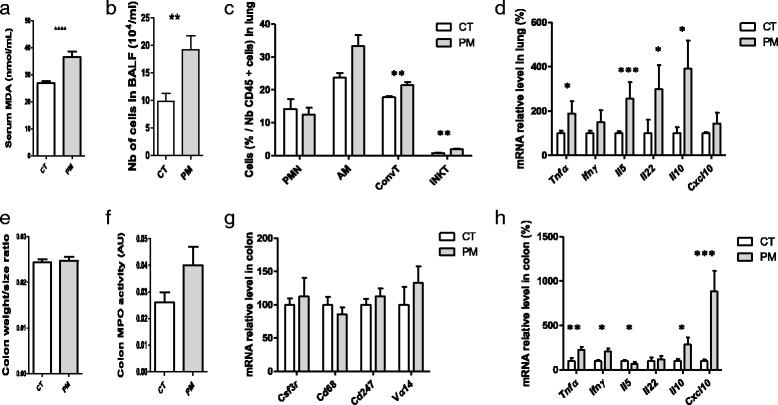
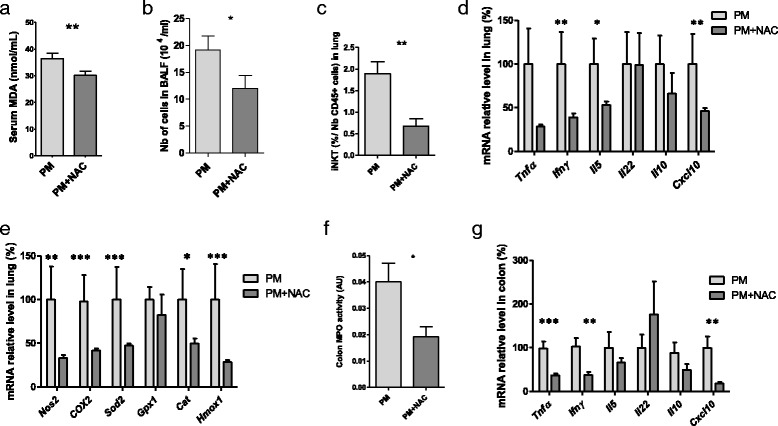
The collected PM had classical features of urban particles and possessed oxidative potential partly attributable to their metal fraction. Bioaccessibility study confirmed the high solubility of some metals at the gastric level. Male mice were exposed to urban coarse PM in a ventilated inhalation chamber for 15 days at a concentration relevant to episodic elevation peak of air pollution. Coarse PM inhalation induced systemic oxidative stress, recruited immune cells to the lung, and increased cytokine levels in the lung and colon. Concomitant oral administration of NAC reversed all the observed effects relative to the inhalation of coarse PM.
Coarse PM-induced low-grade inflammation in the lung and colon is mediated by oxidative stress and deserves more investigation as potentiating factor for inflammatory diseases.
空气污染是肺部疾病的公认加重因素,对哮喘、支气管炎和肺炎有明显的有害影响。最近的研究表明,空气污染也可能对胃肠道造成不良影响。越来越多的实验证据表明,肺部和肠道黏膜的免疫反应密切相关,肠道-肺部串扰控制着对香烟烟雾和流感病毒感染的生理病理反应。我们的第一个目的是收集城市粗颗粒物(PM)并对其元素含量、胃生物利用度和氧化潜能进行表征;我们的第二个目的是确定城市粗 PM 吸入对小鼠肺部和结肠黏膜的短期影响,并验证这样一个假设,即众所周知的抗氧化剂 N-乙酰-L-半胱氨酸(NAC)可以逆转 PM 吸入的影响。
收集的 PM 具有城市颗粒的典型特征,并且具有部分归因于其金属部分的氧化潜能。生物利用度研究证实了一些金属在胃水平的高溶解度。雄性小鼠在通风吸入室中以与空气污染爆发高峰时相当的浓度暴露于城市粗 PM 中 15 天。粗 PM 吸入诱导全身氧化应激,招募免疫细胞到肺部,并增加肺部和结肠中的细胞因子水平。与粗 PM 吸入相比,同时口服 NAC 逆转了所有观察到的影响。
粗 PM 诱导的肺部和结肠低度炎症是由氧化应激介导的,应作为炎症性疾病的增强因素进行更多研究。