Das Bhabana, Saviola Anthony J, Mukherjee Ashis K
Department of Molecular Biology and Biotechnology, School of Sciences, Tezpur University, Tezpur, India.
Department of Biochemistry and Molecular Genetics, University of Colorado Anschutz Medical Campus, Aurora, CO, United States.
Front Pharmacol. 2021 Sep 28;12:710680. doi: 10.3389/fphar.2021.710680. eCollection 2021.
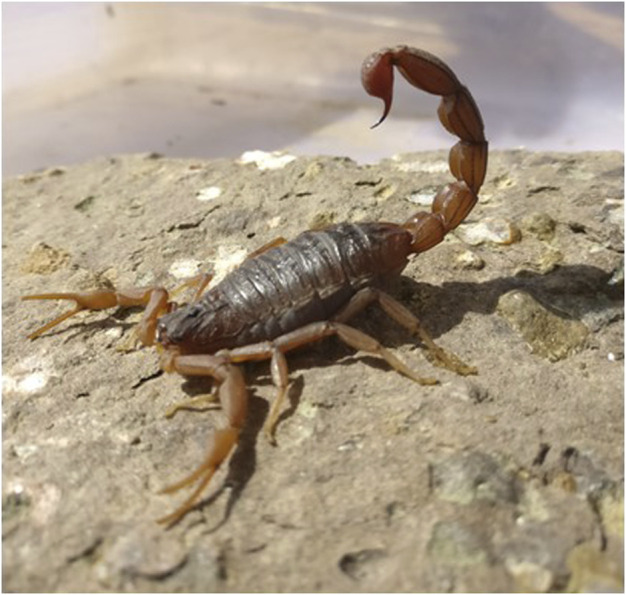
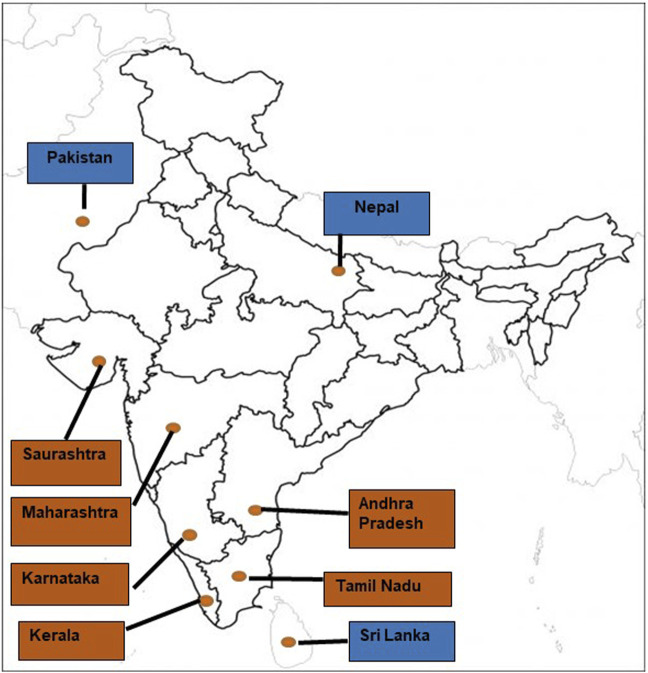
The Indian red scorpion (Mesobuthus tamulus) is one of the world's deadliest scorpions, with stings representing a life-threatening medical emergency. This species is distributed throughout the Indian sub-continent, including eastern Pakistan, eastern Nepal, and Sri Lanka. In India, Indian red scorpions are broadly distributed in western Maharashtra, Saurashtra, Kerala, Andhra Pradesh, Tamil Nadu, and Karnataka; however, fatal envenomations have been recorded primarily in the Konkan region of Maharashtra. The Indian red scorpion venom proteome comprises 110 proteins belonging to 13 venom protein families. The significant pharmacological activity is predominantly caused by the low molecular mass non-enzymatic Na and K ion channel toxins. Other minor toxins comprise 15.6% of the total venom proteome. Indian red scorpion stings induce the release of catecholamine, which leads to pathophysiological abnormalities in the victim. A strong correlation has been observed between venom proteome composition and local (swelling, redness, heat, and regional lymph node involvement) and systemic (tachycardia, mydriasis, hyperglycemia, hypertension, toxic myocarditis, cardiac failure, and pulmonary edema) manifestations. Immediate administration of antivenom is the preferred treatment for Indian red scorpion stings. However, scorpion-specific antivenoms have exhibited poor immunorecognition and neutralization of the low molecular mass toxins. The proteomic analysis also suggests that Indian red scorpion venom is a rich source of pharmacologically active molecules that may be envisaged as drug prototypes. The following review summarizes the progress made towards understanding the venom proteome of the Indian red scorpion and addresses the current understanding of the pathophysiology associated with its sting.
印度红蝎(Mesobuthus tamulus)是世界上毒性最强的蝎子之一,其蜇伤会引发危及生命的医疗紧急情况。该物种分布于整个印度次大陆,包括巴基斯坦东部、尼泊尔东部和斯里兰卡。在印度,印度红蝎广泛分布于马哈拉施特拉邦西部、索拉什特拉、喀拉拉邦、安得拉邦、泰米尔纳德邦和卡纳塔克邦;然而,主要在马哈拉施特拉邦的科坎地区记录到了致命的中毒情况。印度红蝎毒液蛋白质组由属于13个毒液蛋白家族的110种蛋白质组成。显著的药理活性主要由低分子量非酶促钠和钾离子通道毒素引起。其他次要毒素占毒液蛋白质组总量的15.6%。印度红蝎蜇伤会导致儿茶酚胺释放,从而使受害者出现病理生理异常。毒液蛋白质组组成与局部(肿胀、发红、发热和局部淋巴结受累)和全身(心动过速、瞳孔散大、高血糖、高血压、中毒性心肌炎、心力衰竭和肺水肿)表现之间存在很强的相关性。立即注射抗蛇毒血清是治疗印度红蝎蜇伤的首选方法。然而 scorpion-specific antivenoms对低分子量毒素的免疫识别和中和效果较差。蛋白质组学分析还表明,印度红蝎毒液是药理活性分子的丰富来源,可被视为药物原型。以下综述总结了在了解印度红蝎毒液蛋白质组方面取得的进展,并阐述了目前对与其蜇伤相关的病理生理学的理解。 (原文中scorpion-specific antivenoms表述有误,推测可能是scorpion-specific antivenoms,按照正确内容翻译了)