Chepkurui Viola, Amponsah-Dacosta Edina, Haddison Eposi Christiana, Kagina Benjamin Mugo
Faculty of Health Science, School of Public Health and Family Medicine, University of Cape Town, Cape Town, South Africa.
Vaccines for Africa Initiative, School of Public Health and Family Medicine, University of Cape Town, Cape Town, South Africa.
Front Public Health. 2021 Sep 28;9:736532. doi: 10.3389/fpubh.2021.736532. eCollection 2021.
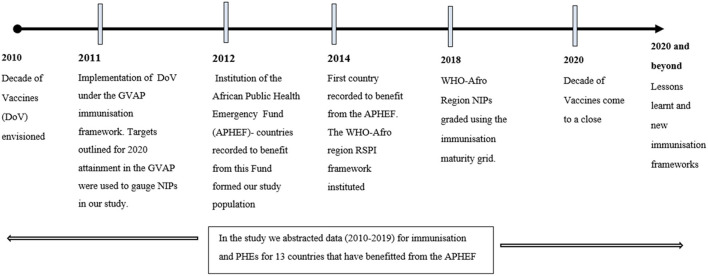
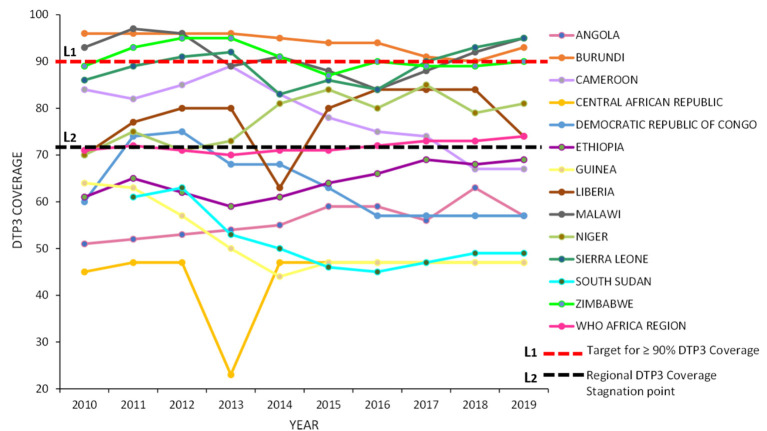
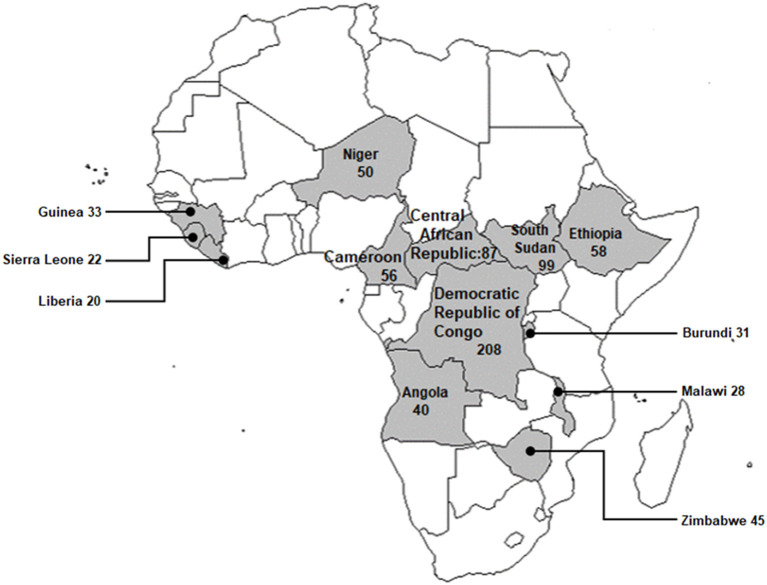
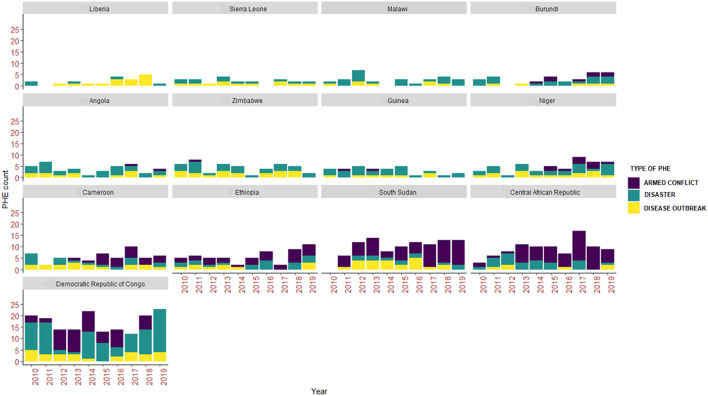
Multiple public health emergencies (PHEs) experienced annually in the World Health Organisation (WHO) Africa region affect the provision of health services, including immunization. However, there is limited information on the performance of national immunization programs (NIPs) in WHO Africa countries that experience PHEs. This study assessed PHEs (armed conflicts, disasters, and disease outbreaks) and the performance of NIPs using global and regional immunization targets outlined for the Decade of Vaccines. Thirteen beneficiary countries of PHE mitigation funds from the African Public Health Emergency Fund were used as case studies. Data on PHEs and immunization indicators between 2010 and 2019 in selected countries were extracted from different PHE databases and the WHO/UNICEF immunization database, respectively. The data were stratified by country and summarized using descriptive statistics. Mann-Whitney test was done to determine the association between the frequency of PHEs and the performance of NIPs. There were 175 disease outbreaks, 288 armed conflicts, and 318 disasters in the examined countries between 2010 and 2019. The Democratic Republic of Congo had the highest total PHE count ( = 208), while Liberia had the lowest ( = 20). Only three of the 13 countries had a median coverage value for the third dose of the combined Diphtheria, Tetanus, and Pertussis vaccine (DTP3) that had attained the target for ≥90% immunization coverage. Higher counts of armed conflict and total PHEs were associated with not meeting immunization targets for national DTP3 coverage of ≥90% and Maternal and Neonatal Tetanus elimination, < 0.01. It was clear that in the WHO Africa region, PHEs are prevalent, irrespective of a country's level of immunization maturity, and have the potential to derail the progress of NIPs in the absence of effective interventions. As we transition toward the Immunization Agenda 2030, we recommend that the WHO Africa region prioritizes interventions to mitigate the impacts of PHEs on NIPs.
世界卫生组织(WHO)非洲区域每年经历的多次突发公共卫生事件(PHE)影响包括免疫接种在内的卫生服务提供。然而,关于经历突发公共卫生事件的世卫组织非洲国家国家免疫规划(NIP)绩效的信息有限。本研究使用疫苗十年设定的全球和区域免疫目标评估了突发公共卫生事件(武装冲突、灾害和疾病暴发)以及国家免疫规划的绩效。来自非洲公共卫生应急基金的突发公共卫生事件缓解基金的13个受益国用作案例研究。分别从不同的突发公共卫生事件数据库和世卫组织/联合国儿童基金会免疫数据库中提取选定国家2010年至2019年期间的突发公共卫生事件和免疫指标数据。数据按国家分层,并使用描述性统计进行汇总。采用曼-惠特尼检验确定突发公共卫生事件发生频率与国家免疫规划绩效之间的关联。2010年至2019年期间,被调查国家共发生175次疾病暴发、288次武装冲突和318次灾害。刚果民主共和国的突发公共卫生事件总数最高(=208),而利比里亚最低(=20)。13个国家中只有3个国家白喉、破伤风和百日咳联合疫苗第三剂(DTP3)的覆盖率中位数达到了≥90%免疫覆盖率的目标。武装冲突和突发公共卫生事件总数较多与未达到国家DTP3覆盖率≥90%和消除孕产妇和新生儿破伤风的免疫目标相关,<0.01。很明显,在世卫组织非洲区域,突发公共卫生事件普遍存在,无论一个国家的免疫成熟程度如何,并且在缺乏有效干预措施的情况下有可能使国家免疫规划的进展脱轨。在我们向《2030年免疫议程》过渡之际,我们建议世卫组织非洲区域优先采取干预措施,以减轻突发公共卫生事件对国家免疫规划的影响。