Department of Anesthesiology and Intensive Care Medicine, University Hospital Schleswig-Holstein, Kiel, Germany.
Department of Cardiovascular Surgery, University Hospital Schleswig-Holstein, Kiel, Germany.
Basic Res Cardiol. 2021 Oct 14;116(1):60. doi: 10.1007/s00395-021-00901-8.
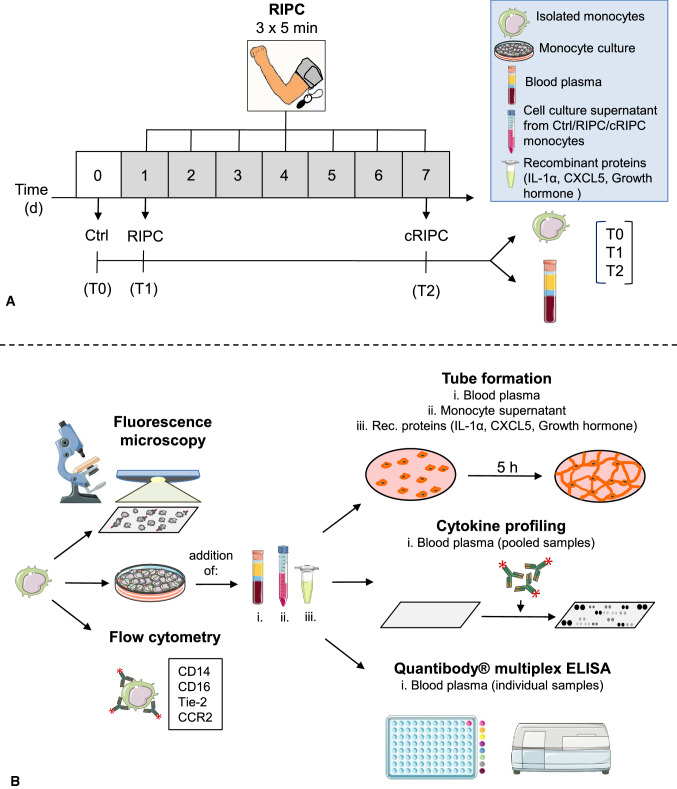
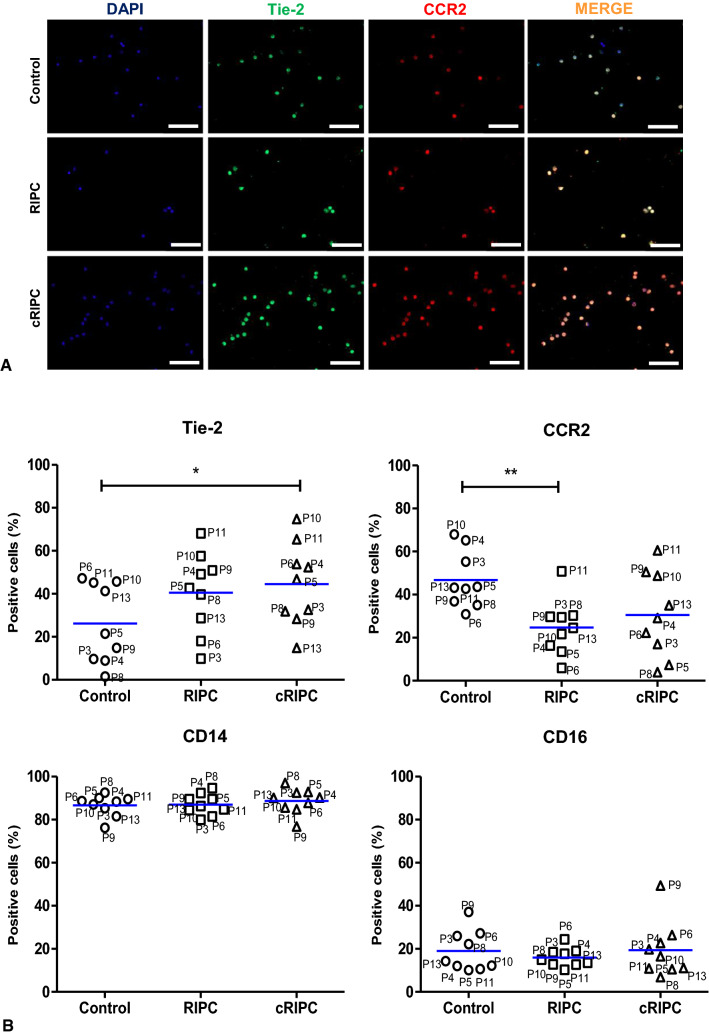
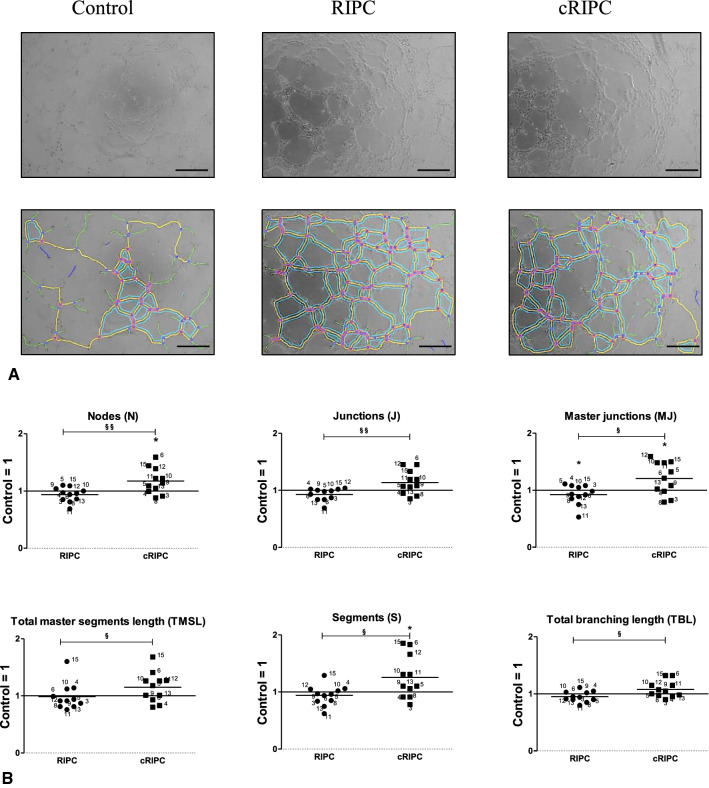
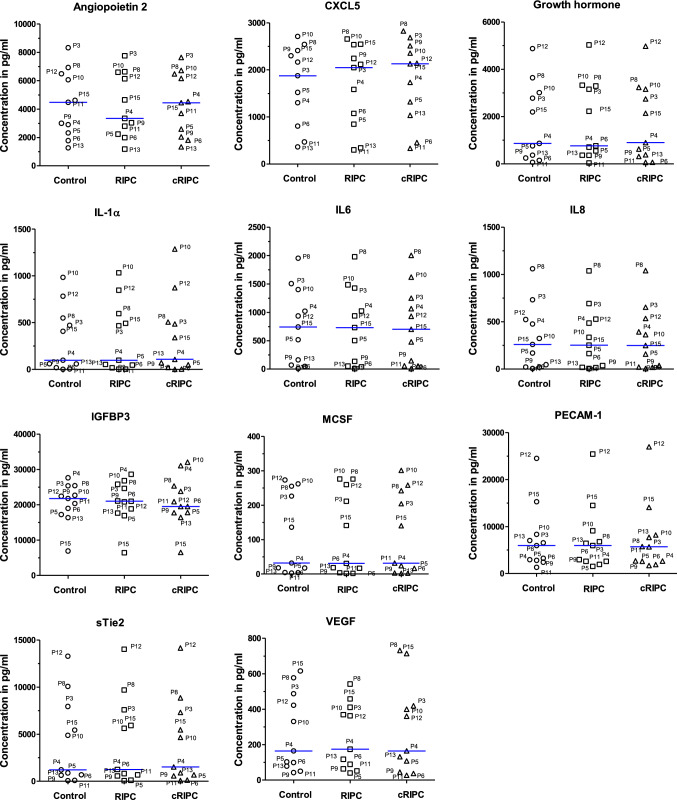
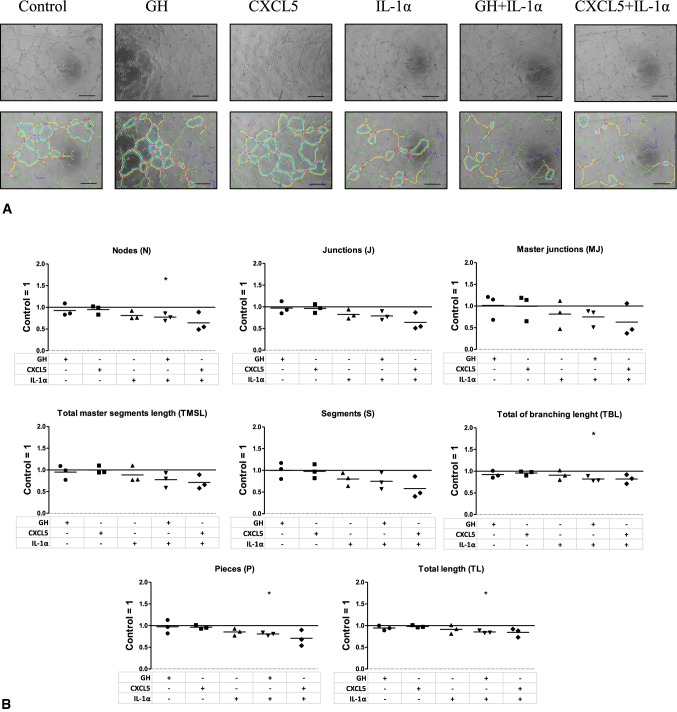
Remote ischemic preconditioning (RIPC) protects the heart against myocardial ischemia/reperfusion (I/R) injury and recent work also suggested chronic remote ischemic conditioning (cRIPC) for cardiovascular protection. Based on current knowledge that systemic immunomodulatory effects of RIPC and the anti-inflammatory capacity of monocytes might be involved in cardiovascular protection, the aim of our study was to evaluate whether RIPC/cRIPC blood plasma is able to induce in-vitro angiogenesis, identify responsible factors and evaluate the effects of RIPC/cRIPC on cell surface characteristics of circulating monocytes. Eleven healthy volunteers were subjected to RIPC/cRIPC using a blood pressure cuff inflated to > 200 mmHg for 3 × 5 min on the upper arm. Plasma and peripheral blood monocytes were isolated before RIPC (Control), after 1 × RIPC (RIPC) and at the end of 1 week of daily RIPC (cRIPC) treatment. Plasma concentrations of potentially pro-angiogenic humoral factors (CXCL5, Growth hormone, IGFBP3, IL-1α, IL-6, Angiopoietin 2, VEGF, PECAM-1, sTie-2, IL-8, MCSF) were measured using custom made multiplex ELISA systems. Tube formation assays for evaluation of in-vitro angiogenesis were performed with donor plasma, monocyte conditioned culture media as well as IL-1α, CXCL5 and Growth hormone. The presence of CD14, CD16, Tie-2 and CCR2 was analyzed on monocytes by flow cytometry. Employing in-vitro tube formation assays, several parameters of angiogenesis were significantly increased by cRIPC plasma (number of nodes, P < 0.05; number of master junctions, P < 0.05; number of segments, P < 0.05) but were not influenced by culture medium from RIPC/cRIPC treated monocytes. While RIPC/cRIPC treatment did not lead to significant changes of the median plasma concentrations of any of the selected potentially pro-angiogenic humoral factors, in-depth analysis of the individual subjects revealed differences in plasma levels of IL-1α, CXCL5 and Growth hormone after RIPC/cRIPC treatment in some of the volunteers. Nevertheless, the positive effects of RIPC/cRIPC plasma on in-vitro angiogenesis could not be mimicked by the addition of the respective humoral factors alone or in combination. While monocyte conditioned culture media did not affect in-vitro tube formation, flow cytometry analyses of circulating monocytes revealed a significant increase in the number of Tie-2 positive and a decrease of CCR2 positive monocytes after RIPC/cRIPC (Tie-2: cRIPC, P < 0.05; CCR2: RIPC P < 0.01). Cardiovascular protection may be mediated by RIPC and cRIPC via a regulation of plasma cytokines as well as changes in cell surface characteristics of monocytes (e.g. Tie-2). Our results suggest that a combination of humoral and cellular factors could be responsible for the RIPC/cRIPC mediated effects and that interindividual variations seem to play a considerable part in the RIPC/cRIPC associated mechanisms.
远程缺血预处理(RIPC)可保护心脏免受心肌缺血/再灌注(I/R)损伤,最近的研究还表明,慢性远程缺血预处理(cRIPC)可用于心血管保护。基于目前关于 RIPC 的全身免疫调节作用和单核细胞的抗炎能力可能与心血管保护有关的知识,我们的研究旨在评估 RIPC/cRIPC 血浆是否能够诱导体外血管生成,确定负责的因素,并评估 RIPC/cRIPC 对循环单核细胞表面特征的影响。11 名健康志愿者在上臂充气至>200mmHg 的血压袖带中接受 RIPC/cRIPC,每次 3×5 分钟。在 RIPC(对照)之前、第 1 次 RIPC 后(RIPC)和 1 周每日 RIPC 治疗结束时(cRIPC)分离血浆和外周血单核细胞。使用定制的多重 ELISA 系统测量潜在的促血管生成体液因子(CXCL5、生长激素、IGFBP3、IL-1α、IL-6、血管生成素 2、VEGF、PECAM-1、sTie-2、IL-8、MCSF)的血浆浓度。使用供体血浆、单核细胞条件培养基以及 IL-1α、CXCL5 和生长激素进行体外血管生成管形成测定。通过流式细胞术分析单核细胞上 CD14、CD16、Tie-2 和 CCR2 的存在。采用体外管形成测定法,cRIPC 血浆显著增加了几项血管生成参数(节点数,P<0.05;主连接数,P<0.05;段数,P<0.05),但单核细胞处理的培养基对这些参数没有影响。虽然 RIPC/cRIPC 治疗并未导致所选潜在促血管生成体液因子的任何一种的中位血浆浓度发生显著变化,但对个别受试者的深入分析显示,在一些志愿者中,RIPC/cRIPC 治疗后 IL-1α、CXCL5 和生长激素的血浆水平存在差异。尽管如此,RIPC/cRIPC 血浆对体外血管生成的积极影响不能仅通过添加各自的体液因子或组合来模拟。虽然单核细胞条件培养基不影响体外管形成,但循环单核细胞的流式细胞术分析显示,RIPC/cRIPC 后 Tie-2 阳性单核细胞数量增加,CCR2 阳性单核细胞数量减少(Tie-2:cRIPC,P<0.05;CCR2:RIPC,P<0.01)。心血管保护可能通过 RIPC 和 cRIPC 调节血浆细胞因子以及单核细胞表面特征的变化来介导(例如,Tie-2)。我们的结果表明,体液和细胞因子的组合可能是 RIPC/cRIPC 介导作用的原因,个体间的差异似乎在 RIPC/cRIPC 相关机制中起着相当大的作用。