Department of Genetic Engineering and Molecular Genetics, Zanjan University, Zanjan, Iran.
Department of Biology, Faculty of Science, Shahid Chamran University of Ahvaz, Ahvaz, Iran.
Mol Biotechnol. 2022 Apr;64(4):339-354. doi: 10.1007/s12033-021-00417-5. Epub 2021 Oct 16.
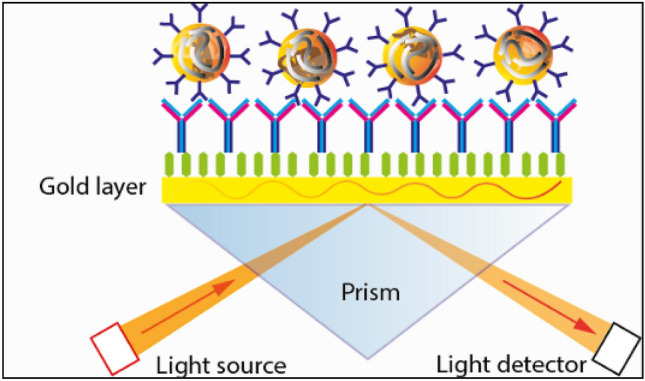
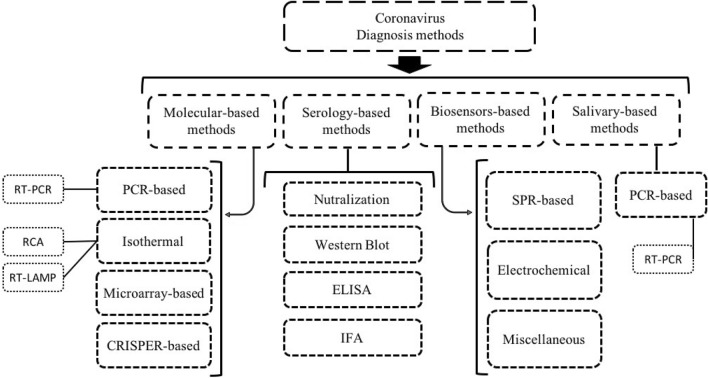
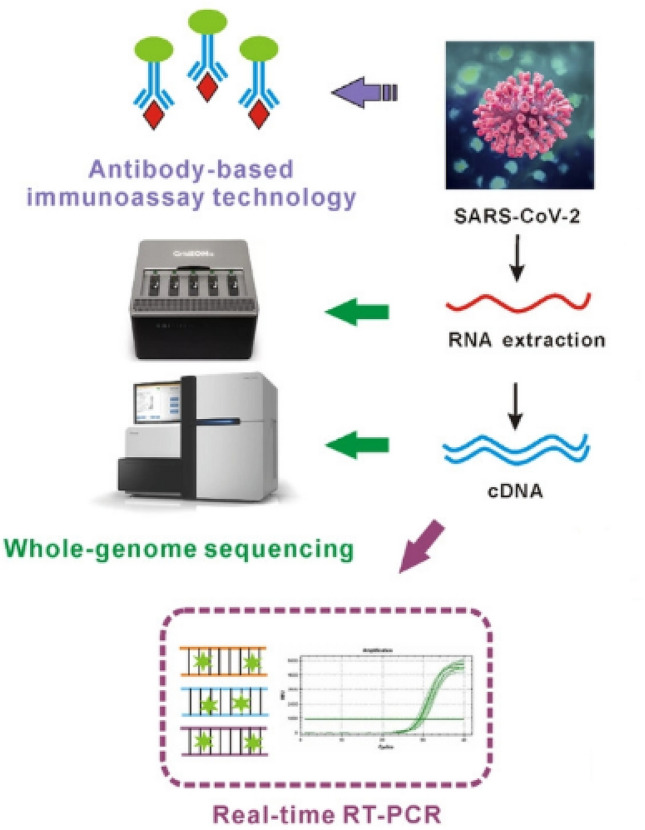
The outbreak of COVID-19 pandemic and its consequences have inflicted a substantial damage on the world. In this study, it was attempted to review the recent coronaviruses appeared among the human being and their epidemic/pandemic spread throughout the world. Currently, there is an inevitable need for the establishment of a quick and easily available biosensor for tracing COVID-19 in all countries. It has been known that the incubation time of COVID-19 lasts about 14 days and 25% of the infected individuals are asymptomatic. To improve the ability to determine SARS-CoV-2 precisely and reduce the risk of eliciting false-negative results produced by mutating nature of coronaviruses, many researchers have established a real-time reverse transcriptase-polymerase chain reaction (RT-PCR) assay using mismatch-tolerant molecular beacons as multiplex real-time RT-PCR to distinguish between pathogenic and non-pathogenic strains of coronaviruses. The possible mechanisms and pathways for the detection of coronaviruses by biosensors have been reviewed in this study.
COVID-19 大流行的爆发及其后果给世界造成了巨大的损失。在本研究中,我们试图回顾近年来在人类中出现的冠状病毒及其在世界范围内的流行/大流行传播。目前,各国都需要建立一种快速、易于获得的生物传感器,以追踪 COVID-19。已知 COVID-19 的潜伏期约为 14 天,25%的感染者无症状。为了提高准确确定 SARS-CoV-2 的能力,并降低冠状病毒变异导致假阴性结果的风险,许多研究人员已经建立了一种使用错配容忍分子信标的实时逆转录聚合酶链反应(RT-PCR)检测方法,用于多重实时 RT-PCR 区分冠状病毒的致病性和非致病性株。本研究综述了生物传感器检测冠状病毒的可能机制和途径。