Martins Sheila Cristina Ouriques, Lavados Pablo, Secchi Thaís Leite, Brainin Michael, Ameriso Sebastian, Gongora-Rivera Fernando, Sacks Claudio, Cantú-Brito Carlos, Alvarez Guzman Tony Fabian, Pérez-Romero Germán Enrique, Muñoz Collazos Mario, Barboza Miguel A, Arauz Antonio, Abanto Argomedo Carlos, Novarro-Escudero Nelson, Amorin Costabile Hector Ignacio, Crosa Roberto, Camejo Claudia, Mernes Ricardo, Maldonado Nelson, Mora Cuervo Daissy Liliana, Pontes Neto Octávio Marques, Silva Gisele Sampaio, Carbonera Leonardo Augusto, de Souza Ana Claudia, de Sousa Eduardo David Gomes, Flores Alan, Melgarejo Donoban, Santos Carquin Irving R, Hoppe Arnold, de Carvalho João José Freitas, Mont'Alverne Francisco, Amaya Pablo, Bayona Hernan, Navia González Victor Hugo, Duran Juan Carlos, Urrutia Victor C, Araujo Denizar Vianna, Feigin Valery L, Nogueira Raul G
Hospital Moinhos de Vento, Porto Alegre, Brazil.
Hospital de Clínicas de Porto Alegre, Universidade Federal do Rio Grande do Sul, Porto Alegre, Brazil.
Front Neurol. 2021 Oct 1;12:743732. doi: 10.3389/fneur.2021.743732. eCollection 2021.
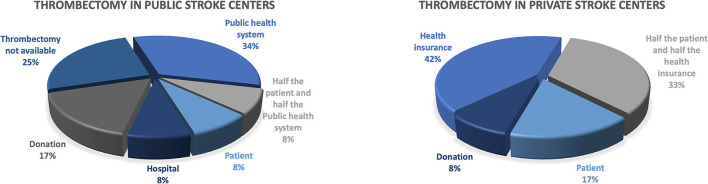
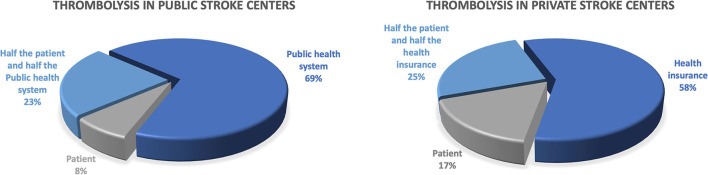
Stroke is one of the leading causes of death in Latin America, a region with countless gaps to be addressed to decrease its burden. In 2018, at the first Latin American Stroke Ministerial Meeting, stroke physician and healthcare manager representatives from 13 countries signed the Declaration of Gramado with the priorities to improve the region, with the commitment to implement all evidence-based strategies for stroke care. The second meeting in March 2020 reviewed the achievements in 2 years and discussed new objectives. This paper will review the 2-year advances and future plans of the Latin American alliance for stroke. In March 2020, a survey based on the Declaration of Gramado items was sent to the neurologists participants of the Stroke Ministerial Meetings. The results were confirmed with representatives of the Ministries of Health and leaders from the countries at the second Latin American Stroke Ministerial Meeting. In 2 years, public stroke awareness initiatives increased from 25 to 75% of countries. All countries have started programs to encourage physical activity, and there has been an increase in the number of countries that implement, at least partially, strategies to identify and treat hypertension, diabetes, and lifestyle risk factors. Programs to identify and treat dyslipidemia and atrial fibrillation still remained poor. The number of stroke centers increased from 322 to 448, all of them providing intravenous thrombolysis, with an increase in countries with stroke units. All countries have mechanical thrombectomy, but mostly restricted to a few private hospitals. Pre-hospital organization remains limited. The utilization of telemedicine has increased but is restricted to a few hospitals and is not widely available throughout the country. Patients have late, if any, access to rehabilitation after hospital discharge. The initiative to collaborate, exchange experiences, and unite societies and governments to improve stroke care in Latin America has yielded good results. Important advances have been made in the region in terms of increasing the number of acute stroke care services, implementing reperfusion treatments and creating programs for the detection and treatment of risk factors. We hope that this approach can reduce inequalities in stroke care in Latin America and serves as a model for other under-resourced environments.
中风是拉丁美洲主要的死因之一,该地区存在无数有待解决的问题以减轻其负担。2018年,在首届拉丁美洲中风部长级会议上,来自13个国家的中风医生和医疗保健管理人员代表签署了《格拉玛多宣言》,确定了改善该地区状况的优先事项,并承诺实施所有基于证据的中风护理策略。2020年3月召开的第二次会议回顾了两年来取得的成就并讨论了新目标。本文将回顾拉丁美洲中风联盟两年来取得的进展和未来计划。2020年3月,一项基于《格拉玛多宣言》条款的调查被发送给了中风部长级会议的神经科医生参会者。结果在第二次拉丁美洲中风部长级会议上与各国卫生部代表和领导人进行了确认。两年来,开展公众中风意识宣传活动的国家从25%增加到了75%。所有国家都启动了鼓励体育活动的项目,并且至少部分实施识别和治疗高血压、糖尿病及生活方式风险因素策略的国家数量有所增加。识别和治疗血脂异常及心房颤动的项目仍然开展得很少。中风中心的数量从322个增加到了448个,所有中风中心都提供静脉溶栓治疗,设有中风单元的国家数量也有所增加。所有国家都有机械取栓治疗,但大多局限于少数私立医院。院前组织仍然有限。远程医疗的应用有所增加,但仅限于少数医院,并未在全国广泛普及。患者出院后获得康复治疗的时间很晚,甚至根本没有。拉丁美洲各国通过合作、交流经验以及联合社会各界和政府来改善中风护理的倡议取得了良好成效。该地区在增加急性中风护理服务数量、实施再灌注治疗以及创建风险因素检测和治疗项目方面取得了重要进展。我们希望这种方法能够减少拉丁美洲中风护理方面的不平等现象,并为其他资源匮乏地区提供一个范例。