Verma Falwinder, Singh Sharanpreet, Dhaliwal Salwinder Singh, Kumar Vinod, Kumar Rakesh, Singh Jaswinder, Parkash Chander
Department of Applied Sciences, I.K.G. Punjab Technical University, Kapurthala, Punjab, 144603, India.
Department of Zoology, Government College for Girls, Ludhiana, Punjab, 141001, India.
Heliyon. 2021 Oct 2;7(10):e08122. doi: 10.1016/j.heliyon.2021.e08122. eCollection 2021 Oct.
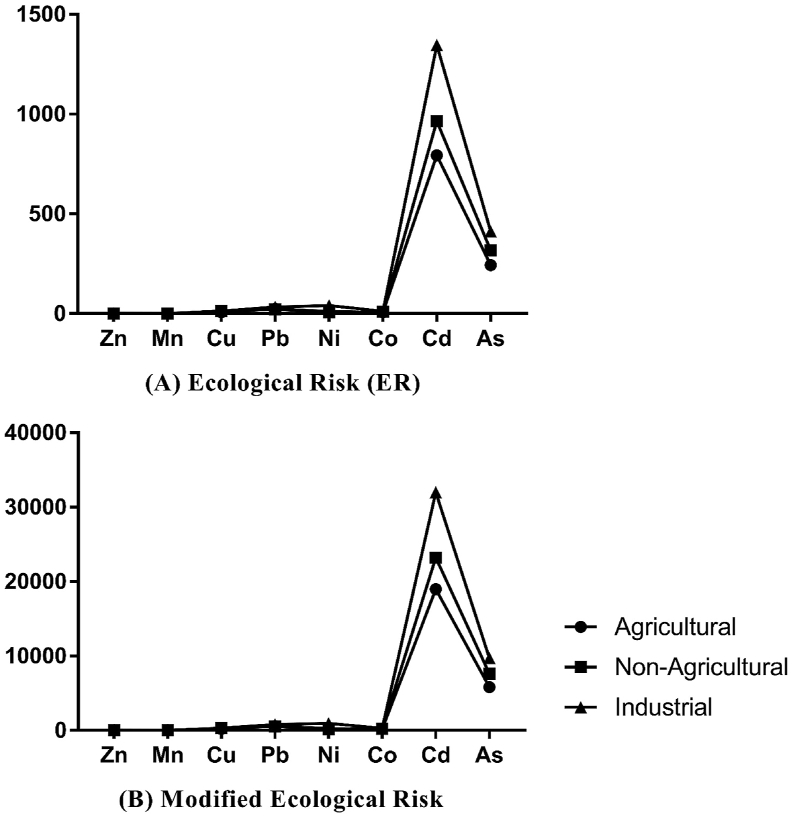
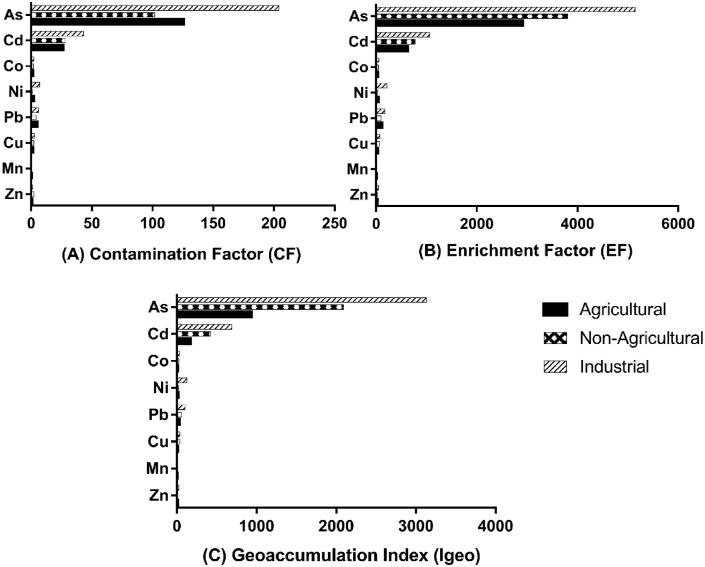
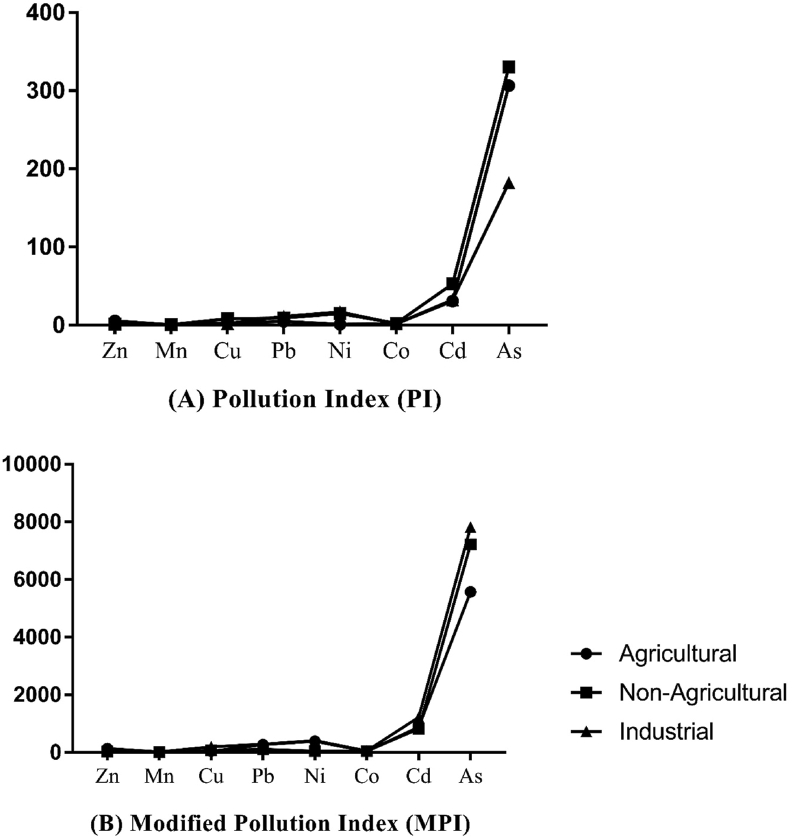
It is imperative to understand the pollution of potentially toxic elements (PTEs) in different soils in order to determine the sustainable management approaches for soils. Potentially toxic elements (Fe, Mn, As, Pb, Zn, Ni, Cu, Cr, Co and Cd) were determined in agricultural, non-agricultural and industrial soils of Punjab, India. The concentration of PTEs at industrial soils were highest followed by non-agricultural and agricultural soils. The percentage change recorded from agricultural to non-agricultural soils for PTEs were 3.19% for Fe, 25.3% for Mn, 63.8% for Cu, 13.5% for Cr, 49.8% for Pb, 79.6% for Ni, 35.8% for Co and 32% for Cd. From non-agricultural to industrial soils, the percentage change observed for PTEs were 89% for Zn, 2.03% for Fe, 21.9% for Mn, 68.2% Cu, 9.2% for Cr, 35.8% for Pb, 18.4% for Co, 30.4% for Cd and 43.4% for As. The results of contamination factor, enrichment factor, geo-accumulation index, pollution and modified pollution indices also resulted severe contamination of Cd and As in all soil types. Ecological risk assessment results revealed that Cd exhibited very high risk in different soil types. The outcomes of this study will aid in forming approaches to decline the perils allied with PTEs in soils, and produce guidelines to save the environment from long term accrual of PTEs.
为了确定土壤的可持续管理方法,了解不同土壤中潜在有毒元素(PTEs)的污染情况至关重要。对印度旁遮普邦的农业、非农业和工业土壤中的潜在有毒元素(铁、锰、砷、铅、锌、镍、铜、铬、钴和镉)进行了测定。工业土壤中PTEs的浓度最高,其次是非农业土壤和农业土壤。从农业土壤到非农业土壤,PTEs的百分比变化分别为:铁3.19%、锰25.3%、铜63.8%、铬13.5%、铅49.8%、镍79.6%、钴35.8%、镉32%。从非农业土壤到工业土壤,PTEs的百分比变化分别为:锌89%、铁2.03%、锰21.9%、铜68.2%、铬9.2%、铅35.8%、钴18.4%、镉30.4%、砷43.4%。污染因子、富集因子、地累积指数、污染指数和修正污染指数的结果也表明,所有土壤类型中的镉和砷都受到严重污染。生态风险评估结果显示,镉在不同土壤类型中表现出极高的风险。本研究结果将有助于形成降低土壤中与PTEs相关风险的方法,并制定指导方针,以保护环境免受PTEs长期累积的影响。