Department of Pharmacology, Toxicology and Clinical Pharmacy, Institute of Pharmacy, University of Tübingen, 72076, Tübingen, Germany.
Institute for Ophthalmic Research, Molecular Biology of Retinal Degenerations and Medical Bioanalysis, University of Tübingen, 72076, Tübingen, Germany.
Cell Mol Life Sci. 2021 Dec;78(23):7569-7587. doi: 10.1007/s00018-021-03953-0. Epub 2021 Oct 18.
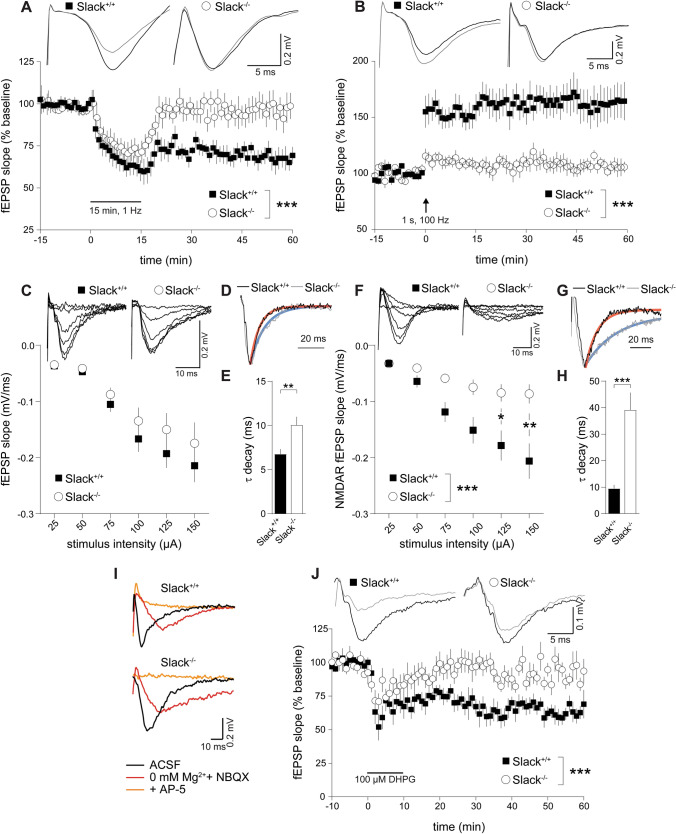
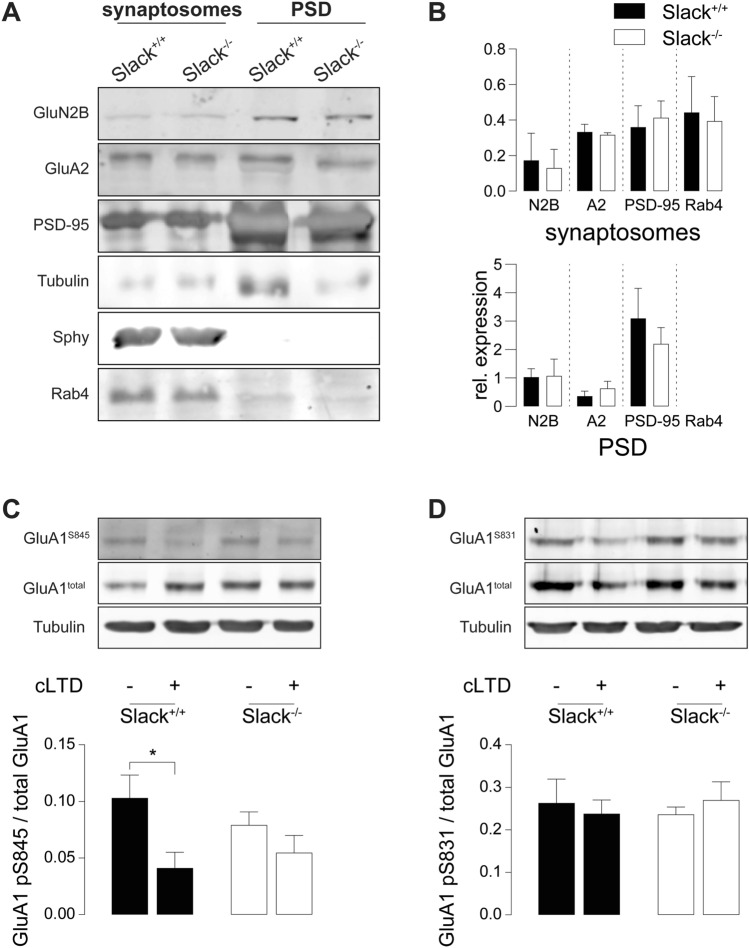
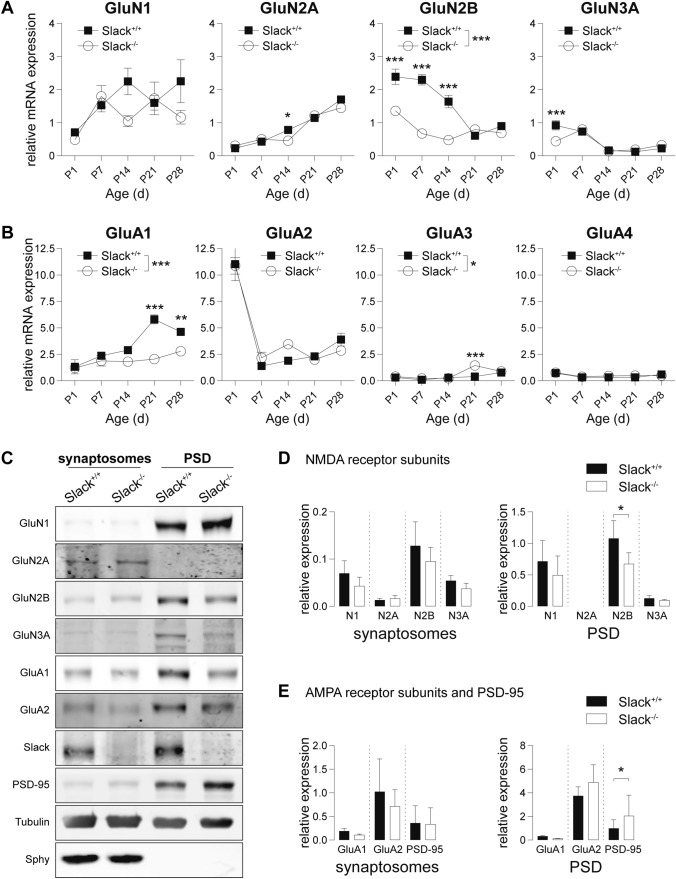
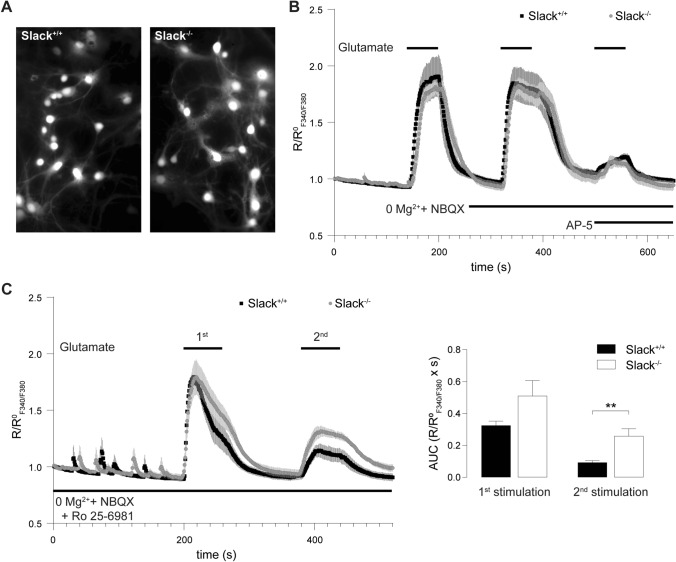
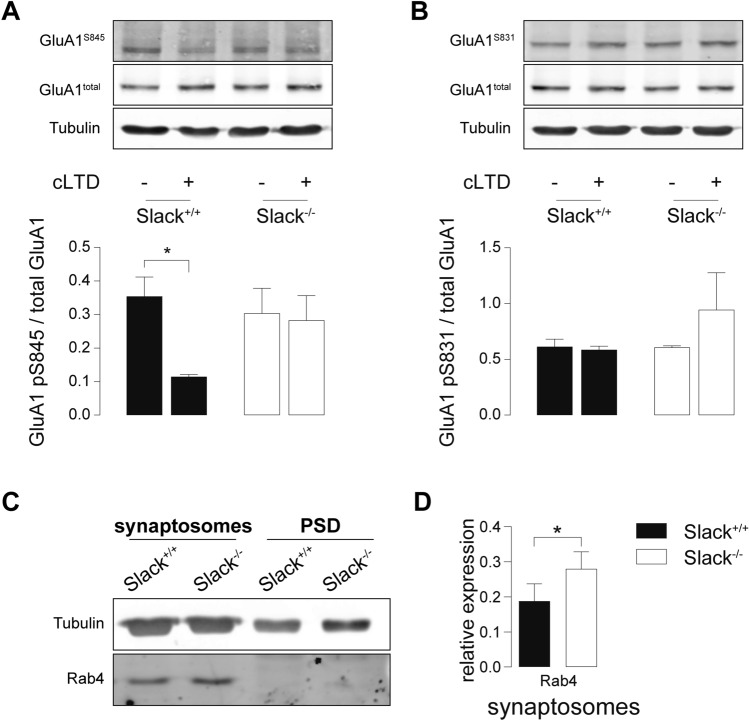
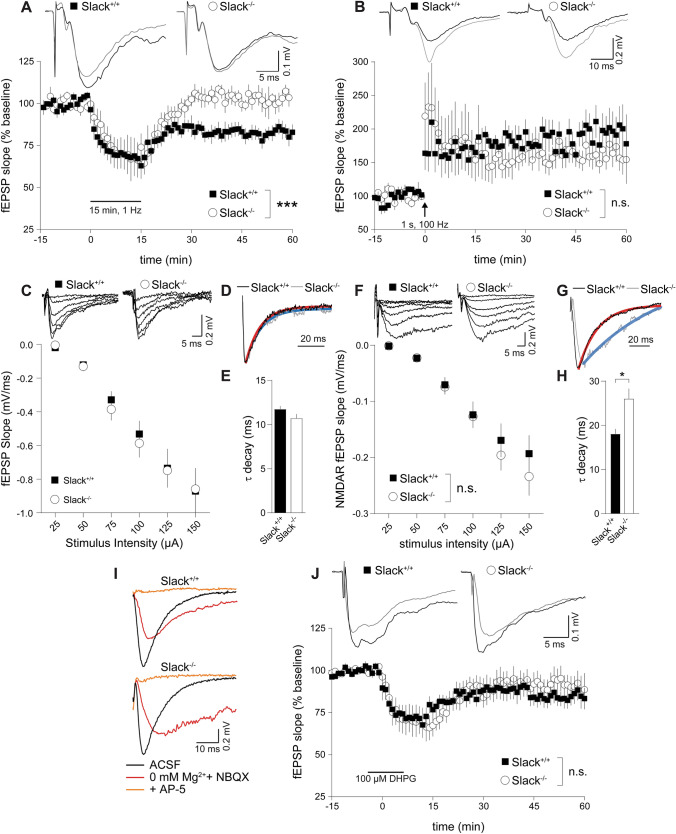
Human mutations of the Na-activated K channel Slack (KCNT1) are associated with epilepsy and intellectual disability. Accordingly, Slack knockout mice (Slack) exhibit cognitive flexibility deficits in distinct behavioral tasks. So far, however, the underlying causes as well as the role of Slack in hippocampus-dependent memory functions remain enigmatic. We now report that infant (P6-P14) Slack lack both hippocampal LTD and LTP, likely due to impaired NMDA receptor (NMDAR) signaling. Postsynaptic GluN2B levels are reduced in infant Slack, evidenced by lower amplitudes of NMDAR-meditated excitatory postsynaptic potentials. Low GluN2B affected NMDAR-mediated Ca-influx, rendering cultured hippocampal Slackneurons highly insensitive to the GluN2B-specific inhibitor Ro 25-6981. Furthermore, dephosphorylation of the AMPA receptor (AMPAR) subunit GluA1 at S845, which is involved in AMPAR endocytosis during homeostatic and neuromodulator-regulated plasticity, is reduced after chemical LTD (cLTD) in infant Slack. We additionally detect a lack of mGluR-induced LTD in infant Slack, possibly caused by upregulation of the recycling endosome-associated small GTPase Rab4 which might accelerate AMPAR recycling from early endosomes. Interestingly, LTP and mGluR LTD, but not LTD and S845 dephosphorylation after cLTD are restored in adult Slack. This together with normalized expression levels of GluN2B and Rab4 hints to developmental "restoration" of LTP expression despite Slack ablation, whereas in infant and adult brain, NMDAR-dependent LTD induction depends on this channel. Based on the present findings, NMDAR and vesicular transport might represent novel targets for the therapy of intellectual disability associated with Slack mutations. Consequently, careful modulation of hippocampal Slack activity should also improve learning abilities.
人类钠离子激活钾通道 Slack(KCNT1)的突变与癫痫和智力障碍有关。相应地,Slack 敲除小鼠(Slack)在不同的行为任务中表现出认知灵活性缺陷。然而,迄今为止,Slack 在内侧颞叶依赖记忆功能中的潜在作用及其根本原因仍然难以捉摸。我们现在报告说,婴儿(P6-P14)Slack 既没有海马 LTD 也没有 LTP,这可能是由于 NMDA 受体(NMDAR)信号受损所致。在婴儿 Slack 中,突触后 GluN2B 水平降低,这表现为 NMDAR 介导的兴奋性突触后电位幅度降低。低 GluN2B 影响 NMDAR 介导的 Ca 流入,使培养的海马 Slack 神经元对 GluN2B 特异性抑制剂 Ro 25-6981 高度不敏感。此外,在婴儿 Slack 中,化学 LTD(cLTD)后 AMPA 受体(AMPAR)亚基 GluA1 的 S845 去磷酸化减少,该磷酸化在体内平衡和神经调质调节可塑性过程中涉及 AMPAR 内吞作用。我们还检测到在婴儿 Slack 中缺乏 mGluR 诱导的 LTD,这可能是由于循环内体相关小 GTPase Rab4 的上调所致,这可能会加速 AMPAR 从早期内体的再循环。有趣的是,在成年 Slack 中,LTP 和 mGluR LTD 但不是 cLTD 后的 S845 去磷酸化恢复。这与 GluN2B 和 Rab4 的正常表达水平一起暗示,尽管 Slack 缺失,但 LTP 表达仍存在发育“恢复”,而在婴儿和成年大脑中,NMDAR 依赖性 LTD 诱导依赖于该通道。基于目前的发现,NMDAR 和囊泡运输可能成为与 Slack 突变相关的智力障碍治疗的新靶点。因此,谨慎调节海马 Slack 活性也应该改善学习能力。