McConnell Brain Imaging Centre, Montreal Neurological Institute, McGill University, Montreal, QC H3A 2B4, Canada.
Translational Neuroimaging Laboratory, The McGill University Research Centre for Studies in Aging, Montreal, QC H4H 1R3, Canada.
Brain. 2022 Jun 3;145(5):1763-1772. doi: 10.1093/brain/awab392.
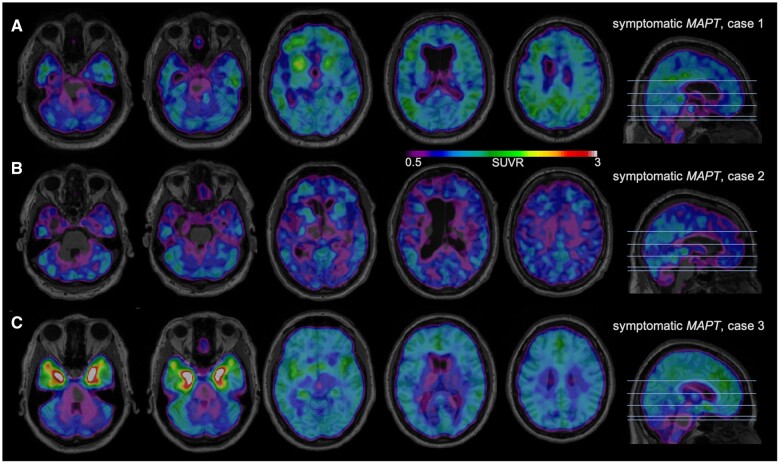
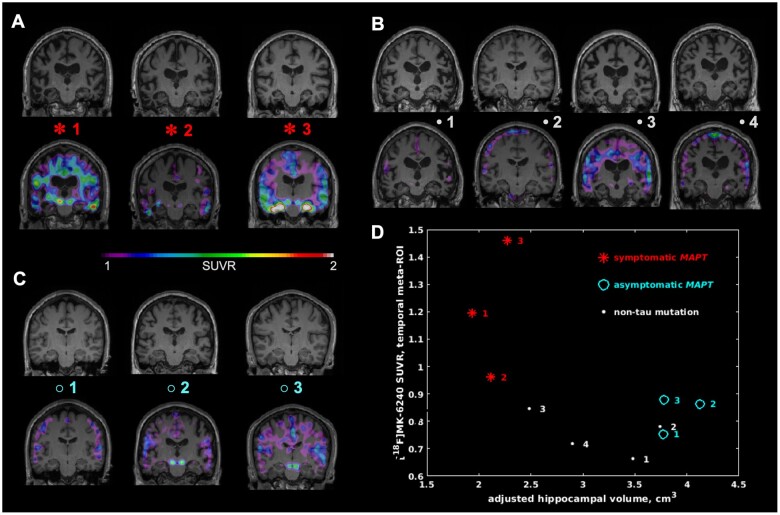
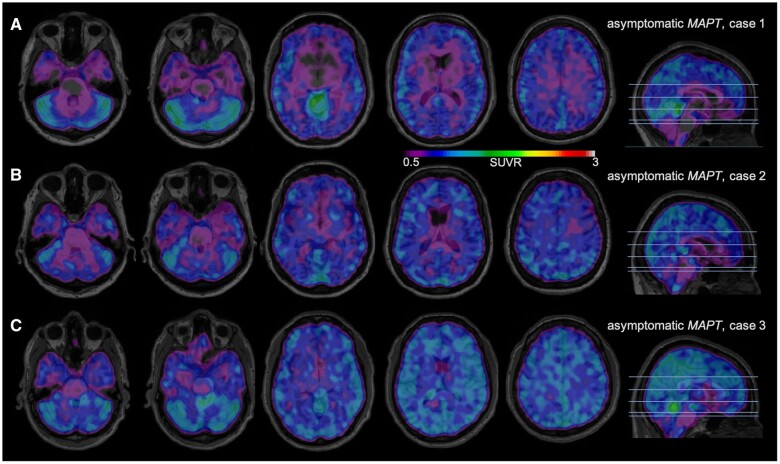
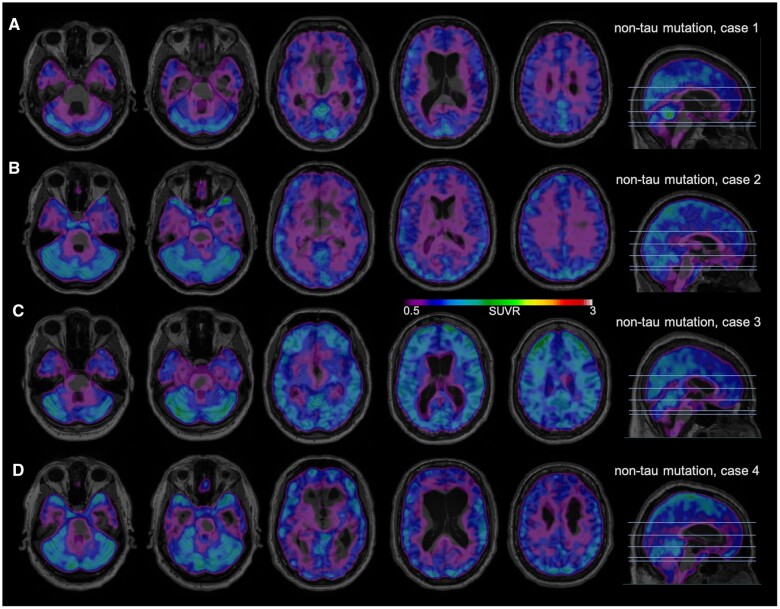
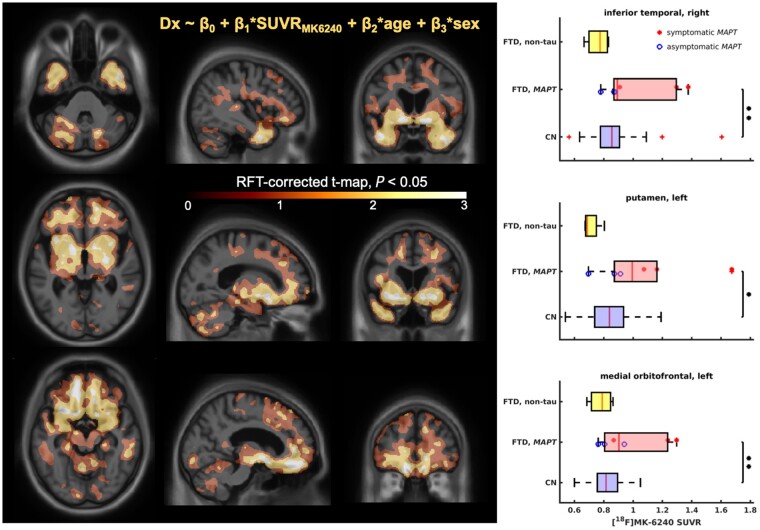
Tau is one of several proteins associated with frontotemporal dementia. While knowing which protein is causing a patient's disease is crucial, no biomarker currently exists for identifying tau in vivo in frontotemporal dementia. The objective of this study was to investigate the potential for the promising 18F-MK-6240 PET tracer to bind to tau in vivo in genetic frontotemporal dementia. We enrolled subjects with genetic frontotemporal dementia, who constitute an ideal population for testing because their pathology is already known based on their mutation. Ten participants (three with symptomatic P301L and R406W MAPT mutations expected to show tau binding, three with presymptomatic MAPT mutations and four with non-tau mutations who acted as disease controls) underwent clinical characterization, tau-PET scanning with 18F-MK-6240, amyloid-PET imaging with 18F-NAV-4694 to rule out confounding Alzheimer's pathology, and high-resolution structural MRI. Tau-PET scans of all three symptomatic MAPT carriers demonstrated at least mild 18F-MK-6240 binding in expected regions, with particularly strong binding in a subject with an R406W MAPT mutation (known to be associated with Alzheimer's like neurofibrillary tangles). Two asymptomatic MAPT carriers estimated to be 5 years from disease onset both showed modest 18F-MK-6240 binding, while one ∼30 years from disease onset did not exhibit any binding. Additionally, four individuals with symptomatic frontotemporal dementia caused by a non-tau mutation were scanned (two C9orf72; one GRN; one VCP): 18F-MK-6240 scans were negative for three subjects, while one advanced C9orf72 case showed minimal regionally non-specific binding. All 10 amyloid-PET scans were negative. Furthermore, a general linear model contrasting genetic frontotemporal dementia subjects to a set of 83 age-matched controls showed significant binding only in the MAPT carriers in selected frontal, temporal and subcortical regions. In summary, our findings demonstrate mild but significant binding of MK-6240 in amyloid-negative P301L and R406W MAPT mutation subjects, with higher standardized uptake value ratio in the R406W mutation associated with the presence of NFTs, and little non-specific binding. These results highlight that a positive 18F-MK-6240 tau-PET does not necessarily imply a diagnosis of Alzheimer's disease and point towards a potential use for 18F-MK-6240 as a biomarker in certain tauopathies beyond Alzheimer's, although further patient recruitment and autopsy studies will be necessary to determine clinical applicability.
tau 是几种与额颞叶痴呆相关的蛋白之一。虽然知道是哪种蛋白导致了患者的疾病至关重要,但目前尚无生物标志物可用于在活体中识别额颞叶痴呆中的 tau。本研究旨在研究有前途的 18F-MK-6240 PET 示踪剂在遗传性额颞叶痴呆患者体内与 tau 结合的潜力。我们招募了遗传性额颞叶痴呆患者作为研究对象,因为根据其突变,他们的病理学已经众所周知,这使他们成为了测试的理想人群。10 名参与者(3 名患有 P301L 和 R406W MAPT 突变的有症状患者,预计会出现 tau 结合,3 名患有无症状 MAPT 突变,4 名患有非 tau 突变的患者作为疾病对照)接受了临床特征描述、18F-MK-6240 的 tau-PET 扫描、18F-NAV-4694 的淀粉样蛋白-PET 成像以排除混杂的阿尔茨海默病病理,以及高分辨率结构 MRI。所有 3 名患有 P301L 和 R406W MAPT 突变的有症状 MAPT 携带者的 tau-PET 扫描均显示出至少轻度的 18F-MK-6240 结合,在一位患有 R406W MAPT 突变的患者(已知与阿尔茨海默病样神经原纤维缠结有关)中结合尤其强烈。两名预计发病前 5 年的无症状 MAPT 携带者表现出适度的 18F-MK-6240 结合,而一名发病前约 30 年的患者则未表现出任何结合。此外,还对 4 名由非 tau 突变引起的有症状额颞叶痴呆患者(2 名 C9orf72;1 名 GRN;1 名 VCP)进行了扫描:18F-MK-6240 扫描对 3 名患者呈阴性,而一名晚期 C9orf72 病例显示出轻微的区域非特异性结合。所有 10 名淀粉样蛋白-PET 扫描均为阴性。此外,将遗传型额颞叶痴呆患者与一组 83 名年龄匹配的对照进行一般线性模型对比,仅在选定的额颞叶和皮质下区域发现 MAPT 携带者有显著结合。综上所述,我们的研究结果表明,在 P301L 和 R406W MAPT 突变的淀粉样蛋白阴性患者中,MK-6240 有轻度但显著的结合,在与 NFT 存在相关的 R406W 突变中,标准化摄取值比更高,而非特异性结合较少。这些结果表明,阳性 18F-MK-6240 tau-PET 不一定意味着阿尔茨海默病的诊断,并表明 18F-MK-6240 作为除阿尔茨海默病以外的某些 tau 病的生物标志物具有潜在用途,尽管还需要进一步招募患者并进行尸检研究以确定其临床适用性。