Department of Traditional Chinese medicine, Beijing Fuxing Hospital, Capital Medical University, Beijing, China.
National Integrated Traditional and Western Medicine Center for Cardiovascular Disease, China-Japan Friendship Hospital, Beijing, China.
Medicine (Baltimore). 2021 Sep 17;100(37):e27027. doi: 10.1097/MD.0000000000027027.
Although the incidence of acute myocardial infarction (AMI) is decreasing, the mortality in AMI patients remains substantial. Traditional Chinese medicine has shown its role in the prevention and management of AMI. The purpose of this study is to evaluate the clinical efficacy of Xuesaitong injection (XST) for the treatment of AMI by a meta-analysis.
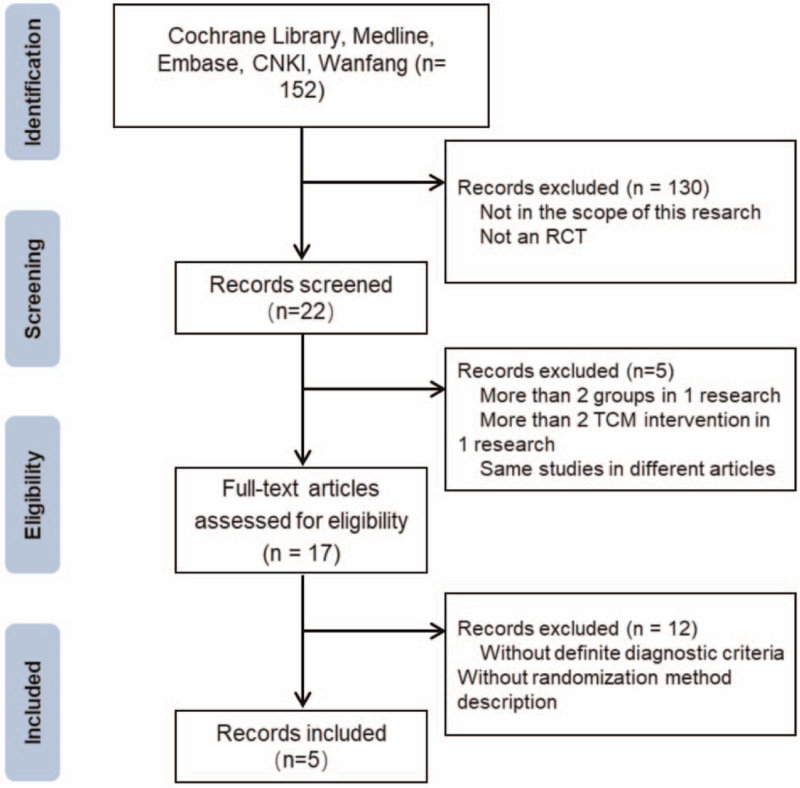
A literature search was performed in 5 medical databases up to June 1, 2020. Randomized controlled trials involving XST combined with conventional treatment versus conventional treatment were included. A meta-analysis of clinical efficacy, left ventricular function and other objective parameters was performed to evaluate the effects of XST on AMI.
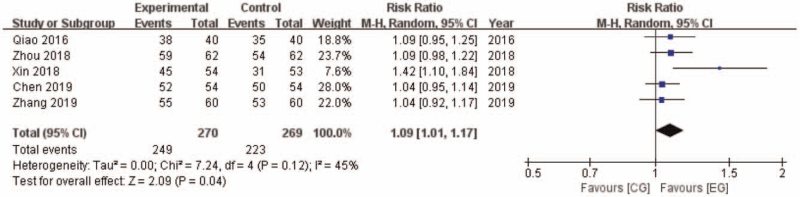
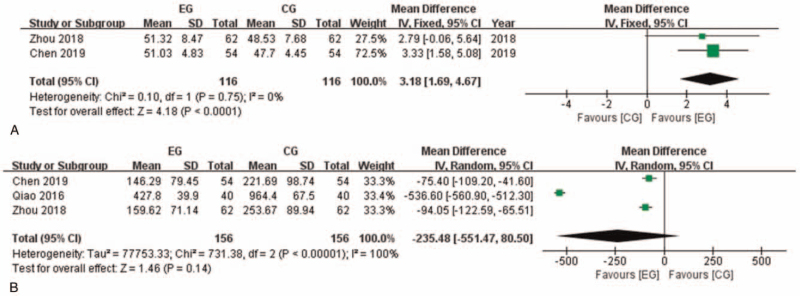
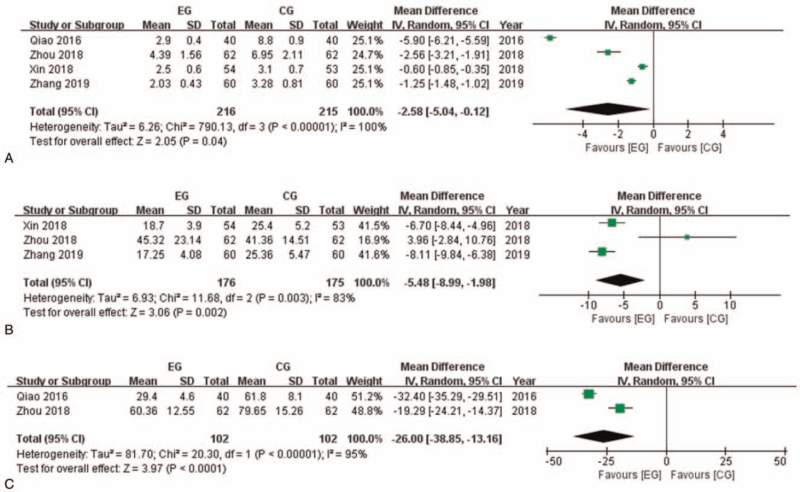
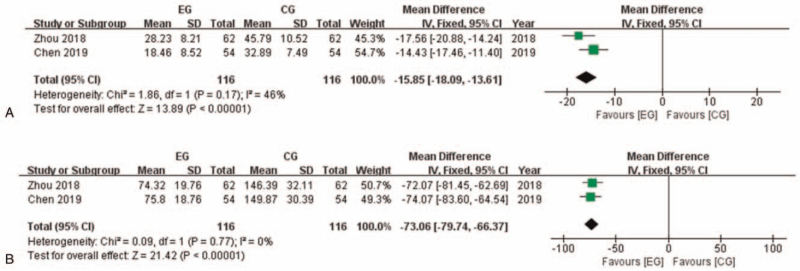
Five randomized controlled trials involving 539 participants were eventually included. Meta-analysis showed that the combination of XST and conventional treatment could achieve significantly better effect on improving clinical efficacy (risk ratio: 1.09 [1.01, 1.17]; P = .04), left ventricular ejection fraction (mean difference [MD]: 3.18 [1.69, 4.67]; P < .0001), hypersensitive C-reactive protein (MD: -2.58 [-5.04, -0.12]; P = .04), interleukin 6 (MD: -26.00 [-38.85, -13.16]; P < .0001), cardiac troponin T (MD: -15.85 [-18.09, -13.61]; P < .00001) and creatine kinase myocardial isoenzyme (MD: -73.06 [-79.74, -66.37]; P < .00001).
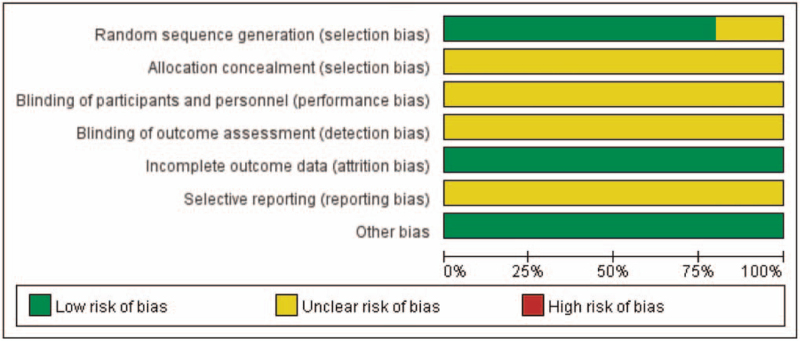
XST combined with conventional treatment can achieve better efficacy on clinical performance and some of the AMI related parameters. However the interpretation of the results should be cautious, due to the relatively low quality of included trials. More rigorously designed, large-scaled, randomized controlled trials are warranted to support its clinical use in the future.
尽管急性心肌梗死(AMI)的发病率正在下降,但 AMI 患者的死亡率仍然很高。中药在 AMI 的预防和治疗中显示出了作用。本研究旨在通过荟萃分析评估血塞通注射液(XST)治疗 AMI 的临床疗效。
截至 2020 年 6 月 1 日,在 5 个医学数据库中进行了文献检索。纳入 XST 联合常规治疗与常规治疗比较的随机对照试验。对临床疗效、左心室功能等客观参数进行荟萃分析,以评估 XST 对 AMI 的影响。
最终纳入了 5 项随机对照试验,共 539 名参与者。荟萃分析表明,XST 联合常规治疗在改善临床疗效方面有显著效果(风险比:1.09 [1.01,1.17];P=0.04)、左心室射血分数(均数差 [MD]:3.18 [1.69,4.67];P<0.0001)、超敏 C 反应蛋白(MD:-2.58 [-5.04,-0.12];P=0.04)、白细胞介素 6(MD:-26.00 [-38.85,-13.16];P<0.0001)、肌钙蛋白 T(MD:-15.85 [-18.09,-13.61];P<0.00001)和肌酸激酶同工酶(MD:-73.06 [-79.74,-66.37];P<0.00001)。
XST 联合常规治疗在临床疗效和一些 AMI 相关参数方面能达到更好的疗效。然而,由于纳入试验的质量相对较低,对结果的解释应谨慎。未来需要进行更严格设计、大规模、随机对照试验来支持其临床应用。