Oxford Vaccine Group, Department of Paediatrics, University of Oxford, Oxford, Oxfordshire, UK
NIHR Oxford Biomedical Research Centre, Oxford, Oxfordshire, UK.
BMJ Glob Health. 2021 Oct;6(10). doi: 10.1136/bmjgh-2021-006305.
Vaccine nationalism has become a key topic of discussion during the development, testing, and rollout of COVID-19 vaccines. Media attention has highlighted the ways that global, coordinated access to vaccines has been limited during the pandemic. It has also exposed how some countries have secured vaccine supply, through bilateral purchase agreements and the way pharmaceutical companies have priced, negotiated, and delivered these supplies. Much of the focus of this debate has been on the vaccine supply 'winners' and 'losers', but the voices of public opinion have been more limited.
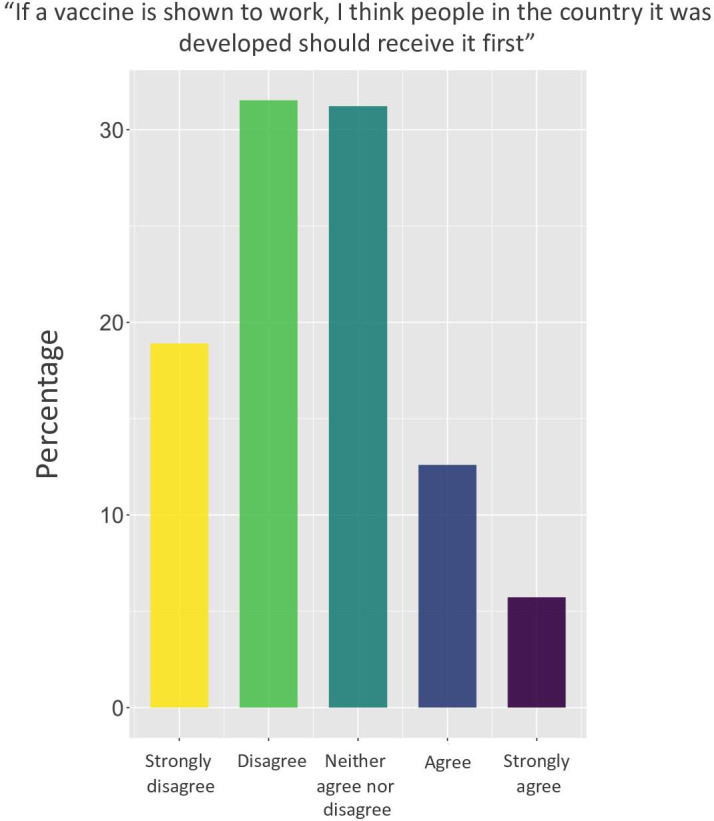
We explore the concepts of vaccine nationalism and internationalism from the perspective of vaccine trial participants, using an empirical perspectives study that involved interviews with phase I/II COVID-19 vaccine trial participants in Oxford, UK. We surveyed and interviewed participants between September and October 2020 about their views, motivations and experiences in taking part in the trial.
First, we show how trial participants describe national and international ideas about vaccination as intertwined and challenge claims that these positions are mutually exclusive or oppositional. Second, we analyse these viewpoints further to show that vaccine nationalism is closely connected with national pride and metaphors of a country's scientific achievements. Participants held a global outlook and were highly supportive of the prioritisation of vaccines by global need, but many were also pessimistic that such a solution could be possible.
Trial participants constitute an informed public group, with situated public expertise that the global community could draw on as an expert opinion. We argue that vaccine nationalism is strongly attached to national character and, therefore, it is more difficult for ownership of a vaccine to be though of as international.
疫苗民族主义已成为新冠疫情疫苗研发、测试和推广过程中的一个关键议题。媒体关注的焦点突显了在大流行期间,全球协调获取疫苗的方式受到了怎样的限制。这也暴露了一些国家如何通过双边采购协议以及制药公司为这些供应品定价、谈判和交付的方式来确保疫苗供应。这场辩论的大部分焦点都集中在疫苗供应的“赢家”和“输家”身上,但公众舆论的声音却更为有限。
我们从疫苗试验参与者的角度探讨了疫苗民族主义和国际主义的概念,采用了一项涉及英国牛津新冠疫苗 I/II 期试验参与者的实证研究。我们在 2020 年 9 月至 10 月期间调查并采访了参与者,了解他们对参与试验的看法、动机和经历。
首先,我们展示了试验参与者如何将国家和国际疫苗接种观念描述为相互交织的,并挑战了这些立场相互排斥或对立的说法。其次,我们进一步分析了这些观点,表明疫苗民族主义与民族自豪感以及一个国家科学成就的隐喻密切相关。参与者持全球视野,高度支持根据全球需求优先考虑疫苗,但许多人也悲观地认为这样的解决方案可能不可能实现。
试验参与者构成了一个知情的公众群体,具有全球社区可以作为专家意见借鉴的特定公共专业知识。我们认为,疫苗民族主义与国家特征紧密相连,因此,疫苗的所有权更难被视为国际性质。