Xu Yichi, Chen Xin, Pan Shuya, Wang Zhi-Wei, Zhu Xueqiong
Center for Uterine Cancer Diagnosis & Therapy Research of Zhejiang Province, Department of Obstetrics and Gynecology, The Second Affiliated Hospital of Wenzhou Medical University, Wenzhou, People's Republic of China.
Cell Death Discov. 2021 Oct 19;7(1):299. doi: 10.1038/s41420-021-00689-5.
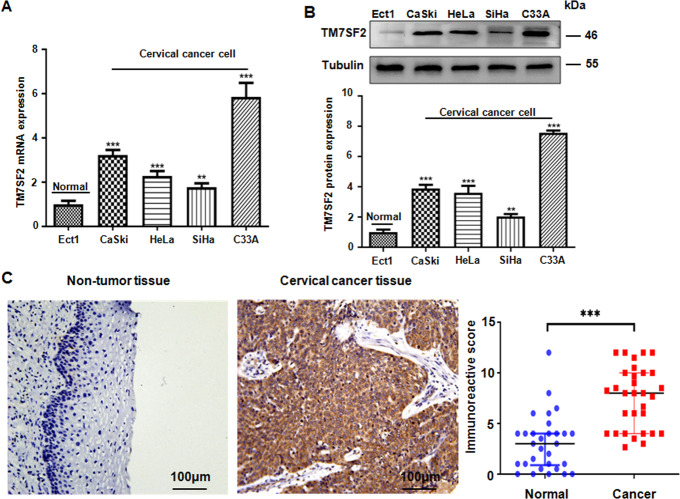
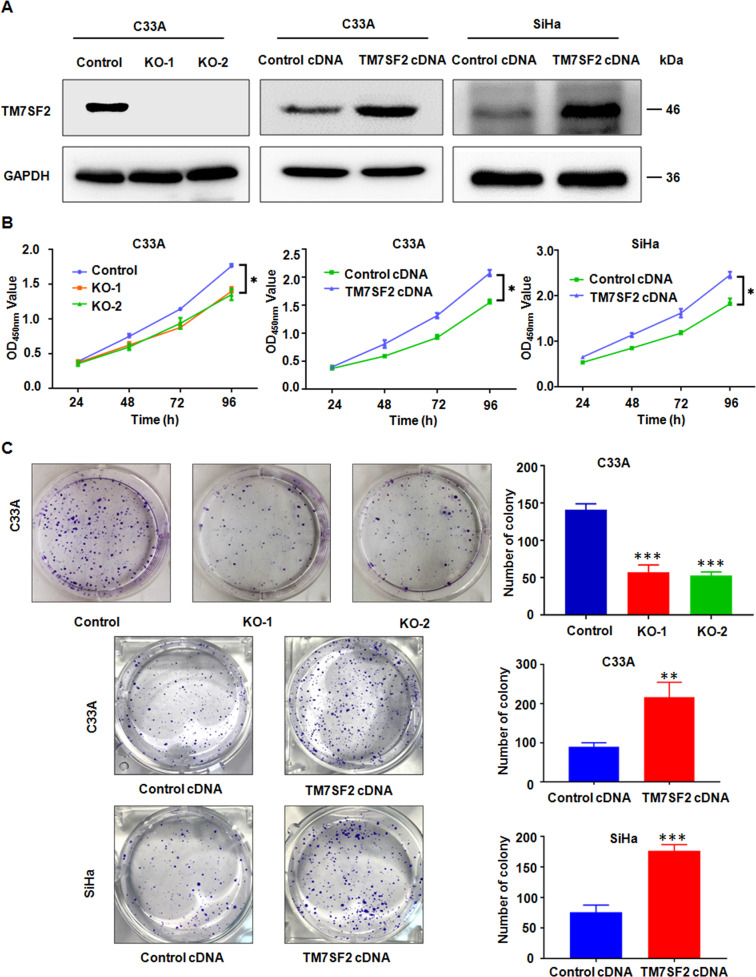
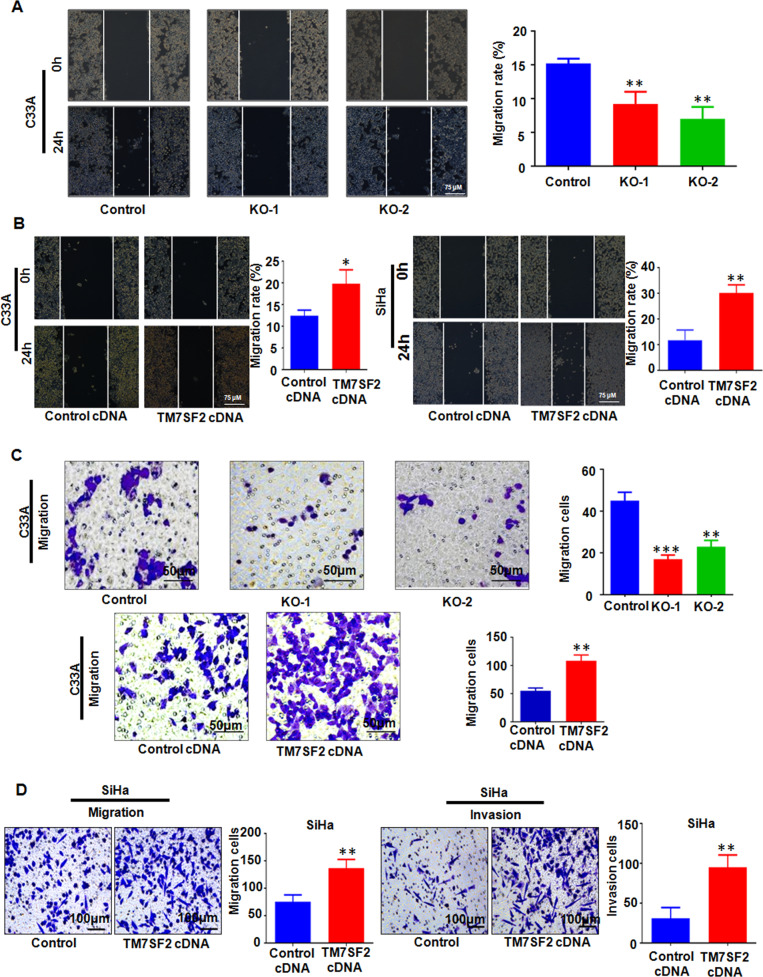
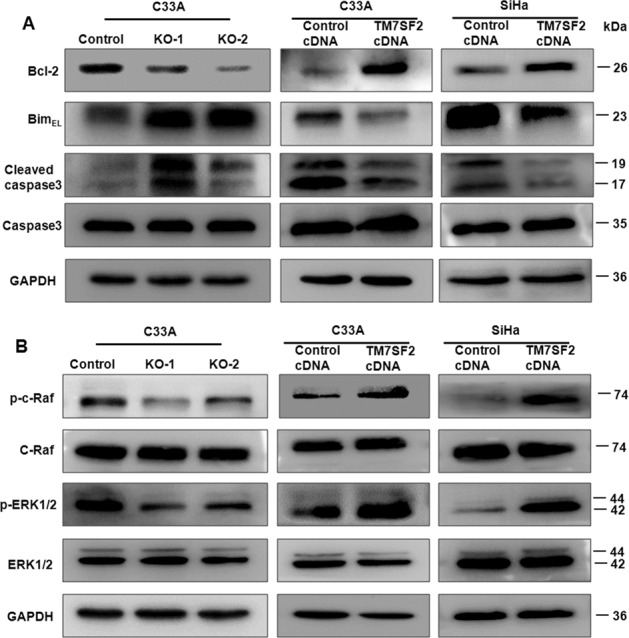
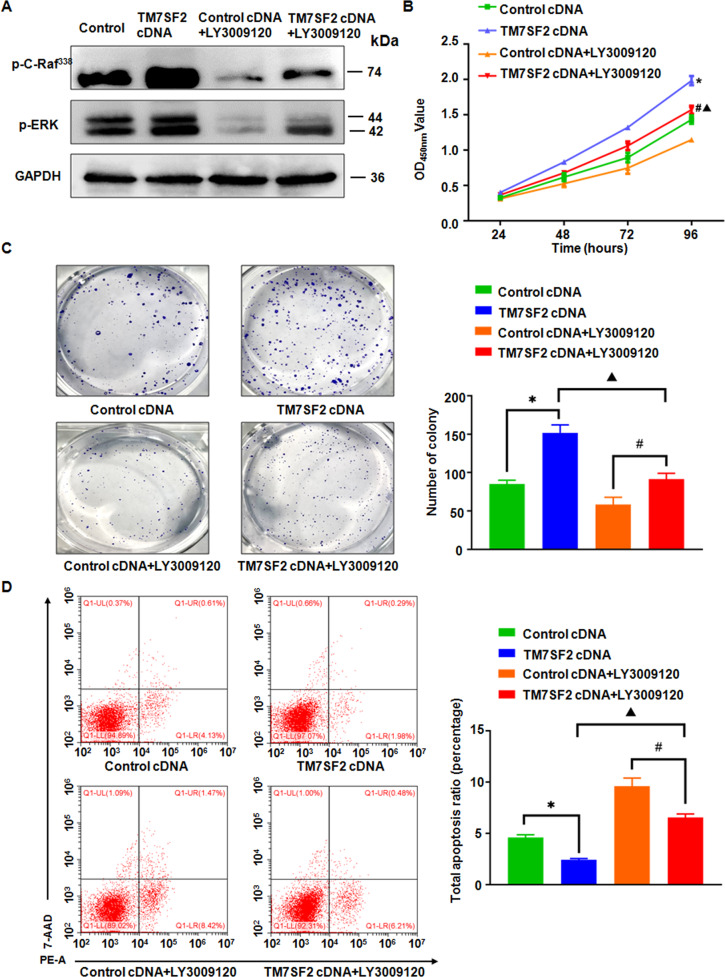
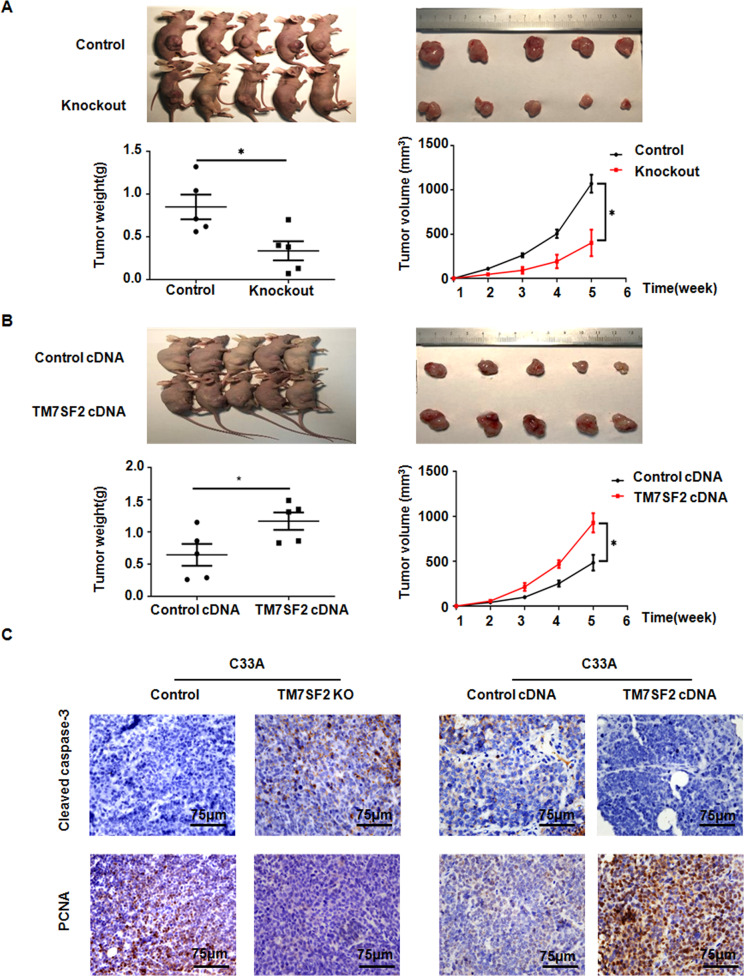
Transmembrane 7 superfamily member 2 (TM7SF2) coding an enzyme involved in cholesterol metabolism has been found to be differentially expressed in kinds of tissues. Nevertheless, the role of TM7SF2 in the regulation of growth and progression among various cancers is unclear. In this study, the immunohistochemistry (IHC) assay, real-time RT-PCR and western blotting analysis were used to determine the TM7SF2 expression in cervical cancer tissues. Next, we used multiple methods to determine the ability of cell proliferation, migration, invasion, apoptosis, and cell cycle in cervical cancer cells after TM7SF2 modulation, such as CCK8 assay, colony formation assay, Transwell assay, wound healing assay, and flow cytometry. Our results revealed that upregulation of TM7SF2 facilitated cell proliferation and metastasis, suppressed cell apoptosis and prevented G0/G1 phase arrests in C33A and SiHa cells. Consistently, the opposite effects were observed after TM7SF2 knockout in cervical cancer cells. Further, we found that TM7SF2 participated in promoting tumorigenesis and progression via activation of C-Raf/ERK pathway in cervical cancer, which can be partly reversed by Raf inhibitor LY3009120. Moreover, TM7SF2 overexpression contributed to enhancement of xenograft tumor growth in vivo. Our findings indicated that TM7SF2 plays a vital role in tumor promotion by involving in C-Raf/ERK activation. Therefore, TM7SF2 could serve as a therapeutic target in future cervical cancer treatment.
编码参与胆固醇代谢的一种酶的跨膜7超家族成员2(TM7SF2)已被发现在多种组织中存在差异表达。然而,TM7SF2在各种癌症的生长和进展调控中的作用尚不清楚。在本研究中,采用免疫组织化学(IHC)检测、实时RT-PCR和蛋白质印迹分析来确定宫颈癌组织中TM7SF2的表达。接下来,我们使用多种方法来确定TM7SF2调节后宫颈癌细胞的增殖、迁移、侵袭、凋亡和细胞周期能力,如CCK8检测、集落形成检测、Transwell检测、伤口愈合检测和流式细胞术。我们的结果显示,TM7SF2的上调促进了C33A和SiHa细胞的增殖和转移,抑制了细胞凋亡并阻止了G0/G1期阻滞。同样,在宫颈癌细胞中敲除TM7SF2后观察到相反的效果。此外,我们发现TM7SF2通过激活宫颈癌中的C-Raf/ERK途径参与促进肿瘤发生和进展,而Raf抑制剂LY3009120可部分逆转这种作用。此外,TM7SF2的过表达有助于增强体内异种移植肿瘤的生长。我们的研究结果表明,TM7SF2通过参与C-Raf/ERK激活在肿瘤促进中起重要作用。因此,TM7SF2可能成为未来宫颈癌治疗的一个治疗靶点。