Institute of Biochemical Engineering, TUM School of Engineering and Design, Technical University of Munich, Boltzmannstr. 15, Garching, 85748, Germany.
Chair of Microbiology, TUM School of Life Sciences, Technical University of Munich, Emil-Ramann-Str. 4, Freising, Germany.
Microb Biotechnol. 2022 May;15(5):1471-1485. doi: 10.1111/1751-7915.13941. Epub 2021 Oct 20.
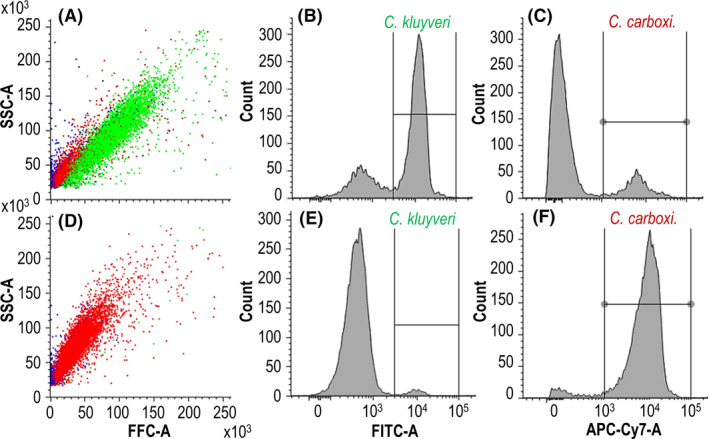
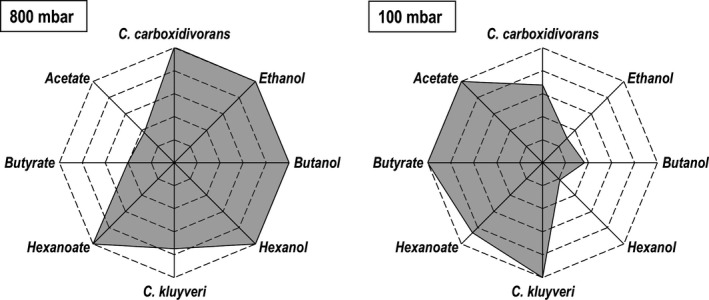
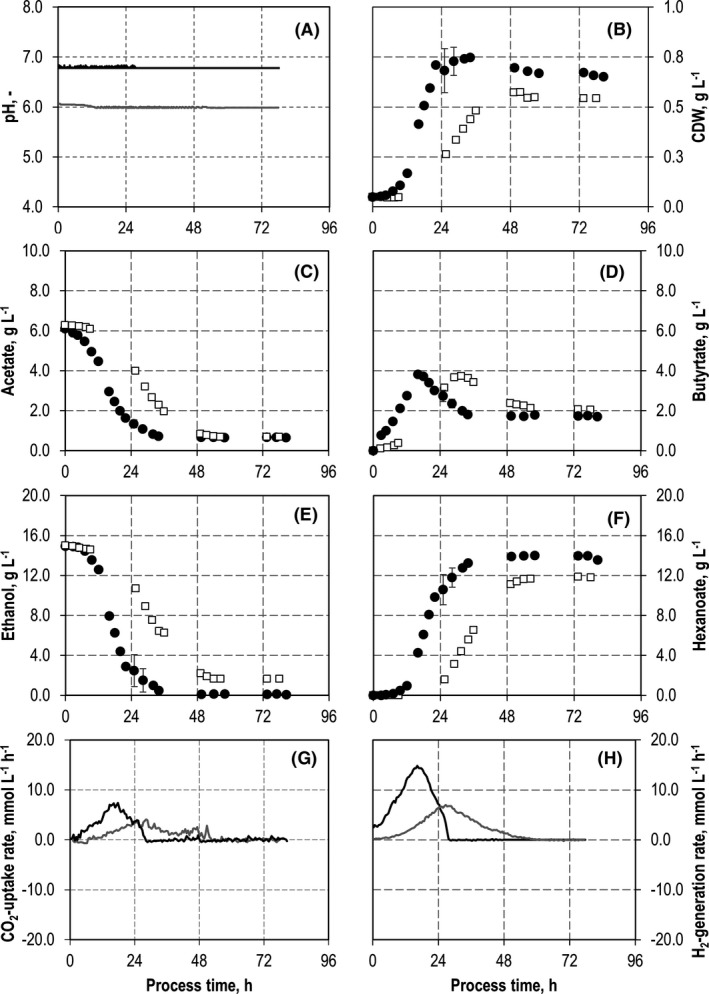
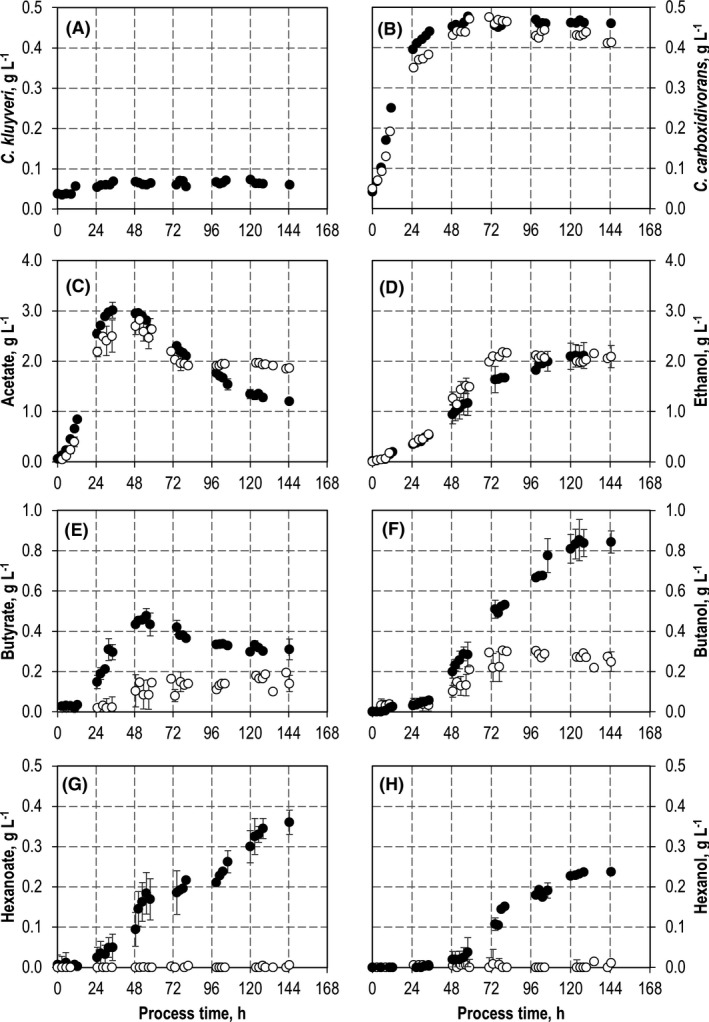
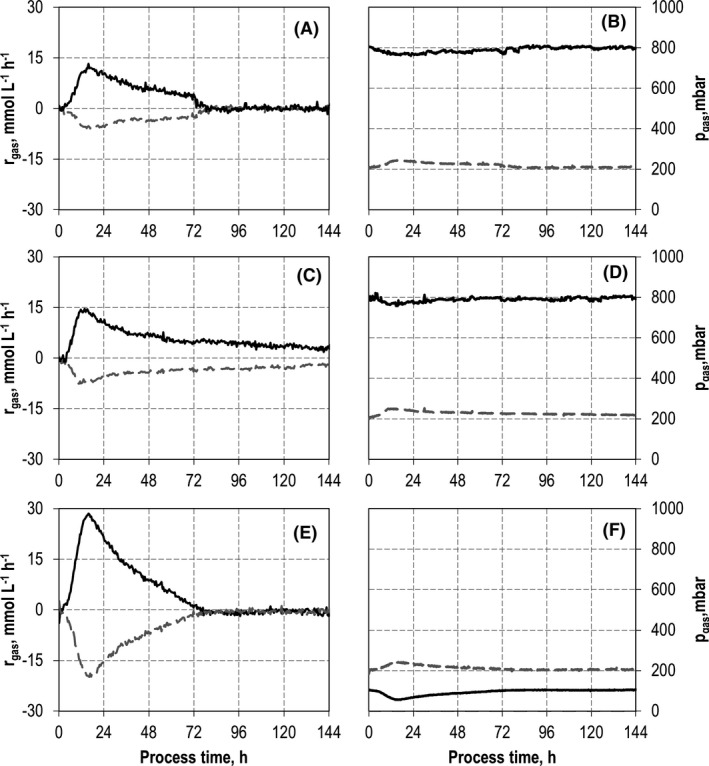
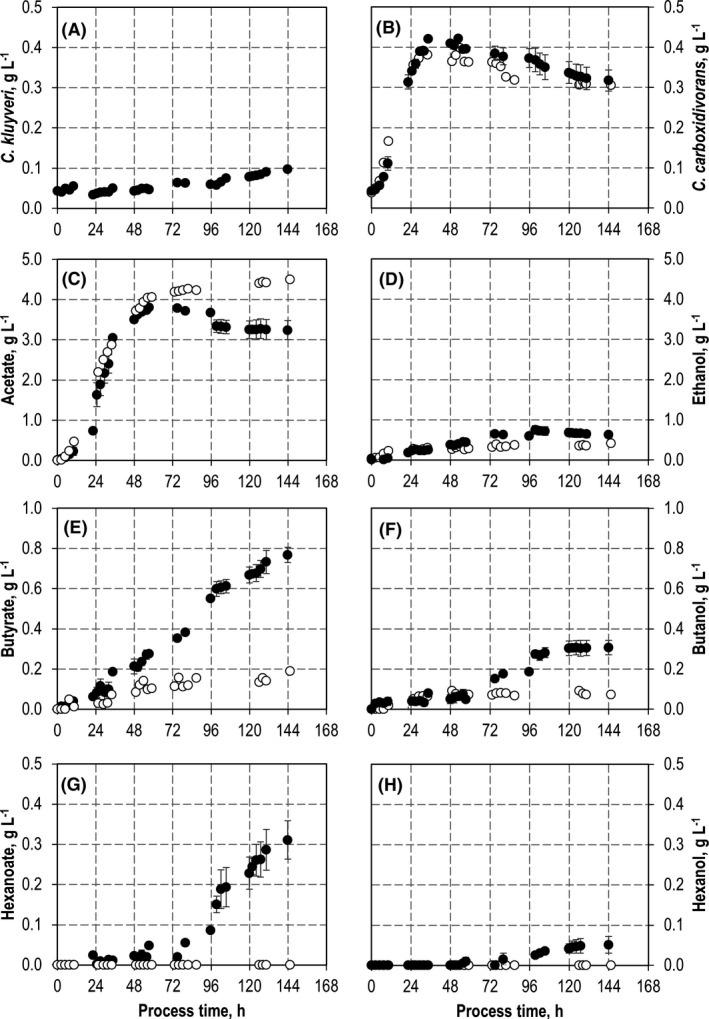
Syngas fermentation with acetogens is known to produce mainly acetate and ethanol efficiently. Co-cultures with chain elongating bacteria making use of these products are a promising approach to produce longer-chain alcohols. Synthetic co-cultures with identical initial cell concentrations of Clostridium carboxidivorans and Clostridium kluyveri were studied in batch-operated stirred-tank bioreactors with continuous CO/CO -gassing and monitoring of the cell counts of both clostridia by flow cytometry after fluorescence in situ hybridization (FISH-FC). At 800 mbar CO, chain elongation activity was observed at pH 6.0, although growth of C. kluyveri was restricted. Organic acids produced by C. kluyveri were reduced by C. carboxidivorans to the corresponding alcohols butanol and hexanol. This resulted in a threefold increase in final butanol concentration and enabled hexanol production compared with a mono-culture of C. carboxidivorans. At 100 mbar CO, growth of C. kluyveri was improved; however, the capacity of C. carboxidivorans to form alcohols was reduced. Because of the accumulation of organic acids, a constant decay of C. carboxidivorans was observed. The measurement of individual cell concentrations in co-culture established in this study may serve as an effective tool for knowledge-based identification of optimum process conditions for enhanced formation of longer-chain alcohols by clostridial co-cultures.
利用产乙酸菌进行合成气发酵被认为能够高效地生产主要的乙酸和乙醇。利用这些产物的链延伸细菌进行共培养是生产长链醇的一种很有前途的方法。以相同的初始细胞浓度将产羧甲基丁酸梭菌和克氏柠檬酸杆菌共培养物在分批操作搅拌罐生物反应器中进行研究,该生物反应器通过连续 CO/CO 鼓泡并在荧光原位杂交(FISH-FC)后通过流式细胞术监测两种梭菌的细胞计数。在 800 mbar CO 下,在 pH 值为 6.0 时观察到链延伸活性,尽管克氏柠檬酸杆菌的生长受到限制。克氏柠檬酸杆菌产生的有机酸被产羧甲基丁酸梭菌还原为相应的醇,如正丁醇和己醇。这导致最终正丁醇浓度增加了三倍,并使己醇的生产得以实现,而这在产羧甲基丁酸梭菌的单一培养物中是无法实现的。在 100 mbar CO 下,克氏柠檬酸杆菌的生长得到了改善;然而,产羧甲基丁酸梭菌形成醇的能力却降低了。由于有机酸的积累,观察到产羧甲基丁酸梭菌的数量持续减少。本研究中建立的共培养物中单个细胞浓度的测量可以作为一种有效的工具,用于基于知识的鉴定增强梭菌共培养物形成长链醇的最佳工艺条件。