
哮喘表型与 COVID-19 风险:基于人群的观察性研究。
Asthma Phenotypes and COVID-19 Risk: A Population-based Observational Study.
机构信息
Airways Disease Section and.
Section of Genomic and Environmental Medicine, National Heart and Lung Institute, Imperial College London, London, United Kingdom.
出版信息
Am J Respir Crit Care Med. 2022 Jan 1;205(1):36-45. doi: 10.1164/rccm.202107-1704OC.
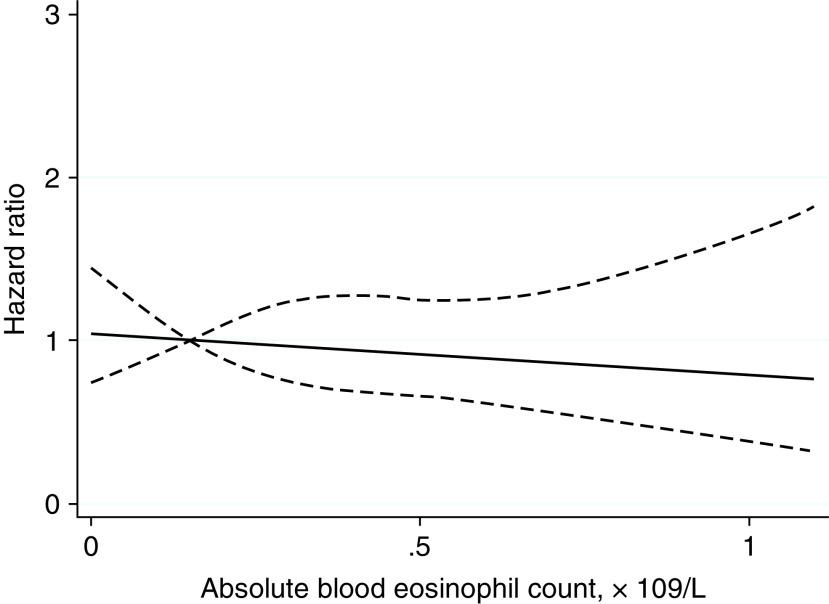
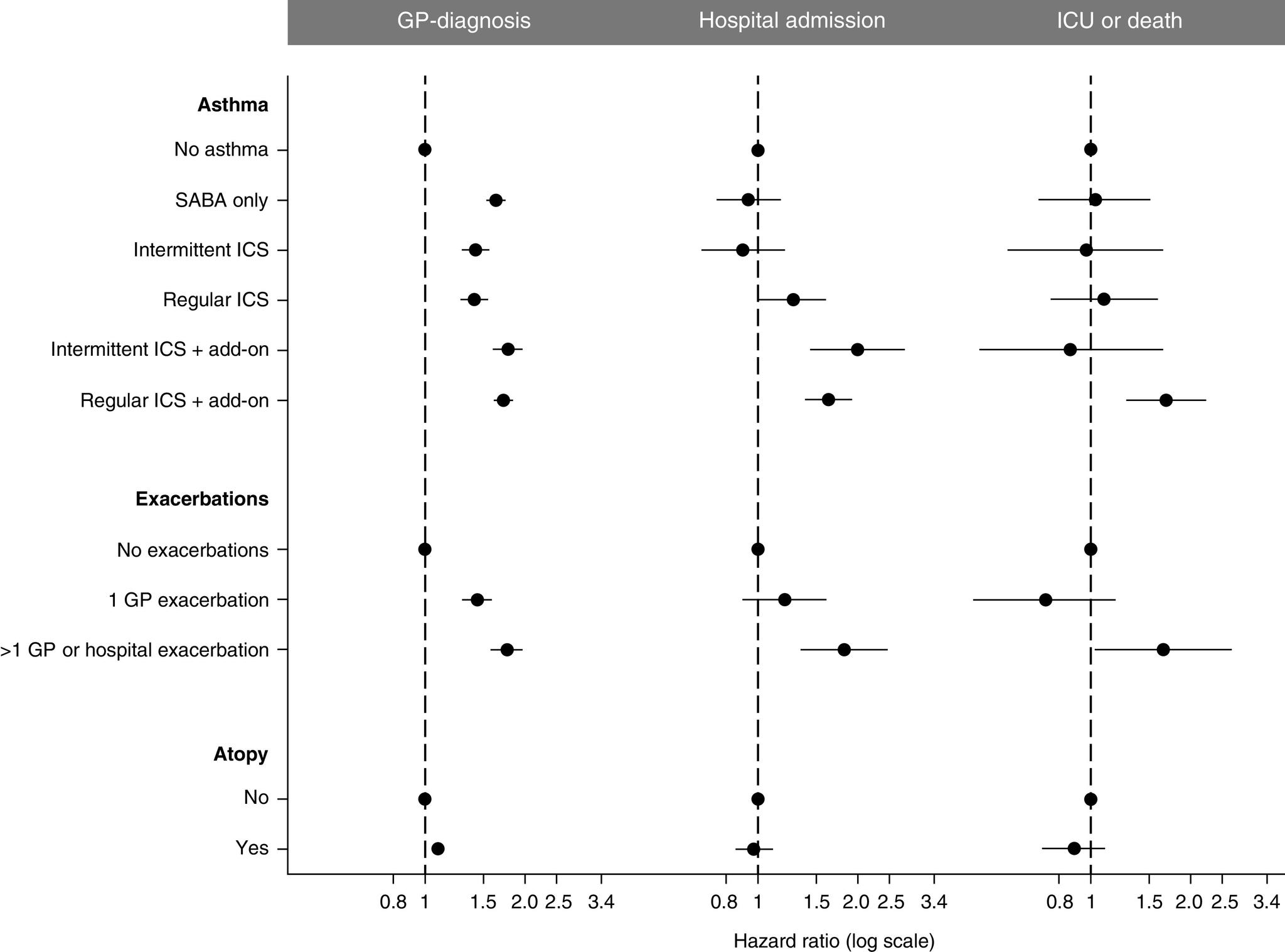
Studies have suggested some patients with asthma are at risk of severe coronavirus disease (COVID-19), but they have had limited data on asthma phenotype and have not considered if risks are specific to COVID-19. To determine the effect of asthma phenotype on three levels of COVID-19 outcomes. Compare hospitalization rates with influenza and pneumonia. Electronic medical records were used to identify patients with asthma and match them to the general population. Patient-level data were linked to Public Health England severe acute respiratory syndrome coronavirus 2 (SARS-CoV-2) test data, hospital, and mortality data. Asthma was phenotyped by medication, exacerbation history, and type 2 inflammation. The risk of each outcome, adjusted for major risk factors, was measured using Cox regression. A total of 434,348 patients with asthma and 748,327 matched patients were included. All patients with asthma had a significantly increased risk of a General Practice diagnosis of COVID-19. Asthma with regular inhaled corticosteroid (ICS) use (hazard ratio [HR], 1.27; 95% confidence interval [CI], 1.01-1.61), intermittent ICS plus add-on asthma medication use (HR, 2.00; 95% CI, 1.43-2.79), regular ICS plus add-on use (HR, 1.63; 95% CI, 1.37-1.94), or with frequent exacerbations (HR, 1.82; 95% CI, 1.34-2.47) was significantly associated with hospitalization. These phenotypes were significantly associated with influenza and pneumonia hospitalizations. Only patients with regular ICS plus add-on asthma therapy (HR, 1.70; 95% CI, 1.27-2.26) or frequent exacerbations (HR, 1.66; 95% CI, 1.03-2.68) had a significantly higher risk of ICU admission or death. Atopy and blood eosinophil count were not associated with severe COVID-19 outcomes. More severe asthma was associated with more severe COVID-19 outcomes, but type 2 inflammation was not. The risk of COVID-19 hospitalization appeared to be similar to the risk with influenza or pneumonia.
研究表明,一些哮喘患者患严重冠状病毒病(COVID-19)的风险较高,但他们对哮喘表型的数据有限,并且没有考虑风险是否特定于 COVID-19。 确定哮喘表型对 COVID-19 三种结局的影响。将住院率与流感和肺炎进行比较。 使用电子病历识别哮喘患者并将其与普通人群进行匹配。将患者水平数据与英国公共卫生署严重急性呼吸系统综合征冠状病毒 2(SARS-CoV-2)检测数据、医院和死亡率数据相关联。通过药物、加重史和 2 型炎症对哮喘进行表型分析。使用 Cox 回归测量每种结局的风险,调整主要危险因素。 共纳入 434348 例哮喘患者和 748327 例匹配患者。所有哮喘患者患全科医生诊断 COVID-19 的风险显著增加。使用常规吸入皮质类固醇(ICS)(危险比[HR],1.27;95%置信区间[CI],1.01-1.61)、间歇性 ICS 加附加哮喘药物使用(HR,2.00;95%CI,1.43-2.79)、常规 ICS 加附加使用(HR,1.63;95%CI,1.37-1.94)或频繁加重(HR,1.82;95%CI,1.34-2.47)的哮喘患者与住院治疗显著相关。这些表型与流感和肺炎住院治疗显著相关。只有常规 ICS 加附加哮喘治疗(HR,1.70;95%CI,1.27-2.26)或频繁加重(HR,1.66;95%CI,1.03-2.68)的患者入住 ICU 或死亡的风险显著增加。过敏和血嗜酸性粒细胞计数与严重 COVID-19 结局无关。 更严重的哮喘与更严重的 COVID-19 结局相关,但 2 型炎症无关。COVID-19 住院的风险似乎与流感或肺炎的风险相似。


 Zotero 插件