Department of Orthopaedic Surgery, St. Vincent's Hospital, The Catholic University of Korea, Suwon-si, Gyeonggi-do, Republic of Korea.
Department of Orthopaedic Surgery, Seoul St. Mary's Hospital, Seoul, Republic of Korea.
BMC Musculoskelet Disord. 2021 Oct 20;22(1):892. doi: 10.1186/s12891-021-04791-8.
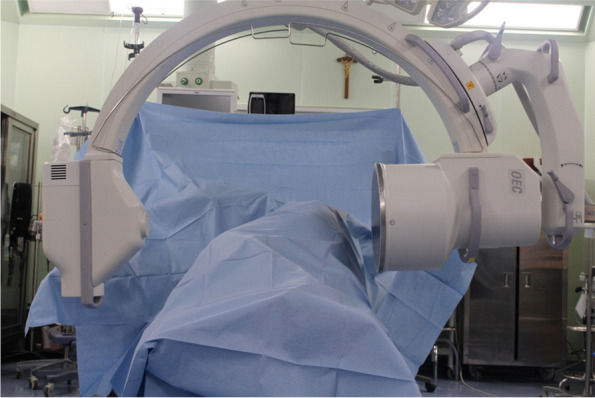
Acetabular prosthesis positioning in total hip arthroplasty (THA) is crucial in reducing the risk of dislocation. There has been minimal research on the proper way to put the acetabular components into the safe zone intraoperatively. Assessment of version by intraoperative imaging intensifier is very valuable. The value of Widmer's method, using the intraoperative C-arm available to determine cup anteversion was assessed.
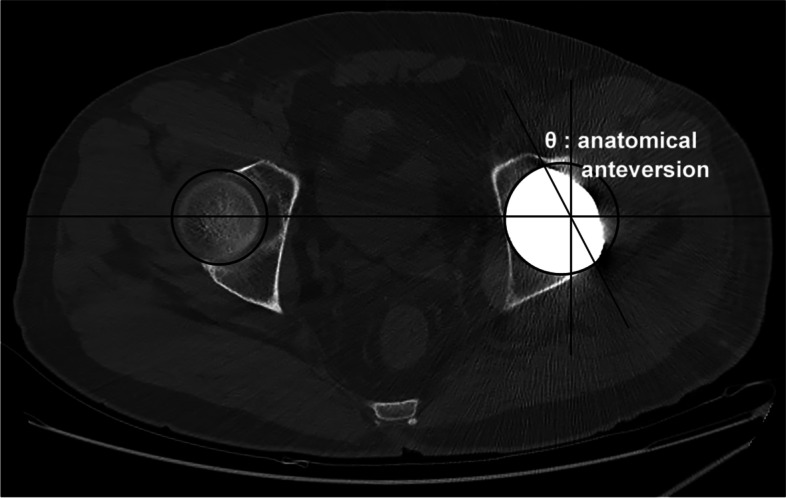
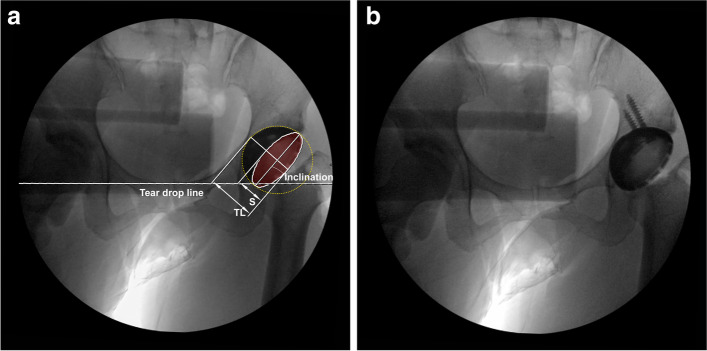
One hundred one hips in 91 patients who underwent primary THA were eligible for inclusion. Utilizing intraoperative C-arm images, measurement was performed using the technique described by Widmer. The values obtained using 3D computed tomography postoperatively, which determined the anteversion of the acetabular component, were regarded as the reference standard.
The method of Widmer obtained values similar to those obtained using 3D computed tomography and was considered accurate (n.s.). All 101 hips were positioned in the set target zone. Among the 101 hips, the cup position in nine hips (8.9%) was changed. The dislocation rate in our study was 1.0% with all dislocations occurring in hips placed in the target zone. The mean Harris hip score after THA in 1 year was 94.2 (82-98).
The method of Widmer was accurate using intraoperative imaging intensifier for the measurement of the anteversion of the acetabular component during THA, with reference to the anteversion obtained from the 3D computed tomography. Also, utilizing intraoperative C-arm imaging was very useful because it allowed for correction of the position of the acetabular cup.
在全髋关节置换术(THA)中,髋臼假体的定位对于降低脱位风险至关重要。关于在术中将髋臼部件放入安全区域的正确方法,研究甚少。术中影像增强器评估假体的倾斜角度非常有价值。评估术中 C 臂可用的 Widmer 方法来确定杯倾斜度的价值。
91 名患者的 101 髋符合纳入标准。术中使用 C 臂图像,采用 Widmer 描述的技术进行测量。术后使用 3D 计算机断层扫描获得的髋臼部件倾斜度值被认为是参考标准。
Widmer 方法获得的值与 3D 计算机断层扫描获得的值相似,被认为是准确的(无统计学意义)。所有 101 髋均定位在设定的目标区域内。在这 101 髋中,有 9 髋(8.9%)的杯位置发生改变。我们的研究中脱位率为 1.0%,所有脱位均发生在目标区域内的髋部。THA 后 1 年的平均 Harris 髋关节评分为 94.2(82-98)。
在 THA 术中,使用术中影像增强器测量髋臼部件的倾斜度,参考 3D 计算机断层扫描获得的倾斜度,Widmer 方法是准确的。此外,术中 C 臂成像非常有用,因为它允许校正髋臼杯的位置。