Department of Medical Oncology, Erasmus MC Cancer Institute, Erasmus Medical Center, Rotterdam, Netherlands.
Department of Developmental Biology, Erasmus Medical Center, Rotterdam, Netherlands.
Clin Epigenetics. 2021 Oct 20;13(1):196. doi: 10.1186/s13148-021-01177-4.
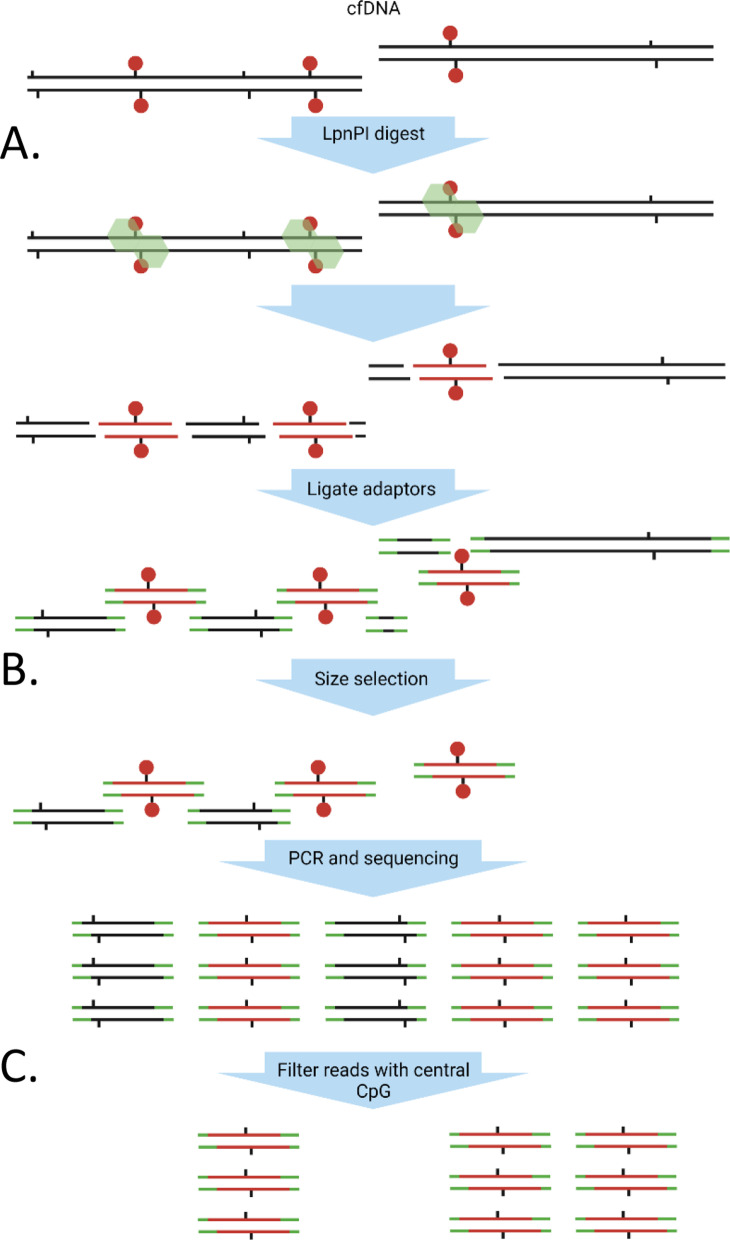
DNA methylation detection in liquid biopsies provides a highly promising and much needed means for real-time monitoring of disease load in advanced cancer patient care. Compared to the often-used somatic mutations, tissue- and cancer-type specific epigenetic marks affect a larger part of the cancer genome and generally have a high penetrance throughout the tumour. Here, we describe the successful application of the recently described MeD-seq assay for genome-wide DNA methylation profiling on cell-free DNA (cfDNA). The compatibility of the MeD-seq assay with different types of blood collection tubes, cfDNA input amounts, cfDNA isolation methods, and vacuum concentration of samples was evaluated using plasma from both metastatic cancer patients and healthy blood donors (HBDs). To investigate the potential value of cfDNA methylation profiling for tumour load monitoring, we profiled paired samples from 8 patients with resectable colorectal liver metastases (CRLM) before and after surgery.
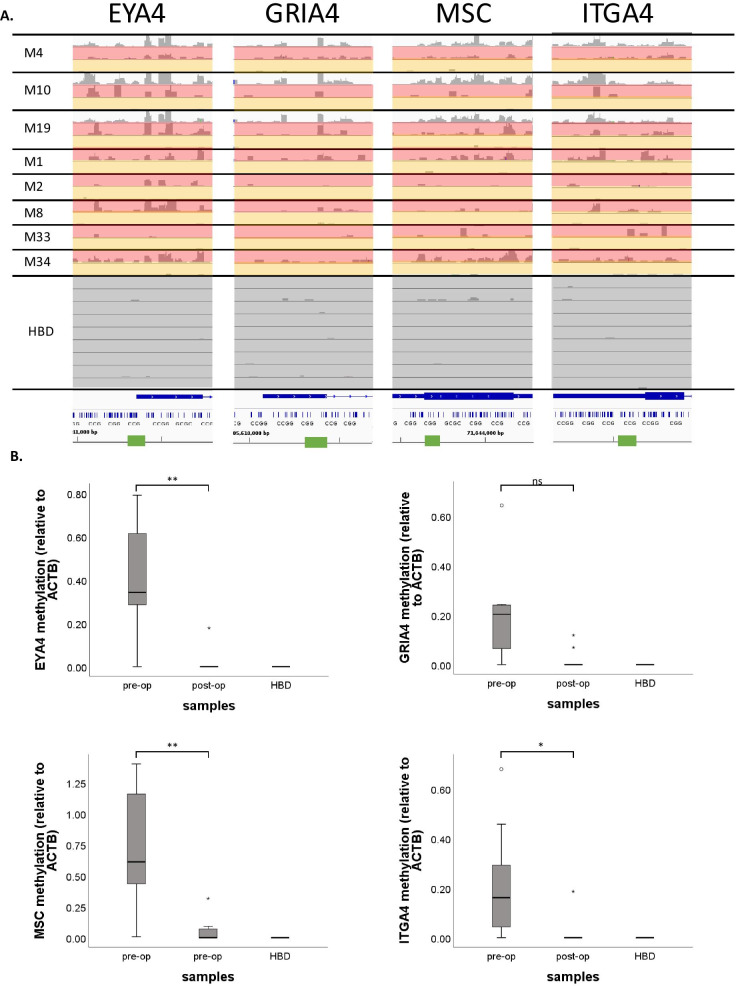
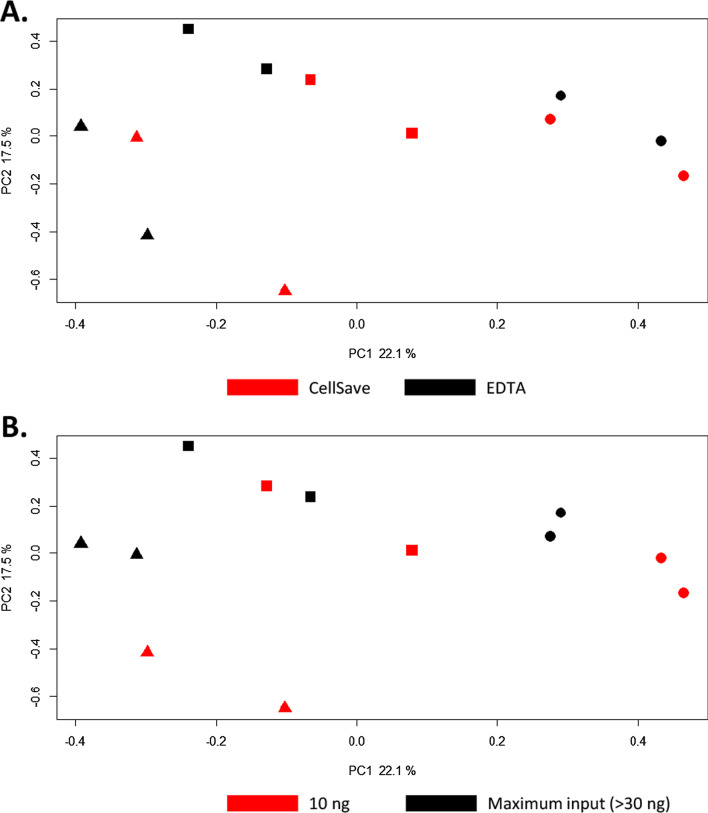
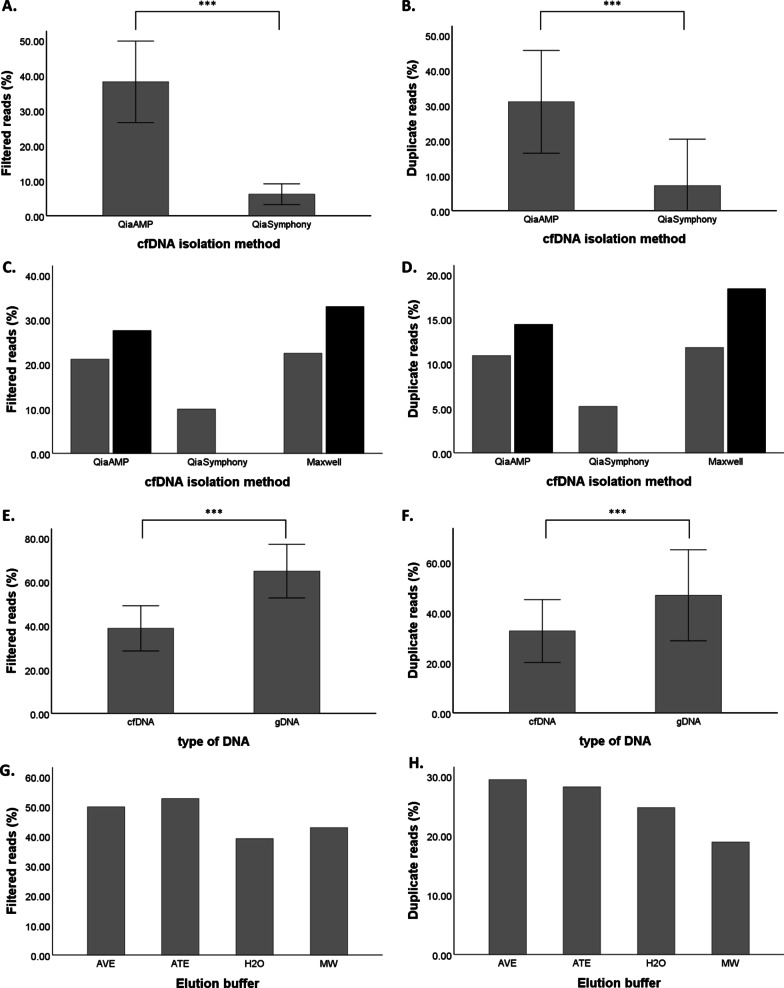
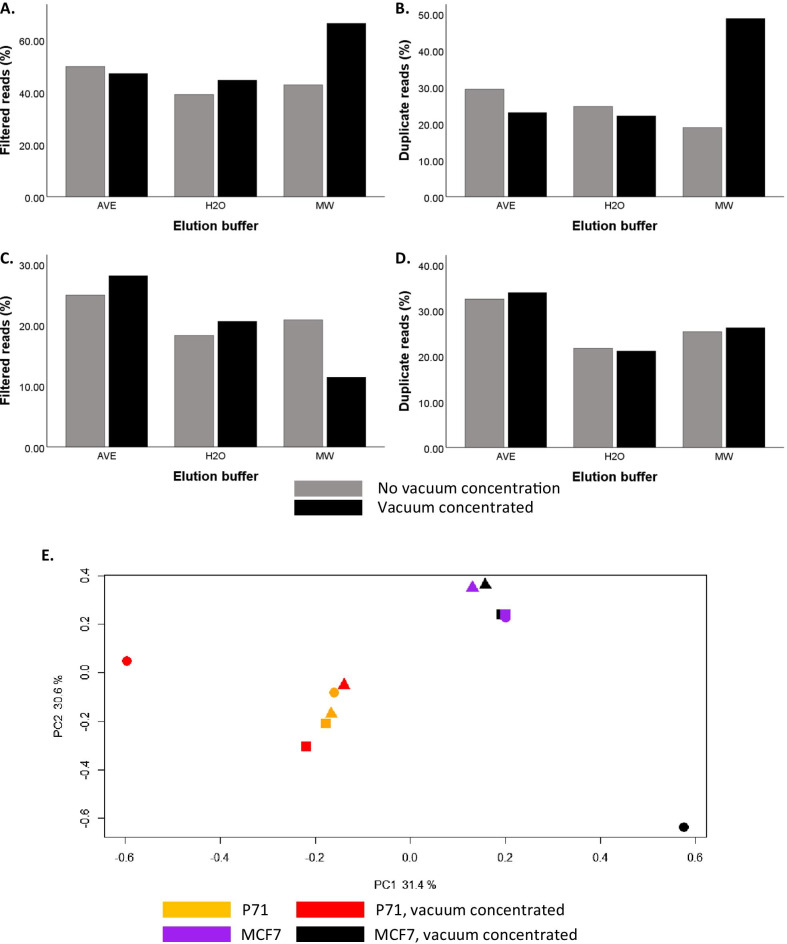
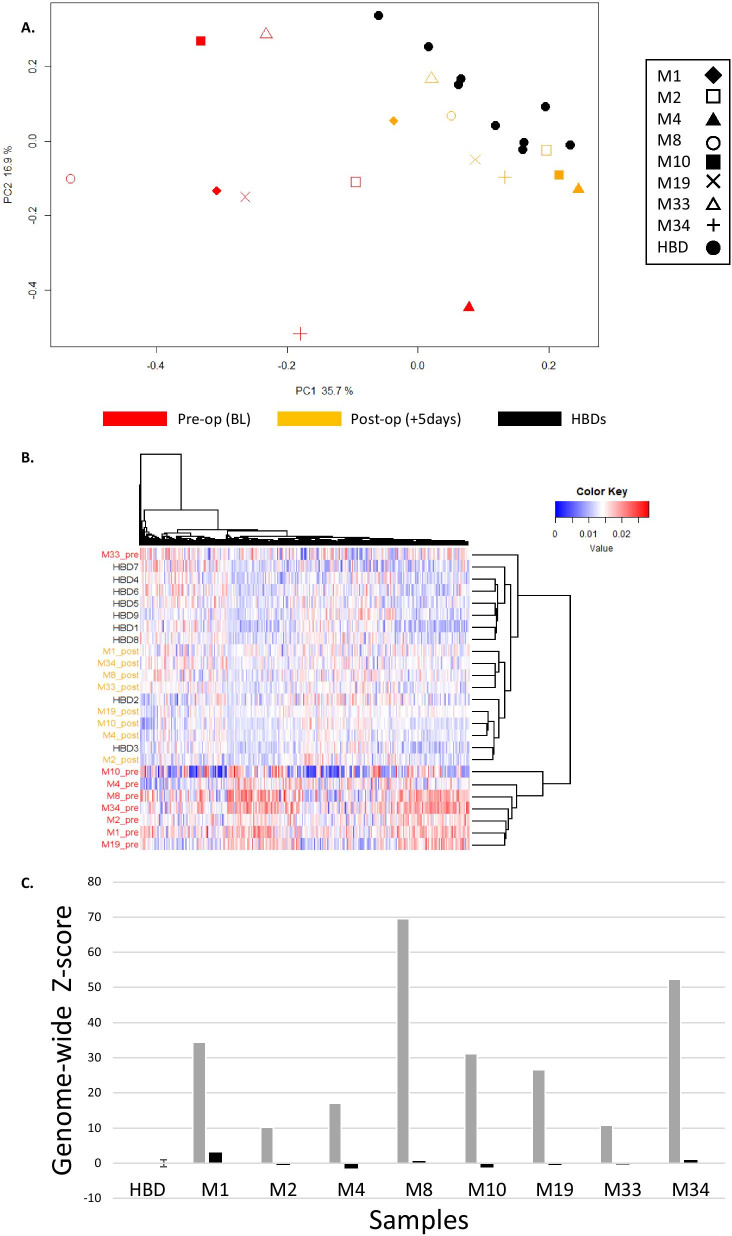
The MeD-seq assay worked on plasma-derived cfDNA from both EDTA and CellSave blood collection tubes when at least 10 ng of cfDNA was used. From the 3 evaluated cfDNA isolation methods, both the manual QIAamp Circulating Nucleic Acid Kit (Qiagen) and the semi-automated Maxwell® RSC ccfDNA Plasma Kit (Promega) were compatible with MeD-seq analysis, whereas the QiaSymphony DSP Circulating DNA Kit (Qiagen) yielded significantly fewer reads when compared to the QIAamp kit (p < 0.001). Vacuum concentration of samples before MeD-seq analysis was possible with samples in AVE buffer (QIAamp) or water, but yielded inconsistent results for samples in EDTA-containing Maxwell buffer. Principal component analysis showed that pre-surgical samples from CRLM patients were very distinct from HBDs, whereas post-surgical samples were more similar. Several described methylation markers for colorectal cancer monitoring in liquid biopsies showed differential methylation between pre-surgical CRLM samples and HBDs in our data, supporting the validity of our approach. Results for MSC, ITGA4, GRIA4, and EYA4 were validated by quantitative methylation specific PCR.
The MeD-seq assay provides a promising new method for cfDNA methylation profiling. Potential future applications of the assay include marker discovery specifically for liquid biopsy analysis as well as direct use as a disease load monitoring tool in advanced cancer patients.
液体活检中的 DNA 甲基化检测为实时监测晚期癌症患者的疾病负荷提供了一种极具前景且非常必要的手段。与常用的体细胞突变相比,组织和癌症类型特异性的表观遗传标记影响癌症基因组的更大部分,并且通常在整个肿瘤中具有高穿透性。在这里,我们描述了最近描述的 MeD-seq 测定法在游离 DNA(cfDNA)上进行全基因组 DNA 甲基化分析的成功应用。通过使用来自转移性癌症患者和健康献血者(HBD)的血浆,评估了 MeD-seq 测定法与不同类型的血液采集管、cfDNA 输入量、cfDNA 分离方法和样品真空浓缩的兼容性。为了研究 cfDNA 甲基化分析在肿瘤负荷监测中的潜在价值,我们对 8 例可切除结直肠癌肝转移(CRLM)患者手术前后的配对样本进行了分析。
当使用至少 10ng 的 cfDNA 时,MeD-seq 测定法可用于 EDTA 和 CellSave 血液采集管衍生的血浆衍生 cfDNA。在评估的 3 种 cfDNA 分离方法中,手动 QIAamp Circulating Nucleic Acid Kit(Qiagen)和半自动 Maxwell® RSC ccfDNA Plasma Kit(Promega)均与 MeD-seq 分析兼容,而 QiaSymphony DSP Circulating DNA Kit(Qiagen)与 QIAamp 试剂盒相比,产生的读取量明显较少(p<0.001)。在进行 MeD-seq 分析之前,可以使用 AVE 缓冲液(QIAamp)或水对样品进行真空浓缩,但在含有 EDTA 的 Maxwell 缓冲液中的样品则效果不一致。主成分分析表明,CRLM 患者的术前样本与 HBD 非常不同,而术后样本则更为相似。在我们的数据中,几种描述的用于液体活检中结直肠癌监测的甲基化标记物显示了术前 CRLM 样本与 HBD 之间的差异甲基化,支持了我们方法的有效性。通过定量甲基化特异性 PCR 验证了 MSC、ITGA4、GRIA4 和 EYA4 的结果。
MeD-seq 测定法为 cfDNA 甲基化分析提供了一种很有前景的新方法。该测定法的潜在未来应用包括专门针对液体活检分析的标志物发现,以及直接用作晚期癌症患者疾病负荷监测工具。