Peter Medawar Building for Pathogen Research, Nuffield Department of Medicine, University of Oxford, Oxford, OX3 1SY, UK.
Copenhagen Hepatitis C Program (CO-HEP), Department of Infectious Diseases, Hvidovre Hospital and Department of Immunology and Microbiology, Faculty of Health and Medical Sciences, University of Copenhagen, Copenhagen, Denmark.
Nat Commun. 2021 Oct 20;12(1):6105. doi: 10.1038/s41467-021-25649-6.
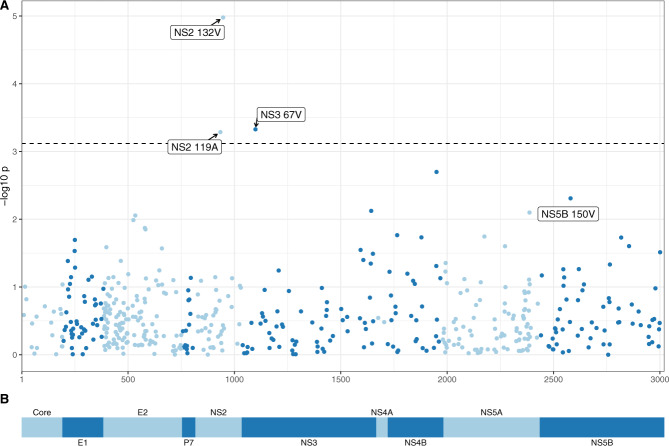
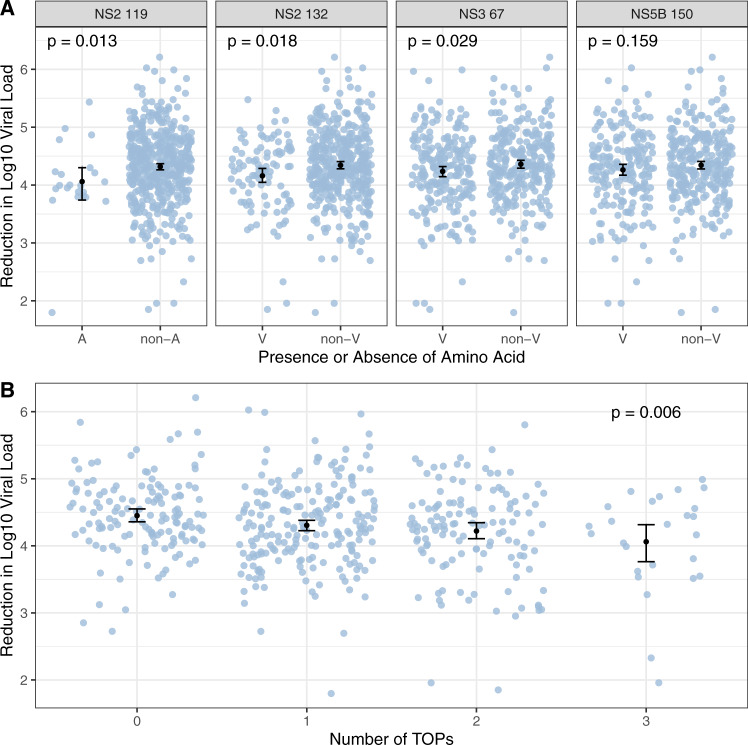
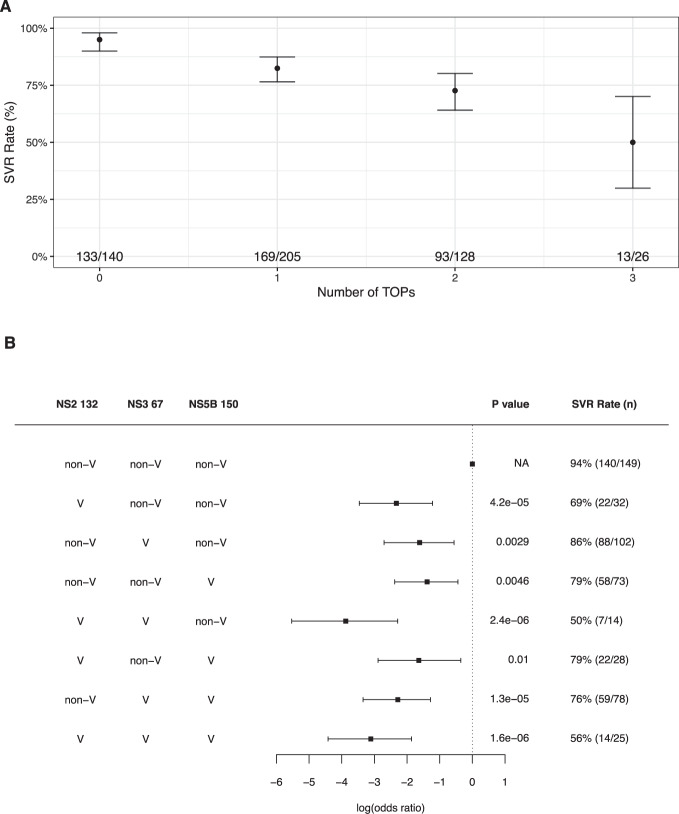
Persistent hepatitis C virus (HCV) infection is a major cause of chronic liver disease, worldwide. With the development of direct-acting antivirals, treatment of chronically infected patients has become highly effective, although a subset of patients responds less well to therapy. Sofosbuvir is a common component of current de novo or salvage combination therapies, that targets the HCV NS5B polymerase. We use pre-treatment whole-genome sequences of HCV from 507 patients infected with HCV subtype 3a and treated with sofosbuvir containing regimens to detect viral polymorphisms associated with response to treatment. We find three common polymorphisms in non-targeted HCV NS2 and NS3 proteins are associated with reduced treatment response. These polymorphisms are enriched in post-treatment HCV sequences of patients unresponsive to treatment. They are also associated with lower reductions in viral load in the first week of therapy. Using in vitro short-term dose-response assays, these polymorphisms do not cause any reduction in sofosbuvir potency, suggesting an indirect mechanism of action in decreasing sofosbuvir efficacy. The identification of polymorphisms in NS2 and NS3 proteins associated with poor treatment outcomes emphasises the value of systematic genome-wide analyses of viruses in uncovering clinically relevant polymorphisms that impact treatment.
持续性丙型肝炎病毒(HCV)感染是全球慢性肝病的主要病因。随着直接作用抗病毒药物的发展,慢性感染患者的治疗变得非常有效,尽管有一部分患者对治疗的反应较差。索非布韦是目前新的或挽救性联合治疗方案的常见组成部分,针对 HCV NS5B 聚合酶。我们使用了 507 例感染 HCV 亚型 3a 并接受含索非布韦治疗方案的患者的治疗前全基因组 HCV 序列,以检测与治疗反应相关的病毒多态性。我们发现,非靶向 HCV NS2 和 NS3 蛋白中的三种常见多态性与治疗反应降低有关。这些多态性在治疗无反应的患者的治疗后 HCV 序列中富集。它们还与治疗第 1 周病毒载量的降低幅度降低相关。使用体外短期剂量反应测定,这些多态性不会导致索非布韦效力降低,表明在降低索非布韦疗效方面存在间接作用机制。与治疗结果不佳相关的 NS2 和 NS3 蛋白中的多态性的鉴定强调了对病毒进行系统的全基因组分析以发现影响治疗的临床相关多态性的重要性。