Center of Analysis and Testing, Nanjing Normal University, Nanjing 210023, China; School of Chemistry and Materials Science, Nanjing Normal University, Nanjing 210023, China.
Center of Analysis and Testing, Nanjing Normal University, Nanjing 210023, China; School of Chemistry and Materials Science, Nanjing Normal University, Nanjing 210023, China.
Ultrason Sonochem. 2021 Nov;79:105800. doi: 10.1016/j.ultsonch.2021.105800. Epub 2021 Oct 16.
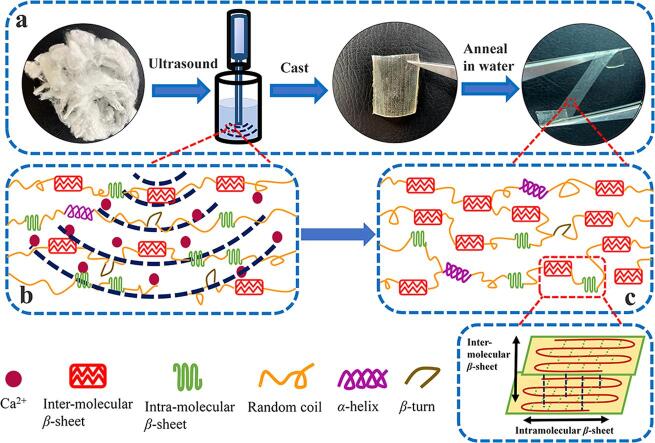
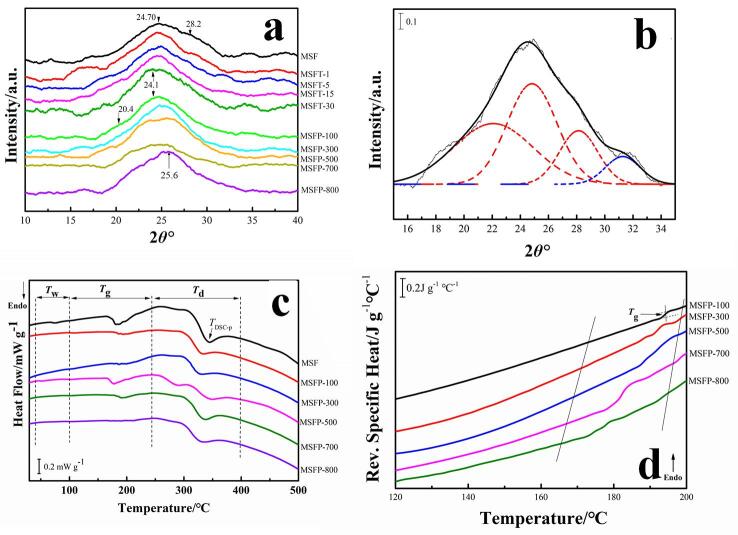
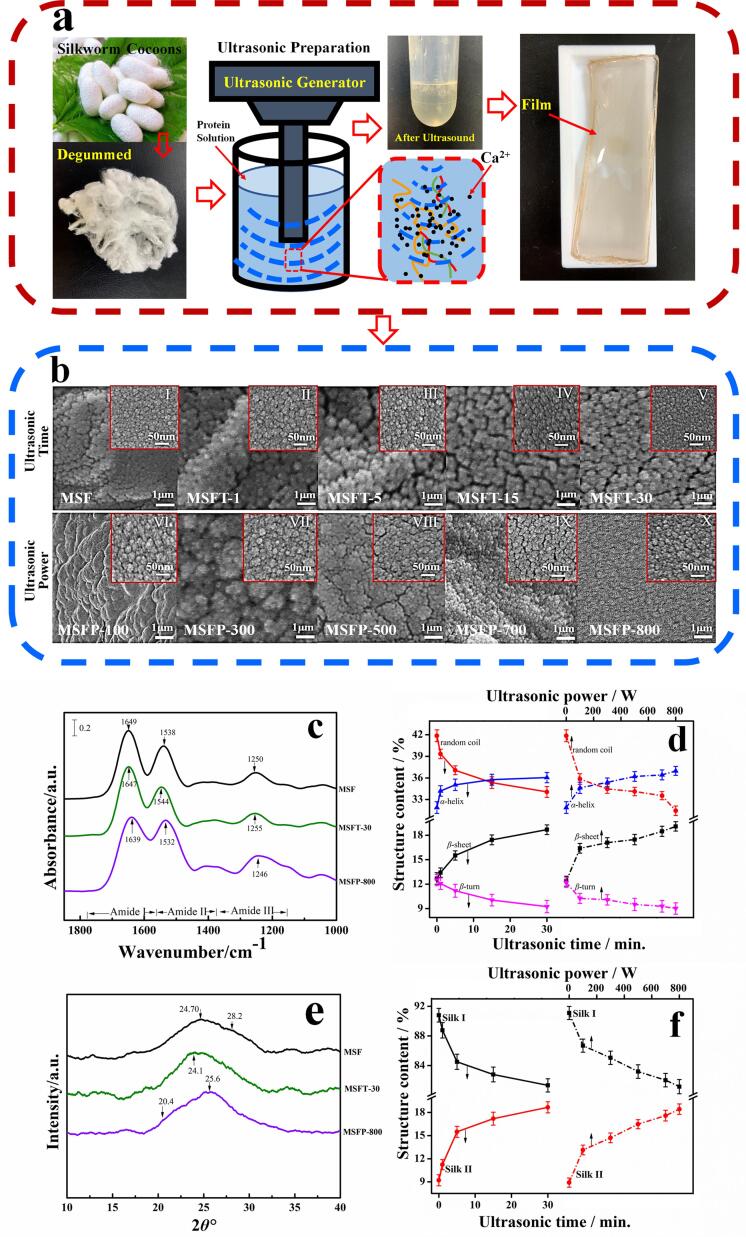
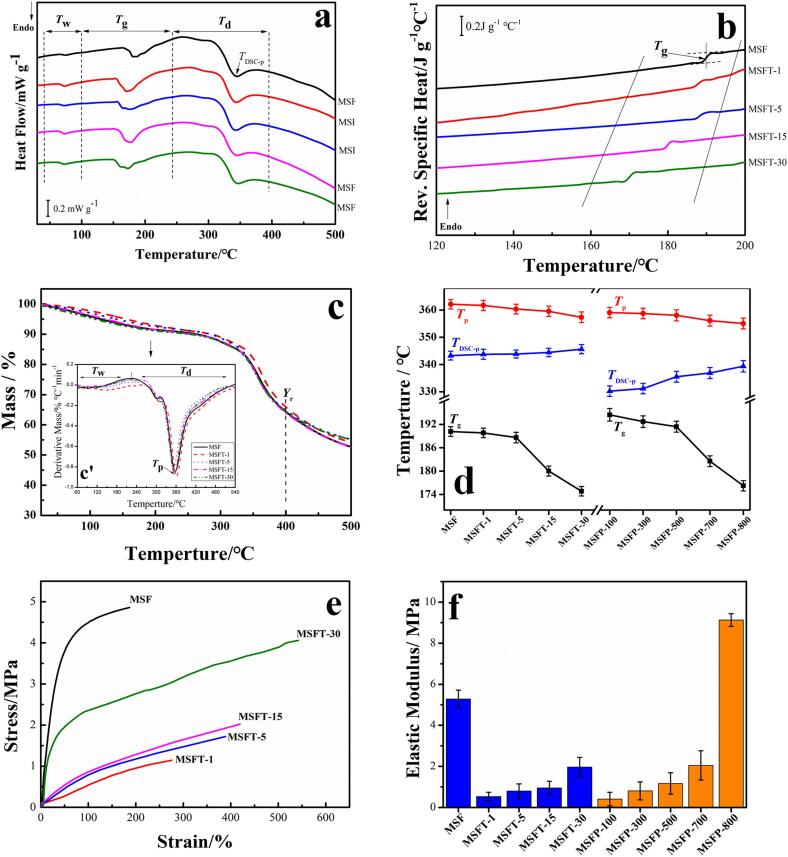
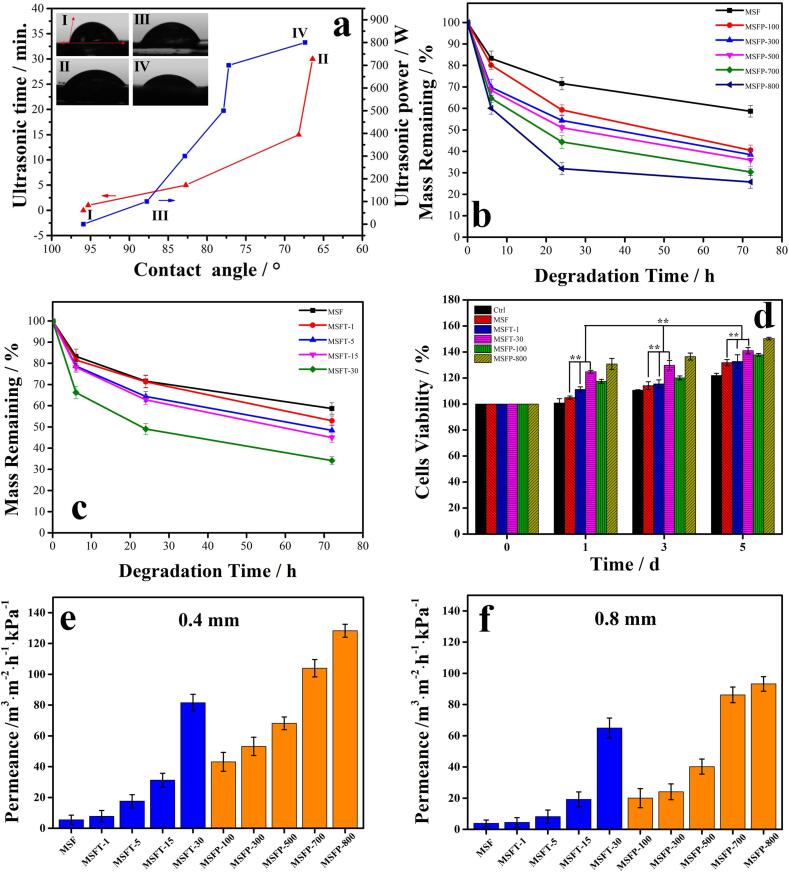
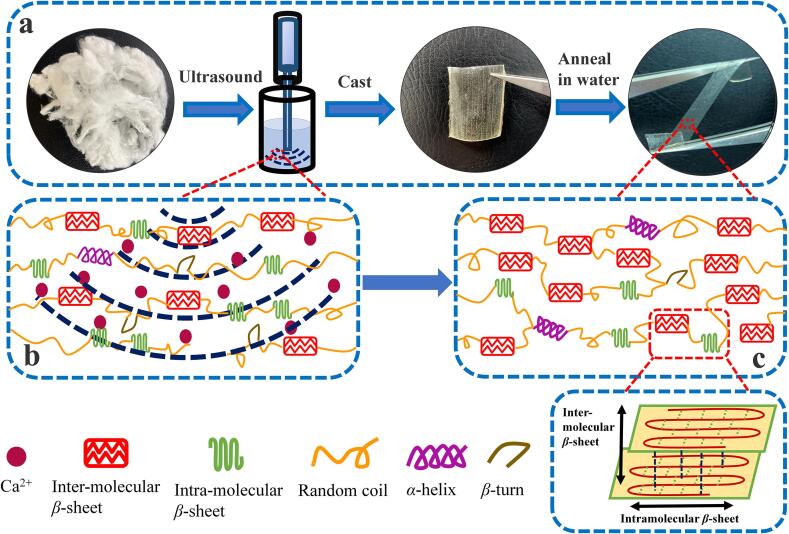
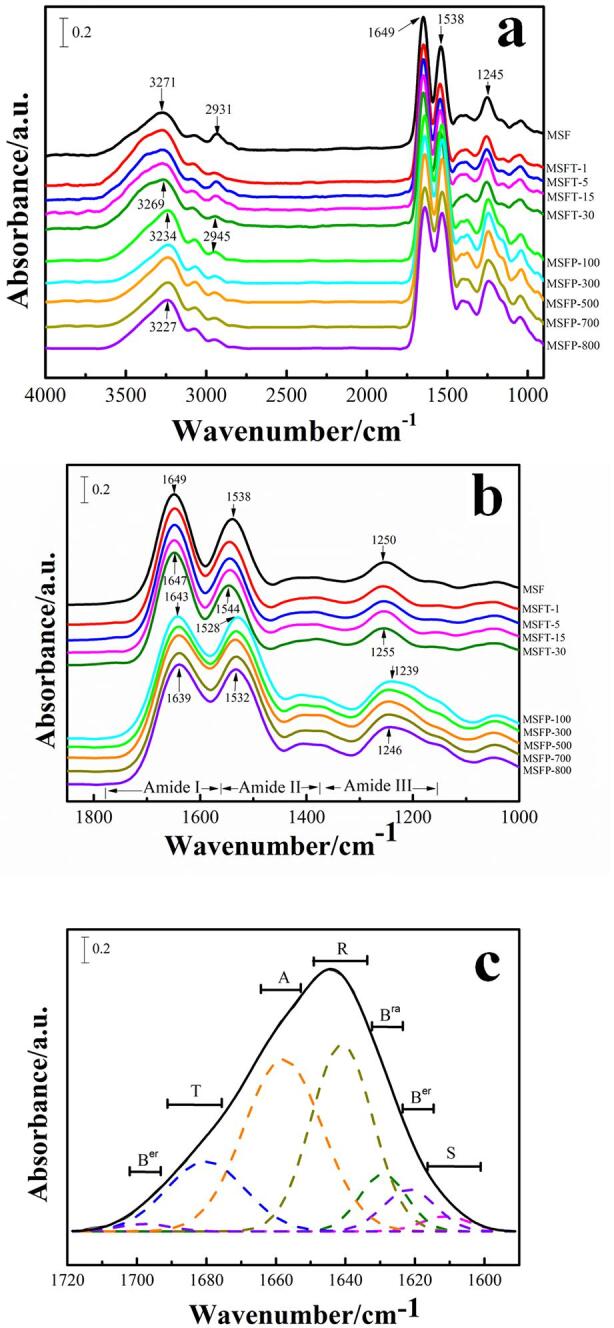
Ultrasound can be used in the biomaterial field due to its high efficiency, easy operation, no chemical treatment, repeatability and high level of control. In this work, we demonstrated that ultrasound is able to quickly regulate protein structure at the solution assembly stage to obtain the designed properties of protein-based materials. Silk fibroin proteins dissolved in a formic acid-CaCl solution system were treated in an ultrasound with varying times and powers. By altering these variables, the silks physical properties and structures can be fine-tuned and the results were investigated with Fourier transform infrared spectroscopy (FTIR), X-ray diffraction (XRD), scanning electron microscopy (SEM), differential scanning calorimetry (DSC), thermogravimetric analysis (TGA), dynamic mechanical analysis (DMA), gas permeability and water contact angle measurements. Ultrasonic treatment aids the interactions between the calcium ions and silk molecular chains which leads to increased amounts of intermolecular β-sheets and α-helix. This unique structural change caused the silk film to be highly insoluble in water while also inducing a hydrophilic swelling property. The ultrasound-regulated silk materials also showed higher thermal stability, better biocompatibility and breathability, and favorable mechanical strength and flexibility. It was also possible to tune the enzymatic degradation rate and biological response (cell growth and proliferation) of protein materials by changing ultrasound parameters. This study provides a unique physical and non-contact material processing method for the wide applications of protein-based biomaterials.
超声因其高效、易操作、无化学处理、可重复性和高水平的控制而可用于生物材料领域。在这项工作中,我们证明了超声能够在溶液组装阶段快速调节蛋白质结构,从而获得基于蛋白质的材料的设计性能。丝素蛋白溶解在甲酸-CaCl 溶液体系中,用不同时间和功率的超声处理。通过改变这些变量,可以精细调整丝绸的物理性质和结构,并通过傅里叶变换红外光谱(FTIR)、X 射线衍射(XRD)、扫描电子显微镜(SEM)、差示扫描量热法(DSC)、热重分析(TGA)、动态力学分析(DMA)、气体渗透性和水接触角测量来研究结果。超声处理有助于钙离子与丝分子链之间的相互作用,从而增加分子间β-折叠和α-螺旋的数量。这种独特的结构变化使丝膜在水中高度不溶,同时诱导亲水性溶胀性能。超声调节的丝材料还表现出更高的热稳定性、更好的生物相容性和透气性,以及良好的机械强度和柔韧性。通过改变超声参数,还可以调节蛋白质材料的酶降解率和生物响应(细胞生长和增殖)。本研究为基于蛋白质的生物材料的广泛应用提供了一种独特的物理和非接触式材料处理方法。